

100 years of Phoenix Contact
"Competition only begins in the application"
It all started with the terminal block, says Hans-Jürgen Koch from Phoenix Contact. Today, the company's goal is to fully electrify the world. For the future, Koch is certain that companies should cooperate more in areas that are not market-differentiating.
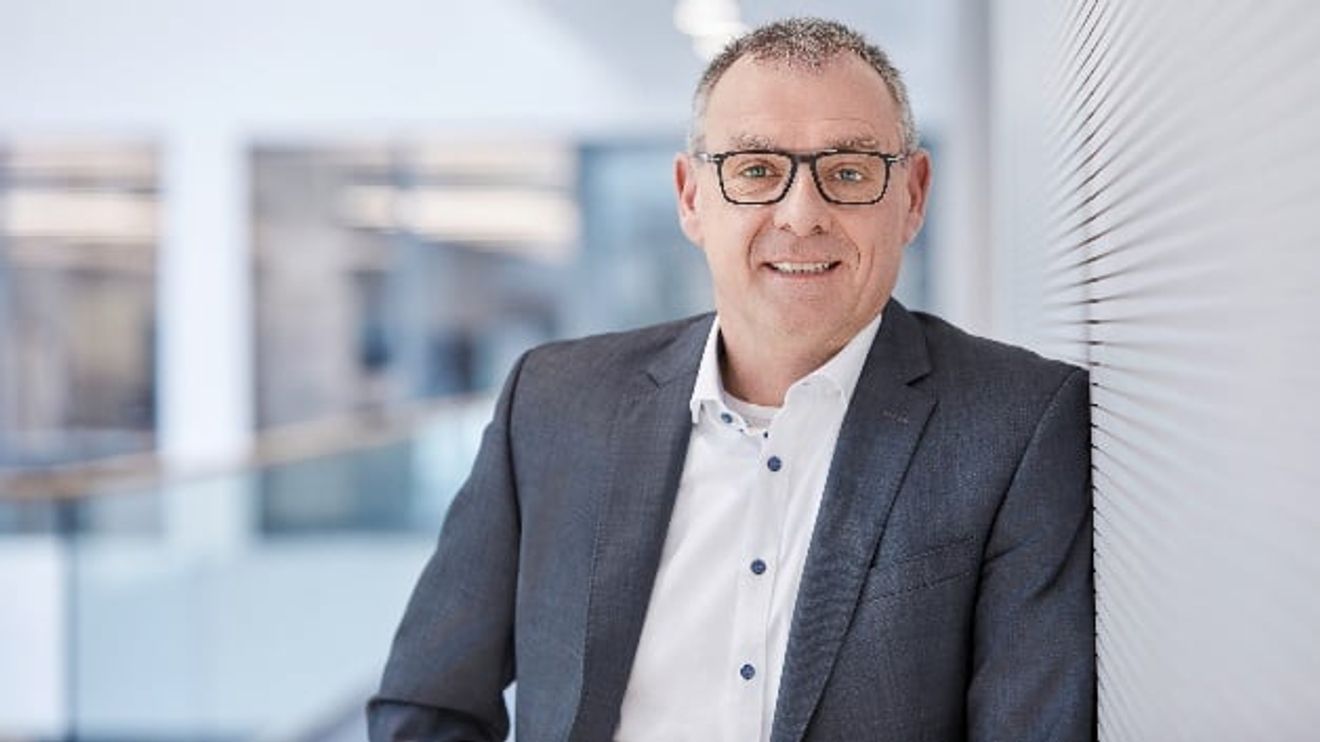
Congratulations on 100 years of Phoenix Contact! Looking back: What was the most significant technological development of your company?
Hans-Jürgen Koch: Spontaneous answer: the modular terminal block. It has shaped the Phoenix Contact brand and everyone knows it, at least in the field of electrical engineering. The terminal block was and is the basis for what Phoenix Contact is today. With its commercial success, it created the ideal conditions for the development of all other product divisions, such as device connection technology, industrial electronics and automation technology.
Is there an absolute 'bestseller' and what makes it so?
Koch: Phoenix Contact's success is based on the interaction between the electromechanical and electronics divisions. Of course, it all started with the terminal block, but all subsequent product divisions have been making a lasting contribution to the company's success for decades. Today, there is no longer one absolute 'bestseller'. The breadth of the product portfolio - from the device connection terminal to the web service - in the areas of energy, infrastructure, process and factory automation is the formula for success.
|
|
|---|
It's not all rosy in 100 years - what do you think was the most difficult time for the company?
Koch: 100 years is a long time. Personally, I have been lucky enough to experience this company up close for 32 years. From memory, the situation during the financial crisis in 2009 seems to me to be the most difficult time, as there was a drastic slump in the market, which resulted in short-time working across the board and considerable restrictions throughout the entire group of companies, the likes of which had never been seen before. However, if one compares this to the events of the Second World War, when the company had to relocate its headquarters from Essen to Blomberg in the Lipperland region due to bombing raids, the events and their consequences in 2009 seem rather harmless for those affected.
What does the roadmap for the next ten to 15 years look like?
Koch: Phoenix Contact will make its contribution to a more sustainable world in the next ten to 15 years and beyond. We are committed to the idea of fully electrifying the world by focusing our products and solutions on the efficient generation and intelligent distribution of renewable energy. We call this the "All Electric Society" - a world in which sufficient renewable energy will be available for everyone.
|
|
|---|
What technological trends do you see that are or will become important for Phoenix Contact?
Koch: The digitalization and automation of processes in industrial production as well as the energy and infrastructure sector are the drivers for the coming decades, as only through intelligent and efficient networking of components and processes can the necessary energy requirements of mankind be met and climate change be stopped at the same time. We don't have to reinvent ourselves, but rather consistently drive forward the networking of the world and everything in it. We at Phoenix Contact have been doing this for 100 years: We connect - mechanically, electrically and safely.
What do you think will be the biggest challenge in the next few years, in terms of business and/or technology?
Koch: The biggest challenge in the next few years, not only for Phoenix Contact, but also for all market competitors, is to find the necessary people to implement what we have said so far. Demographic change cannot be stopped. It is coming. That is why we need to learn even more about working decentrally in international teams. What's more, in areas that do not differentiate us from the market, such as the implementation of standards in our products, we should cooperate with our competitors instead of doing the same thing in parallel. This reduces the workload for everyone and conserves the dwindling capacities of the specialist personnel required.
|
|
|---|
The technological challenge in the coming years will be to make the networked world described above even more secure against cyberattacks. This will make the lifecycle management of products and components even more complex, as constant vigilance is required against a never-ending threat. In order to be able to act quickly and provide the many products with a security update, it is essential to rely on a standardized and scalable software platform. At Phoenix Contact, this is called PLCnext Technology and already meets the applicable security requirements. Incidentally, we share this with interested companies so that - as already mentioned - we can complete the non-differentiating mandatory tasks together and efficiently. Competition only begins in the application.
| 25 years of Computer&Automation |
|---|
|
It's not just Computer&Automation that has reason to celebrate this year - numerous companies in the industry are also celebrating anniversaries in 2023. And whether it's ten, 50 or even 100 years - they all share a sense of pride in what they have achieved. No company gets through time without ups and downs. Company representatives report on how individual companies experience their anniversary in an interview - available at www.computer-automation.de/jubilaeum Our anniversary edition will be published on August 7. Subscribe to our newsletter now and receive the e-paper of issue 8/2023 free of charge! |


You might also be interested in
Standard for digital twin in place
The IDTA has published version 3.0 of the specification for the asset administration shell information model. In four parts, the specification describes how companies can prepare and structure information in the asset administration shell.
 read more...
The e-paper of issue 05/23
Read which automation company congratulated the competition with a banner several meters in size, how the ODCA wants to bring DC technology to factories worldwide and why the OPC Foundation is reaching its limits in its push into the IT world.
read more..."A path through the zoo of standards"
The OPC Foundation used its traditional press conference at SPS to call for more cooperation between OT and IT. The implementation of OPC UA cloud interoperability by AWS and Microsoft shows where the path needs to go.
read more...EU Commission strives for pioneering role
In the race for uniform standards for the industry, the EU Commission believes that Europe must put up a stronger fight against competitors such as China.
read more...New Automation Management Board strengthened
New Automation, the training association for industrial companies in the field of automation technology, has expanded its board and set up new projects for young talent.
read more...Monitor and protect DC microgrids
Sustainable production using renewable energies begins with the establishment of an industrial DC grid. A multifunctional DC switching device is responsible for switching, protecting, monitoring and precharging DC sectors.
read more...The e-paper of issue 08/2024
How can data centers be cooled for AI? How successful is malware programmed with WormGPT? And how can virtualized control systems be integrated into production using TSN? Computer&Automation issue 08/2024 provides answers to these questions and...
read more...Frank Stührenberg hands over to Dirk Görlitzer
Frank Stührenberg will hand over the chairmanship of the Phoenix Contact management board to Dirk Görlitzer at the end of the year. Until then, there will be dual leadership.
read more...Frank Stührenberg hands over to Dirk Görlitzer
At the end of the year, Frank Stührenberg will hand over the position of CEO of Phoenix Contact to Dirk Görlitzer. Until then, there will be dual leadership.
read more...