
Follow up with Christian Eder
Investing in real time
At the recent embedded world, Congatec announced the acquisition of hypervisor manufacturer Real-Time-Systems (RTS). Christian Eder on the background to the first acquisition in the company's history.
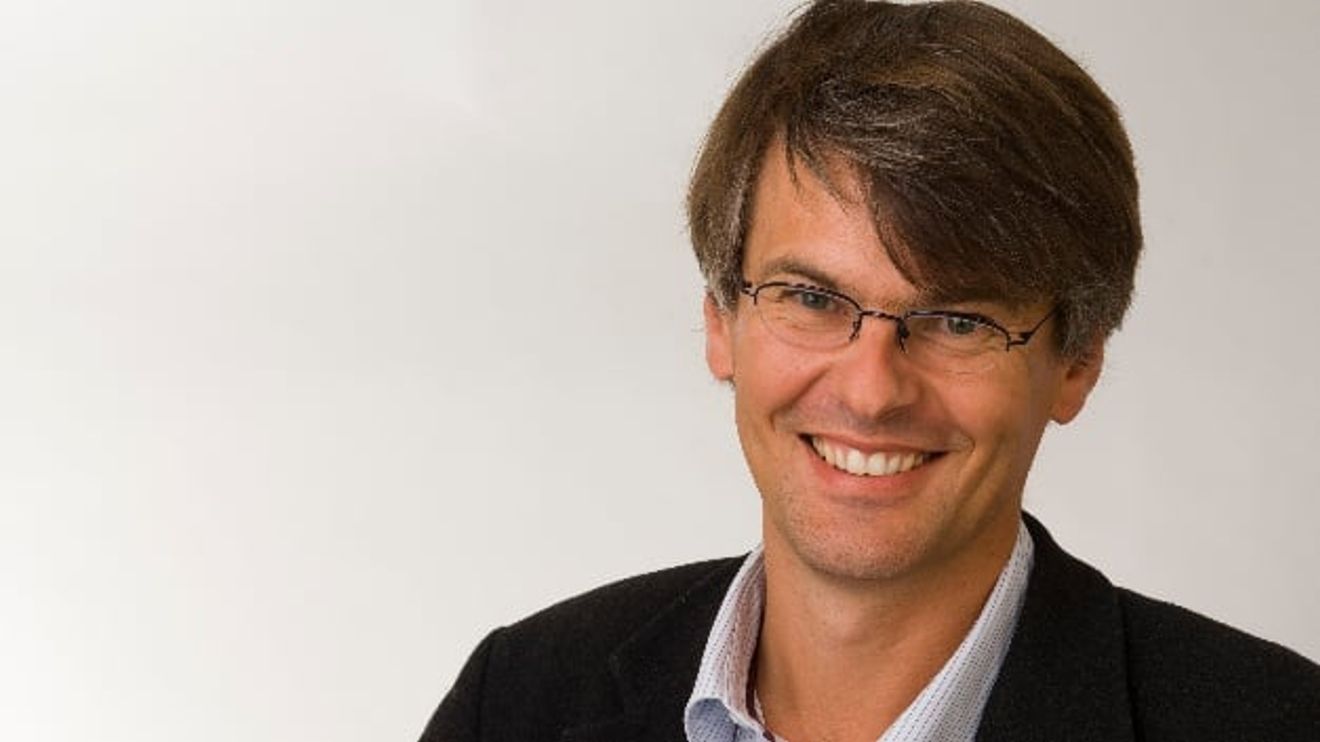
Mr. Eder, how is the integration of the company planned?
The company will remain in its current form and will continue to supply and support all computer system manufacturers. Real-Time Systems can now draw on Congatec's worldwide resources to promote the global distribution of the Real-Time Hypervisor. RTS Managing Director Gerd Lammers will also remain on board.
What can we expect in terms of technology?
With the RTS hypervisor, different operating systems can be run on a single hardware platform. The continuing strong trend towards multi-core technology and extended real-time capability makes the use of this technology more necessary than ever. With the acquisition, x86 hardware developers, BIOS and firmware engineers can now work closely with hypervisor developers to achieve the best possible real-time performance and determinism. Users in the fields of automation and medical technology in particular will benefit directly from this.
Can you name specific applications in automation?
Thanks to the increasing number of CPUs, customers can work in an increasingly modular way and develop virtual machines as functional modules, which are required for motion control of multiple axes or communication via real-time Ethernet, TSN and many other edge computing tasks, for example. In addition, end users can now also be provided with their own virtual machine for their operating system environment, which they can use exclusively for their specific tasks. For example, to synchronize a machine with the tasks of its multi-vendor factory. Such tasks regularly lie outside the primary functional scope of the OEM's control system and HMI. Nevertheless, OEMs must enable such Industry 4.0 interface functions today.
What distinguishes the RTS hypervisor from competitor solutions?
It runs on any x86 multicore system without any customization and supports all common real-time and general-purpose operating systems. Thanks to the so-called privileged mode for the operation of real-time operating systems, additional latencies due to virtualization are excluded and the hard real-time capability and determinism are retained. It is also easy to install and the existing device drivers, development tools and processes can continue to be used to supplement your own real-time applications with virtual machines for a gateway or an HMI.
No special development tools are required for the hypervisor itself. This makes development particularly secure for RTS users, as they can use the development tools and compilers provided by the manufacturer for each operating system. Due to the clear partitioning, the guest operating systems are usually not assigned emulated devices, but the real existing devices. This means that the existing device drivers can continue to be used without any adaptations.
Congatec has developed the 'Universal IoT Connector' together with other SGET companies. Another field of application for the hypervisor?
It is certainly very interesting to map this gateway logic in a virtual machine, as it can be easily ported. That's why we will of course also offer the Universal IoT Connector as a virtual machine. But this is not a must. Ultimately, customers have to decide for themselves how they want to get their data into the cloud. There are many possible solutions. However, as the UIC is a purely software-based standard to standardize the connection between hardware and cloud, it is predestined to be operated in a virtual machine that does not interfere with the real-time system.


You might also be interested in
Follow-up with Kevin Carlin, ADI
Entry into the IE business
With the new 'ADI Chronous' brand, Analog Devices wants to have a major say in Industrial Ethernet (IE) in the future. Kevin Carlin, Vice President Industrial Automation & Energy at ADI, explains exactly what this plan looks like.
 read more...
Follow-up with Dr. Jochen Schlick
Bogged down in individual projects
For the sixth time, the management consultancy Staufen has compiled the 'German Industry 4.0 Index' and surveyed more than 300 German industrial companies on the topic of digitalization. Dr. Jochen Schlick from Staufen Digital Neonex explains the...
read more...The Internet of Production
The Internet of Production (IoP) is based on the idea of enabling a new level of cross-domain collaboration. The Cluster of Excellence IoP at RWTH Aachen University is working to realize this vision. Rahman Jamal, member of the Industrial Advisory...
read more...Follow-up with Benjamin Häfner
The autonomous production system
Researchers from the fields of mechanical engineering, electrical engineering, information technology and computer science are developing an agile production system at KIT that adapts autonomously to changing product specifications. Project...
read more...Follow-up with Dr. Thomas Kuhn
An operating system for Industry 4.0
The three-year BMBF project 'Basic System Industry 4.0' came to an end on June 30, 2019. What goals were achieved? What can be transferred into practice? Where do we go from here? Project manager Dr. Thomas Kuhn gives his opinion.
read more...The interface to the motor
A year and a half ago, the encoder manufacturers Baumer, Hengstler and Kübler joined forces to establish an open single-cable solution between motor and drive with 'SCS open link'. What has become of it? Jonas Urlaub from Kübler takes a stand.
read more...The face of the FLC initiative
At SPS IPC Drives 2018, the OPC Foundation presented the 'Field Level Communication' initiative - FLC for short. Since the Hannover Messe, the initiative has had a director, Peter Lutz, who explains the background to the OPCF's new management...
read more...AI in the industry
How widespread is artificial intelligence in industry today? The ARC Advisory Group is currently getting to the bottom of this question with a study. Ebele Maduekwe explains the upcoming results in advance.
read more...Follow-up with Dr. Michael Hecker
From financial IT to the industry
GFT is actually at home in the financial sector. With the new 'Industry Solutions' business field, the company now wants to specifically address companies from the manufacturing sector that are still at the beginning of their digital transformation.
read more...