
Anniversary editorial
The question of trust
Technology is a wonderful thing. As a tool, it helps us with many things. However, skepticism is a constant companion of new technologies.
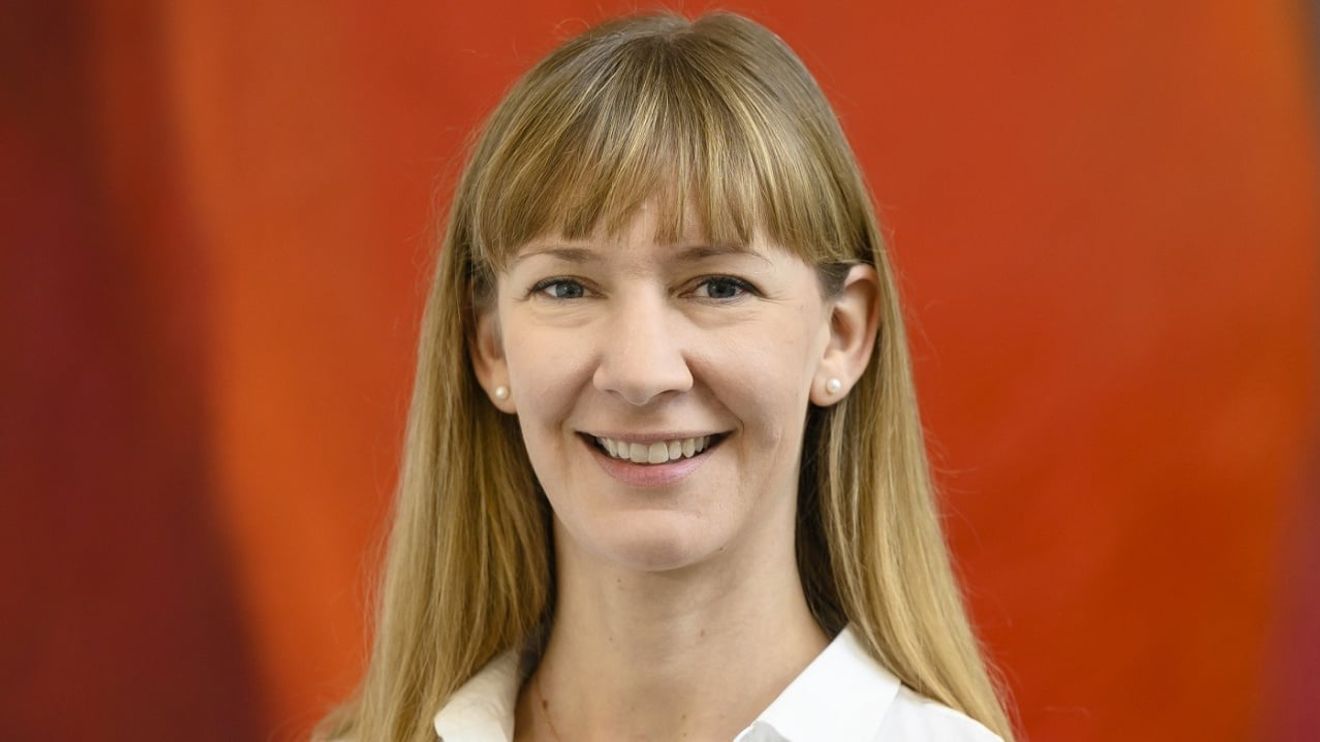
Andrea Gillhuber, Editor-in-Chief of Computer&Automation.
© WFMI am always fascinated by the demonstration of the high-voltage system at the Deutsches Museum in Munich: Arcs of light move purposefully through the room, the smell of ozone fills the air and a person sits calmly in a Faraday cage while 270,000 volts buzz around the sphere. A few meters below, visitors stand and watch the spectacle in amazement. What they all have in common is the confidence that nothing can happen to them - confidence in the technology and in the people who operate it.
Technology is a wonderful thing. Over the centuries, technological achievements have simplified people's lives. Just think of the industrial revolutions: In the first industrial revolution in the second half of the 18th century, mechanical processes were introduced. (The driving force was the steam engine. The advent of electricity and assembly line production at the beginning of the 20th century marked the second industrial revolution and ushered in mass production. The beginning of the 1970s and the introduction of the computer marked the start of the third industrial revolution and the automation of production facilities progressed rapidly. At the beginning of the 2000s, the fourth industrial revolution began: cyber-physical systems were used to link real objects and virtual processes - creating the smart factory.
It should not be forgotten that every advance also led to skepticism and debate in society. However, every revolution was followed by an economic upturn and technological progress made life easier or more flexible: from carriages to cars, from radio to streaming services, from telephones to smartphones. In addition, standardization bodies and legislation provided the necessary framework to protect users. This led to people gaining confidence - in technology and in the way they use it.
The fourth industrial revolution is also causing skepticism and debate in society: the advance of networking is turning people into "transparent citizens" and the increasing use of robots could result in job losses. And then there is artificial intelligence. Experts recently issued a highly publicized warning with just one sentence: "Reducing the risk of annihilation by AI should be a global priority alongside other risks to society, such as pandemics and nuclear war." Dystopias such as the Matrix, iRobot or Terminator were quickly invoked to underpin the potential danger of AI.
Some people will roll their eyes, but people's fears should be taken seriously. Questions need to be asked: Where does the skepticism come from? Are they perhaps right? And - fundamentally - do we really understand artificial intelligence at all? These are questions with which we confronted Prof. Dr. Matthias Spörrle (see page 28 in the e-paper). As a professor of business psychology with a research focus on 'Human decision-making processes in digital and economic contexts', he also assesses the potential dangers of AI: "The fact that people usurp power through tools is really nothing new. AI is also used in this way. So far, the danger has not come from the technology itself, but from those who misuse it."
And that brings us back to the beginning: do you trust the technology and the people who use it?
Your opinion on the subject: Write to Andrea Gillhuber


You might also be interested in
New Automation Management Board strengthened
New Automation, the training association for industrial companies in the field of automation technology, has expanded its board and set up new projects for young talent.
 read more...
Staufen study from the industry
Bosses must be coaches and mentors
The role of managers in industry is changing. Above all, managers need strong communication skills and empathy. What is the specific list of requirements for a modern manager today?
read more...The e-paper for the special issue
Communication & networking 09/24
Communication and networking form the backbone of industrial automation. It enables flexible production processes and creates the basis for innovations and new business models. The news is now available in this e-paper.
read more...Automated detection of damage to trains
No more overlooked damage: A project team at TH Wildau has optimized the inspection of passenger trains using AI-supported computer-visual techniques. The results of the "ESPEK" project are summarized by the research partners.
read more...The top 10 articles in August 2024
The top 10 articles from Computer&Automation in August 2024. Readers were most interested in these reports.
read more...The e-paper of issue 9/2024
The hype surrounding AI is inspiring, but the reality requires a sober approach to the technology. Computer&Automation 9/24 looks at topics relating to AI & security, the EU AI Act, secure IIoT projects and OPC UA FX "From the cloud to the...
read more...Robots become human
The World Robot Conference 2024 showed the world new versions of humanoid robots. The exhibition areas were dedicated to the topics of "Industrial Robots", "Service Robots", "Special Robots" and "Artificial Intelligence".
read more...Ankush Malhotra becomes new Group CEO
Ankush Malhotra has been appointed as the new Group CEO of the technology and automation company Element Logic. He succeeds Dag-Adler Blakseth, who co-founded the company almost 40 years ago.
read more...The future of warehouse work is robot-assisted
Modern robotic systems are key elements in making the day-to-day work of warehouse workers easier. Robotic solutions reduce the physical strain on employees, prevent errors and also increase efficiency.
read more...