

Harting
SPE and persistent hypotheses
Single Pair Ethernet is intended to close one of the last major gaps in a TCP/IP-oriented network world - the gap between classic IT and sensor technology. At the moment, there are still a few hypotheses in the air that are causing confusion.
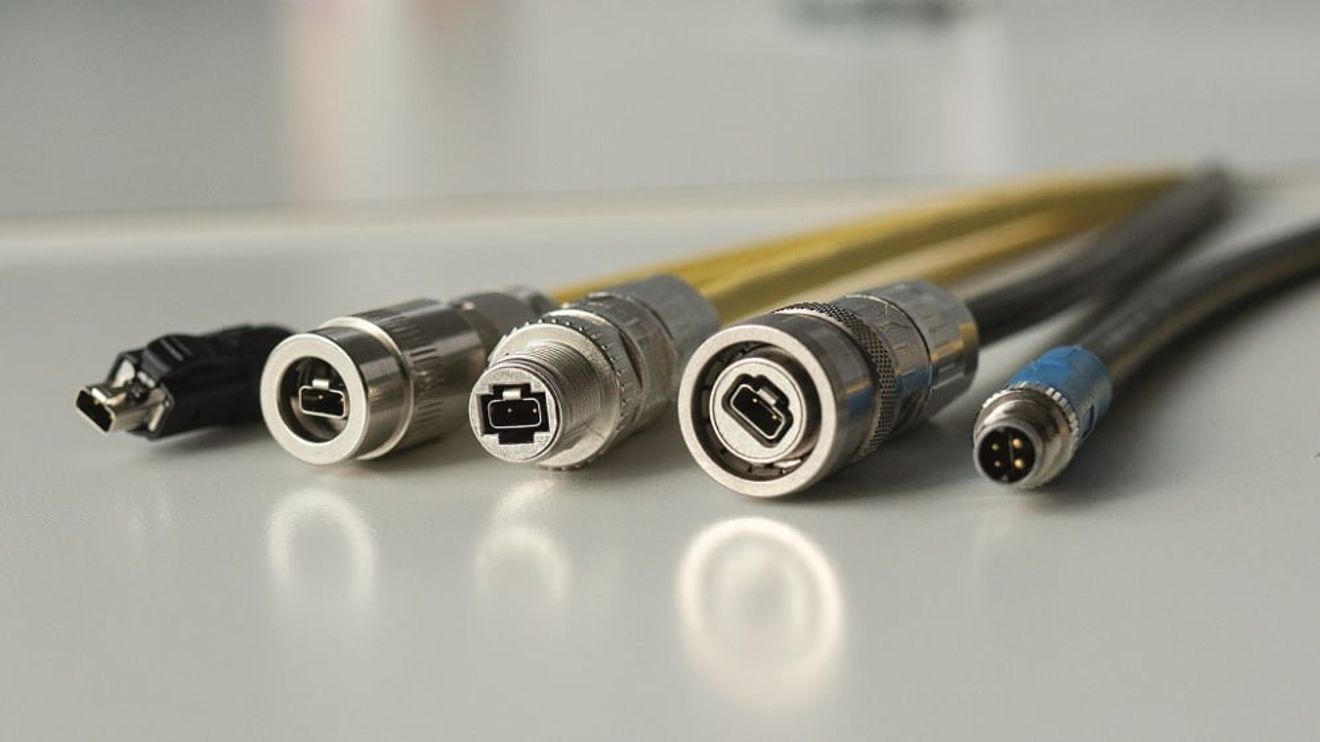
The reason is that there are two company networks that favor different mating faces. Single Pair Ethernet (SPE) is not a product of chance, but the answer to the question of what future automation solutions must look like in order to be successful on the market.
This question has particularly driven three sectors: the automotive industry, industrial automation and building automation. All three fields of application require unhindered access to sensor/actuator networks for the next step in their respective automation solutions. This is the only way to implement autonomous driving in cars, the end-to-end manufacturing process according to Industry 4.0 in industry and the intelligent building in building automation.
These considerations are driving the development of SPE - and nothing else! The fact that cabling is becoming simpler and connectors smaller is an additional positive effect, but not the cause of the SPE innovation.
But what will the realization or implementation of SPE look like in these three fields of application and what does this mean for cabling?
Three major fields of application
SPE must be implemented in the car simply, quickly and yet stably, sometimes under extreme operating conditions. For car manufacturers, this means simple control of all relevant components using SPE. The cabling for this is generally unshielded and uses specially developed connection technology. This connection technology is characterized by a simple design that combines the advantages of plug connectors and terminal technology and can be combined in blocks to save a lot of space. The first model series are already being supplied with SPE. In ten years' time, this technology will be standard and will have completely replaced today's CAN bus or comparable solutions.
The situation is basically similar in industrial automation. Here too, extreme conditions such as large temperature ranges to be covered, shock and vibration as well as IPx protection against dust and moisture play an important role in the design of the connection technology. However, shielded cabling is predominantly used in the industry in order to guarantee high interference immunity in the area of EMC. The design of the connectors for SPE in industrial automation is therefore based on robust shielded IP20 connectors through to IP65/67-protected variants in the widely used M12 and M8 designs.
What does SPE do in building automation? This is probably the most exciting story yet. This has to do with the fact that building automation systems include solutions such as KNX, LON, EchoNet and TRON. Their players will have to decide strategically how and to what extent they want to use SPE in the future.
Thanks to the innovation pressure of SPE in sensor technology, they will not be able to avoid SPE technology. However, it remains to be seen whether they will also use this technology change for more far-reaching changes, including completely Ethernet-based systems. Unshielded and shielded solutions are used for cabling, which are generally installed indoors and therefore do not need to be as robust as in industry, for example.
RJ45 has played a role here, if at all, as a service and test interface. Otherwise, terminal blocks with screw or clamp technology are used as connection technology.
Conclusion on SPE connection technology
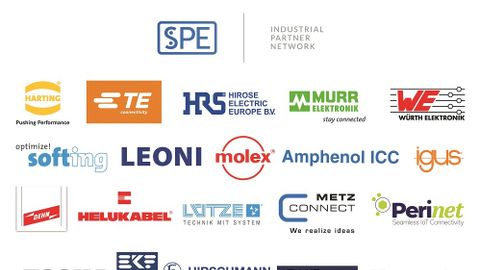
The 'SPE Industrial Partner Network' was launched in October 2019 and is based in Rahden, Westphalia. The network is an equal association of the companies presented, which promote Harting's single-pair Ethernet mating face technology as the basis for the rapid and successful growth of the IIoT. The bundling of competencies of the individual companies is intended to give users investment security in this technology. Other interested companies are welcome to join as new members.
© HartingIn all three areas - automotive, industry and buildings - the RJ45 plug connection plays no role in the introduction of SPE. In all three areas, there is also no RJ45 history that needs to be taken into account when introducing SPE. This means that considerations regarding the backwards compatibility of SPE connection technology with RJ45 cabling are of course permissible, but not really meaningful. There is simply a lack of applications.
Hypothesis number 1 - an SPE mating face must be backwards compatible with RJ45 - is therefore obsolete. However, a brief examination of the SPE application areas also shows this: Each has its own history and, above all, each has its own very special requirements profile. This leads to special designs in SPE connection technology, i.e. SPE mating faces. As a result, there will not be a single solution that is repeatedly demanded by various parties. Or to put it another way: there will be no SPE all-rounder connector! Rather, it is becoming clear that there will be three solutions for SPE plug faces:
- one for the car (or several, depending on the manufacturer)
- one for industry
- and one for building installations
To get to the bottom of the question as to why the connector manufacturers cannot 'agree' on a common mating face, let's take a closer look at the application fields of industry and buildings. For some time now, these two fields of application have met - at least as far as cabling is concerned - in the ISO/IEC 11801 series of standards, which has an industrial section in ISO/IEC 11801-3 and a section for building automation in ISO/IEC 11801-6.
This fact prompted the IEEE to ask ISO/IEC JTC 1/SC 25/WG 3 (cabling standardization group, which also develops the 11801 papers) for a recommendation for an SPE mating face, which led to a selection process within SC 25/WG 3 at the beginning of 2018.
As a basis for this selection process, SC 25/WG 3 drew up a requirements profile for SPE mating faces. Part of this requirement was the assurance of all manufacturers/applicants that, if successful, they would also standardize the mating face they submitted in order to guarantee mating compatibility and ensure patent freedom.
Various manufacturers - all of whom are also active in international standardization - took part in this selection process, presented their concepts and contributed their expertise to the discussion. At the end of this process, all SPE plug-in face concepts were put to a vote.
This election - International Ballot - was conducted according to ISO/IEC rules and 25 countries participated through their National Committees. Each country has only one vote.
Result in June 2018: There was an absolute majority for the SPE industrial mating face according to IEC 63171-6(Harting concept) as well as for the mating face according to IEC 63171-1 (CommScope concept) for building installation.
Hypothesis number 2: "The connector manufacturers cannot agree on an SPE mating face" is therefore not correct. Such an agreement has already been reached via international standardization at ISO/IEC in mid-2018.
Now that ISO/IEC has agreed on an SPE mating face for industry (IEC 63171-6) and a mating face for building installations (IEC 63171-1), work on the more advanced cabling standards is continuing step by step. The resolutions on the SPE mating face are being incorporated into the corresponding ISO/IEC, TIA and IEEE papers.
The good news for all users: The standardized SPE mating face for the industry in accordance with IEC 63171-6 will be adopted in all relevant cabling standards and made mandatory there. This applies in detail to
- ISO/IEC 11801-3 AMD-1: Information technology - Generic cabling for customer premises (Structured cabling) Part 3: Industry, AMD-1: SPE
- ANSI/TIA-1005-B Telecommunications Infrastructure Standard for Industrial Premises - SPE cabling
- IEC 61918 Ed 4.0 AMD-1: Industrial communication networks - Installation of communication networks in industrial premises, AMD-1 SPE
Process automation

There is another discussion: the importance of SPE for process automation (PA). Here there is the argument that everything is completely different in process automation.
It is true that PA occupies a certain special position within the broad spectrum of industrial automation. Process automation has a special requirements profile with its areas of application ranging from the oil and gas industry to the chemical and pharmaceutical sectors and mining. Among other things, this requirement profile is characterized by long distances, hence the 1000 m cable length in IEEE802.3cg. This in turn has an impact on the cross-sections of the copper cables, AWG 16, AWG 18, and therefore provides for connection blocks (terminal technology) in addition to classic plug connections for SPE.
Furthermore, explosion protection in accordance with IEC/EN 60079-0 and IEC/EN 60079-7 plays an important role. This means that in some PA applications, the connection technology must comply with intrinsic safety regulations, which in turn requires a special design. Solutions for remote power supply are also affected by this. Networking concepts with SPE in the PA provide for the operation of SPE switches in explosion-proof areas, for example. This in turn means higher performance requirements that cannot or can only partially be met by PoDL. As a result, providers of PA solutions will also resort to their own remote power supply concepts.
However, the question now is what market relevance process automation has for the development of IIoT and SPE: Process automation represents a single-digit percentage share in the concert of solutions for industrial automation. The special case of explosion protection is only a fraction of this.
And this also disproves the last hypothesis - that process automation determines the development of SPE.
Process automation is just one application for SPE in industry. Due to the special requirements of PA, SPE components also need to be adapted in some cases. PA is therefore not the pacemaker for SPE, but vice versa. SPE gives the PA the opportunity to implement innovation in the development of TCP/IP networks.
There has been a long discussion and many hypotheses have been put forward, causing uncertainty. It is time to clear up these hypotheses.
- SPE and SPE mating faces have nothing to do with RJ45.
- In the standardization process, a mating face for SPE applications in industry was selected from the various manufacturer concepts - IEC 63171-6.
- Process automation does not determine the development of SPE, it is the other way around.
Note: A second SPE alliance
The technology partnership between the companies Phoenix Contact, Weidmüller, Reichle & De Massari (R&M), Fluke Networks and Telegärtner for Single Pair Ethernet (SPE) has developed into an SPE System Alliance. They support Phoenix Contact's mating face technology, which has also been submitted for standardization. Datwyler, Kyland, Microchip Technology, Rosenberger, Sick, O-Ring, Draka/Prysmian Group and University4Industry have also joined the System Alliance this year.


You might also be interested in
RJ45 replaced
With the 'XTS' transport system, Beckhoff enables flexible machine concepts with highly individualized product transport. In the current generation, an Ethernet interface from Harting replaces the RJ45 interfaces of the computer cards. What are the...
 read more...
Is your patience wearing thin? Stefan Schönegger in conversation
With Single Pair Ethernet - SPE for short - a standardized Ethernet on a one-pair basis is currently being developed. However, two groups of companies - one led by Harting, the other by Phoenix Contact - favor competing mating faces for the standard.
read more...The top articles in July 2024
Innovative spirit and entrepreneurial thinking characterize the most-read articles from July. Find out more about competitive advantages through AI, click through award-winning developments and read more about model-based design and quantum sensor...
read more...New management for Asia-Pacific business
Mabel Low takes over the position of Managing Director and Corporate Regional Manager at Harting Singapore Pte. Ltd.
read more...Establishment of global headquarters in Switzerland
The Harting Technology Group, a provider of industrial connection technology, has announced that it will be bundling supra-regional top management positions in Switzerland to drive forward global management.
read more...Setting up a Global Headquarters in Switzerland
The Harting Technology Group, a provider of industrial connection technology, has announced that it will be bundling supra-regional top management positions in Switzerland to drive forward global management.
read more...Connection technology for fuel cells
The Harting Technology Group presents connection technology for fuel cells and hydrogen production as well as the AI-supported development of connectors in order to actively shape the All Electric Society.
read more...Chief Technology Officer leaves technology group
Dr. Kurt D. Bettenhausen, Chief Technology and Development Officer, is leaving the Harting Technology Group by mutual agreement. He will relinquish his office on March 1, 2024.
read more...Industrial Ethernet cable length soon also with SPE
Single Pair Ethernet is on the verge of a breakthrough - and is also being expanded with new solutions for longer cable lengths and higher transmission rates. Marian Dümke, Global Product Manager Harting T1 Industrial Single Pair Ethernet...
read more...