
IoT
No Industry 4.0 without test bench data
When it comes to the Industrial IoT, the focus is usually on machines and systems, whereas automated test systems tend to be neglected. National Instruments (NI), which has been focusing on automated test systems for some time, is preparing to change this.
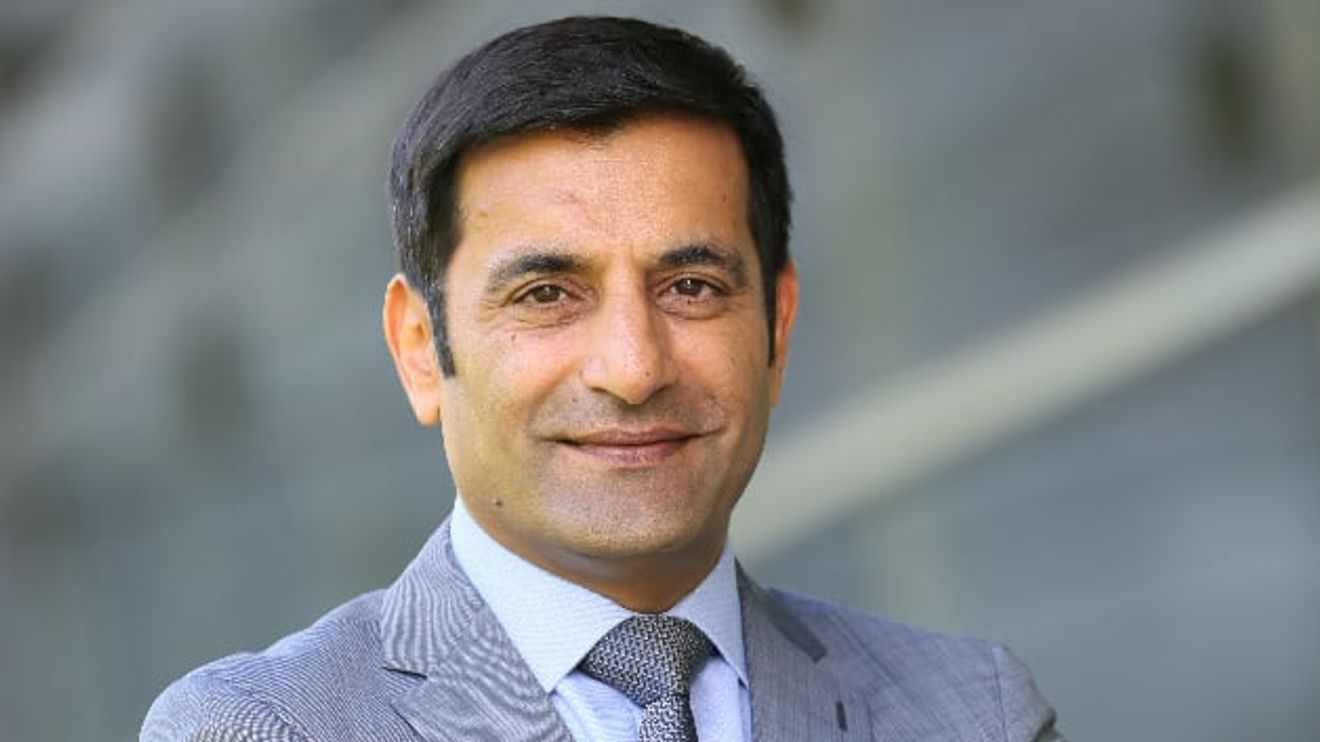
Rahman Jamal, Business & Technology Fellow at National Instruments, comments on this.
First of all, a trivial-sounding question: What do you understand by IoT?
Rahman Jamal: The topic of IoT is on everyone's lips, but there are very different perspectives on it, so your question is quite justified. We define the IoT as the networking of devices and systems that generate more and more data; it therefore also includes automated testing systems, provided they are networked.
What importance do you attach to the IoT for industrial production?
Rahman Jamal : Alongside 5G mobile communications and autonomous vehicles, we see the IoT as the most important technical trend with an impact on industry. We differentiate between two types of IoT: the IoT for commercial applications and the IIoT - Industrial IoT - for smart production, autonomous vehicles and energy supply via smart grids, to name just a few examples. In Germany, smart production is mainly understood to mean automated machines and systems, whereas automated test benches and production testing are not very much in focus. In our view, however, they are important, and an Industry 4.0 strategy without automated test benches and the inclusion of production test data is incomplete. Test asset management will be an integral part of Industry 4.0.
However, the development towards IoT is making design and testing increasingly complex. More and more functions are being mapped in software and are changing rapidly. So the question is: we know what IoT is doing to automated testing - but what can IoT do for automated testing?
A good question - what opportunities do you see?
Rahman Jamal : Automated test benches must be networked in the IIoT just like machines and systems; after all, they generate a lot of data that should be analyzed. We distinguish between different types of data, such as parameterization data, measurement data, application data of the tested product and status data of the test bench. This data can then be processed with IoT services, which is ultimately the added value of the IoT. And depending on the application, you can decide where this should take place: in the IoT cloud platform, in the ERP or MES solution or at the edge. If you ensure that the analytics software is designed for test data, there are many advantages. For example, the test data can also be correlated with production and design data. In addition, a wide variety of analyses can be carried out - from simple statistics to algorithms from artificial intelligence or machine learning processes. Common tools such as Python, R and Matlab can also be integrated into the workflow. The prerequisite for this is that the data is networked and can be viewed from different locations. But the test bench itself must also be on the test bench and monitored - IoT technologies can be used in this sense.
Commercial IoT platforms are now springing up like mushrooms. Instead of inventing everything yourself, you can benefit from them in the industry. Their range of tasks is as follows: They grant access to data and take care of so-called "data ingestion", i.e. the prioritization of data sources, the validation of different files and their meaningful forwarding; they manage endpoints and connectivity; they capture, check, prioritize and process data in different formats; they analyze and visualize data; and they develop and manage applications of IoT devices.
What requirements do automated testing systems need to meet in order to make all of this possible?
Rahman Jamal : At the moment, most automated test benches are not well networked, although they are increasingly distributed globally. They are then isolated solutions. There is also a proliferation of measuring device interfaces such as GPIB, LXI and serial protocols. Systems are often scattered all over the place and the user lacks an overview of where they are and what state they are in. Think of driver and software versions, hardware variants and all these things. In other words, system administration for distributed test systems is a real challenge.
This is where our "SystemLink" comes in, a middleware for the system, data and test management of test benches. SystemLink provides a central interface for the automation of tasks such as software distribution, remote device configuration and system status monitoring. It enables the networking and management of distributed NI and third-party systems from a single, centralized interface that users can access from anywhere.
What architecture does an automated test system need to have in order to be IIoT-ready?
Rahman Jamal : The basis for every single automated test bench is first of all a software-defined approach with a high degree of modularity. That is the be-all and end-all.
For testing, there is a tendency towards proprietary, organically grown centralized solutions. A well-structured modular test software architecture with test management, test code, measurement IP, device drivers, hardware abstraction layers, etc. would be an excellent basis for utilizing the many advantages of cloud computing, for example.
Based on the different data, the user can apply a wide range of services for automated testing, from simple messaging services to sophisticated deep learning and AI algorithms that optimize their workflow. It is no coincidence that the future is said to lie in the so-called "Internet of Services".
And on this basis, the user can then decide what he wants to move to the cloud, what he wants to pass on to the ERP systems, which reports should be generated, all the things that are important for business decisions.
National Instruments at embedded world 2019: Hall 4, Stand 108


You might also be interested in
Nine award categories for the first time
The embedded award recognizes outstanding innovations at the embedded world Exhibition&Conference. It is presented in nine specialist disciplines as part of a networking event on the first day of the trade fair.
 read more...
The knowledge hub of the embedded community
The embedded systems industry will meet from March 11 to 13. In seven exhibition halls, exhibitors in Nuremberg will provide information on hardware, software, services and tools. Two accompanying conferences, expert panels and exhibitor forums will...
read more...embedded world 2019 - Summary & outlook
Interview with trade fair director Benedikt Weyerer
What makes embedded world special? How did embedded world 2019 go and what is planned for the 2020 trade fair? Benedikt Weyerer from the trade fair organizer - Nürnberg Messe - in conversation with Ingo Kuss on the 'VIP stage'.
read more...embedded world 2019 / Electromobility
Interview with Formula E racing driver Pascal Wehrlein
Formula E racing driver Pascal Wehrlein was a guest on the 'VIP stage' powered by Markt&Technik and Elektronik at embedded world 2019. Matthäus Hose and Ingo Kuss asked him about Playstation tips and technical innovations in electromobility.
read more...Panel discussion on embedded vision & machine learning
At embedded world 2019, a panel of renowned experts discussed the topic of "Embedded Vision & Machine Learning: new architectures and technologies boosting (new) vision applications." The highlights in the video.
read more...The embedded world 2019 in picture and sound
The second-highest number of visitors in the history of embedded world, more exhibitors, more exhibition space, the new Start-up Area, numerous expert discussions in the forums, the 10th Student Day and around 2000 participants at the two...
read more...Records broken again
The 17th edition of embedded world set new records in terms of exhibitors and exhibition space. At around 31,000, there were slightly fewer visitors than in 2018 - but this is the second-best visitor result in the event's history. The hype topic of...
read more...A rendezvous for marketing decision-makers
13. MEDIA SUMMIT 2019
On February 26, 2019, the 13th Media Summit took place at embedded world, where media and marketing experts from the electronics industry came together. It was about nothing less than the future.
read more...Review of embedded world 2019
More exhibitors, more space and the second-best visitor result: this is how embedded world 2019 can be summarized in figures. WEKA Fachmedien has collected impressions of the trade fair in a series of pictures.
read more...