

Phoenix Contact
Information transparency along the value chain
In the future, it will not only be about what and how quickly a factory delivers, but also how it produces. This is because purchasing decisions are increasingly dependent on various criteria.

This includes the use of green energy, the degree ofCO2 neutrality and the scope of resource-saving processes and recycling concepts. But how can resource-conserving production be achieved?
As a manufacturing company, Phoenix Contact aligns its business models with sustainable business practices. This includes the obligation to use resources as consciously as possible. The use of recycled materials and the development of smart recycling concepts, for example, are intended to successively maximize the conservation of resources. Environmentally friendly materials are used in the packaging, and all work steps and production processes are reviewed and continuously optimized to save valuable resources - such as water - and avoid hazardous substances. The aim is to establish an effective circular economy that is ecologically and economically beneficial for all parties involved.
When it comes to products and solutions, the automation specialist pays attention to sustainability in all process steps - from development to production and logistics to recycling. The focus is on durability, repair and reuse. In future, the environmental footprint of products will be reflected in the Product Environmental Footprint (PEF), which will be reported from this year onwards. This creates a high level of transparency, for example with regard to theCO2 emissions of a product over the course of its entire life cycle.
Digitalization as an important foundation
Sustainability in the production sector can be viewed from two perspectives: that of the production manager and that of the supplier. After the coronavirus years and the associated supply bottlenecks, sustainability and the 'net zero factory' represent a major challenge for production managers: Customers' expectations of product transparency are growing. In addition, the targets for reducing emissions and increasing efficiency are also increasing. Phoenix Contact has set itself the goal of achievingCO2-neutral production by 2030. Without the preparatory work that has been carried out in recent years with regard to digitalization, this task would be much more difficult to achieve.

The Data Collection Box makes it possible to collect digital data from production without disrupting ongoing processes.
© Phoenix ContactThe systems installed in the production facilities permanently supply data on their status. Lines and workstations that do not have interfaces are integrated into the infrastructure via data collection boxes. The connection is largely made via the MQTT protocol in conjunction with a PLCnext controller as an IoT gateway to transfer sensor data directly from the machine to the microservice architecture. In this way, employees can access energy consumption almost everywhere. In 2022 alone, the Manufacturing Data Support team trained the neural networks for over 500 hours. The neural networks then use this data to calculate operating states or anomalies (see image).
Networking production and building technology
The closer cooperation with Facility Management also makes a big difference. By jointly reviewing energy consumption, employees from both areas are constantly finding new potential for reducing peaks in electricity consumption. If, for example, the ovens in SMT production are ramped up, Facility Management takes countermeasures via the building technology. Large consumers, such as the air conditioning systems, can be temporarily throttled back, helping to limit total power consumption at the site to 2.1 MW. This is only possible because production and building technology are fully networked with each other. All information comes together in the IoT-based building management system Emalytics - from the motor power of the absorber for the building air conditioning to the fill level of the coffee machines and the energy consumption of the injection molding machines (see image).

With the IoT-based management platform Emalytics, Phoenix Contact is helping to break up the traditional structures of building automation and create added value for intelligent buildings.
© Phoenix ContactHowever, increasing efficiency alone is not enough to make the Bad Pyrmont siteCO2-neutral. Based on the available data, the participants therefore simulated the entire site with various scenarios.
This enabled them to identify the key aspects of the brownfield transformation: In addition to local energy generation through renewable plants - such as photovoltaics - this includes the conversion and electrification of the heating and cooling supply.
Use of AI for process optimization
The requirements of end customers are increasingly being shaped by sustainability criteria: be it the cradle-to-cradle approach, which requires a continuous and consistent circular economy, or thecarbon footprint generated by a machine, which has an impact on the entirecarbon footprint. For suppliers, this means that the subsequent energy consumption must already be taken into account when designing a machine. This begins with the selection of efficient components and technologies, which, for example, produce less waste heat due to better efficiency and do not require additional components for cooling. Another aspect to be mentioned is the engineering of the programs - for example process and product twins - which must be taken into account so that optimal automation processes can be created. Energy recovery through recuperation also improves the energy balance.
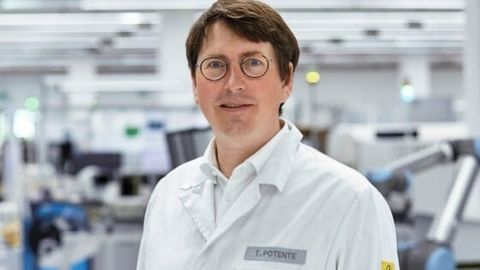
The author: Dr. Till Potente is Vice President Operations & Sustainability IMA at Phoenix Contact Electronics in Bad Pyrmont.
© Phoenix Contactmachine is supported by artificial intelligence (AI). Machine learning (ML) can be used to detect anomalies and derive potential for improvement. This not only enables predictive maintenance, but also the significant optimization of processes during operation. As a result, the machine produces more resource-efficiently and product rejects are reduced, which in turn has a positive effect on energy and material consumption per product. However, exploiting this potential for improvement requires a high level of existing information transparency. For example, the status of a system must be known at all times so that adjustments can be made if necessary. Dashboards, which employees can access remotely, are available to machine operators in this context.
In addition to the approaches described above, transparency is required along the entire supply chain, as sustainable production can only be established with information on the origin of the materials used, their environmental impact, social standards and the existingcarbon footprint.
Data collection with the Data Collection Box
Digitalization is a basic prerequisite for the sustainable manufacture of products and the sustainable operation of machines and systems. If this is already largely taken into account for new assets, operators are faced with the question of whether and how existing applications can be retrofitted accordingly. Collecting the necessary OT data proves to be difficult, especially for existing systems, because the required interfaces are often not available or a conversion of the system is associated with certificate losses and technical risks.
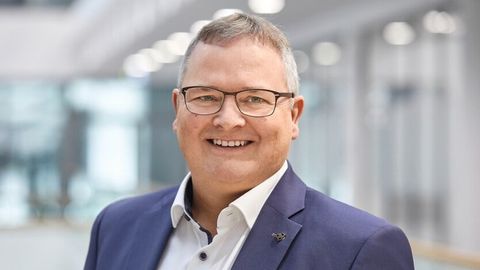
The author: Frank Woortmann is Vice President Vertical Market Management Factory Automation IMA at Phoenix Contact Electronics in Bad Pyrmont.
© Phoenix ContactThis can lead to unplanned downtimes. With this in mind, Phoenix Contact has developed the aforementioned Data Collection Box, which can be used to record extensive energy and process data without affecting ongoing operations. Thanks to its modular and compact design, the solution can be integrated into existing systems. The collected data is usually stored locally, but can also be transferred to IT or cloud services - such as Proficloud.io - with minor adjustments. This means that nothing stands in the way of optimizing products, machines and systems in terms of efficiency and sustainability.
On the topic: Direct current in industry
Sustainability begins with the correct use of DC technology. As one of 39 partners from industry and research, Phoenix Contact is therefore participating in the ZVEI's DC Industry 2 research project, which is funded by the German Federal Ministry for Economic Affairs and Climate Protection. In view of the necessary energy transition in industrial production and the associated maximum use of renewable energies, the project is aimed at the safe and robust energy supply of production plants with direct current.
As part of DC Industry 2, Phoenix Contact is involved in national and international committees and is conducting intensive research into the use of industrial direct current networks in factory automation with a focus on future-proof electrical installations. For example, a new building is being constructed at the Blomberg site, which has its own DC power grid. The electricity generated by photovoltaic systems supplies parts of the company's own mechanical engineering directly with energy, among other things. The company's own products are used for this. Based on this experience, further DC-capable components are also being developed.
Reading tip: Phoenix Contact's advertising in transition


You might also be interested in
Direct current research project
DC-INDUSTRIE2 successfully completed
The DC-INDUSTRIE2 research project came to an end after seven years. The project investigated the potential of direct current technology for industrial production facilities. A follow-up project is already underway.
 read more...
Ready for remote access?
IIoT is often used as a collective term for the changes in the mechanical engineering market. But what criteria must IIoT connectivity meet, particularly with regard to remote access to machines?
read more...New Automation Management Board strengthened
New Automation, the training association for industrial companies in the field of automation technology, has expanded its board and set up new projects for young talent.
read more...Monitor and protect DC microgrids
Sustainable production using renewable energies begins with the establishment of an industrial DC grid. A multifunctional DC switching device is responsible for switching, protecting, monitoring and precharging DC sectors.
read more...The e-paper of issue 08/2024
How can data centers be cooled for AI? How successful is malware programmed with WormGPT? And how can virtualized control systems be integrated into production using TSN? Computer&Automation issue 08/2024 provides answers to these questions and...
read more...Frank Stührenberg hands over to Dirk Görlitzer
Frank Stührenberg will hand over the chairmanship of the Phoenix Contact management board to Dirk Görlitzer at the end of the year. Until then, there will be dual leadership.
read more...Frank Stührenberg hands over to Dirk Görlitzer
At the end of the year, Frank Stührenberg will hand over the position of CEO of Phoenix Contact to Dirk Görlitzer. Until then, there will be dual leadership.
read more...New production facility in Mexico
In order to meet the growth potential of the North American market, Phoenix Contact is planning a new building for electronic and electromechanical production in Mexico. Production is scheduled to start after the first construction phase at the end...
read more...The top articles in April 2024
The most-read articles in April demonstrate the innovative strength of the automation industry and its ability to adapt new technologies.
read more...