

followed up! - with Rainer Brehm, Siemens
An All Automation Society?
Industrial automation has experienced an enormous upswing in the last 25 years. But where exactly is automation today and where should or must it be in the future? Rainer Brehm takes a stand in this interview.
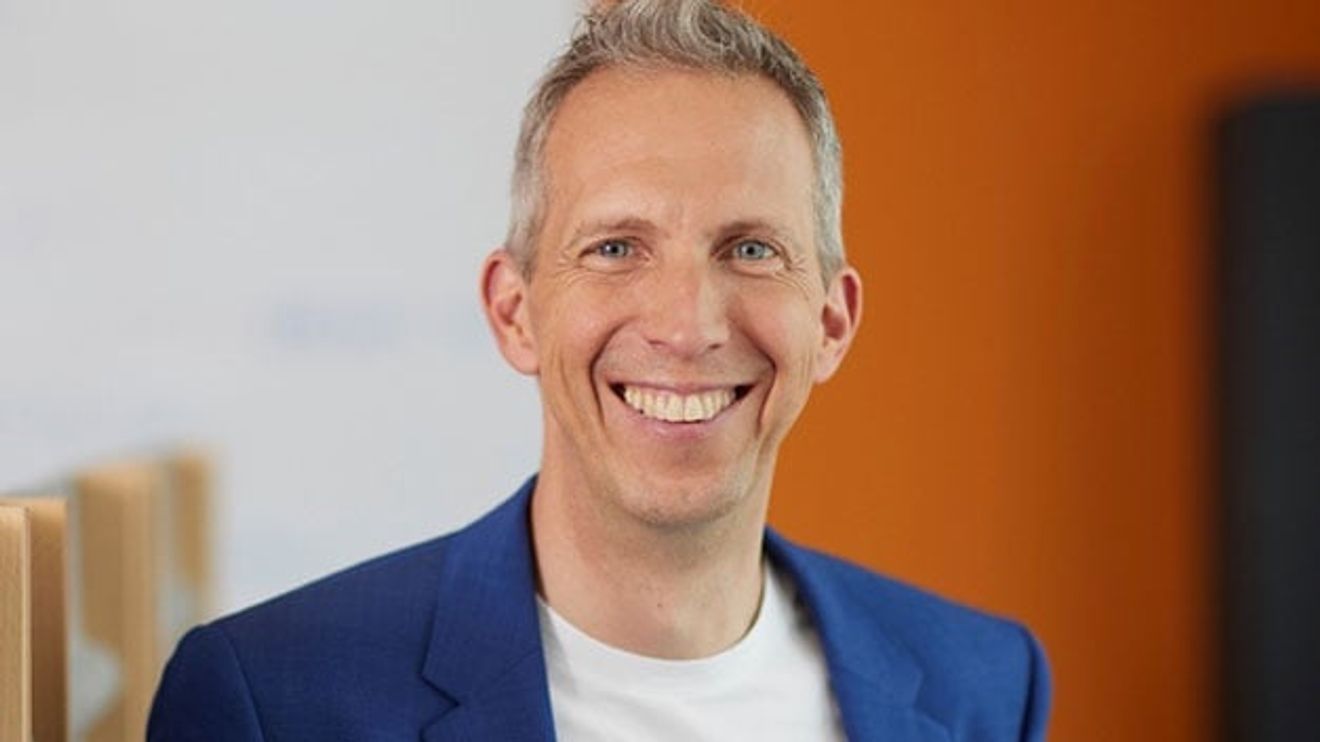
Mr. Brehm, looking back 25 years, would you have thought that industrial automation would become such a success story?
Rainer Brehm: When I programmed my first control system 27 years ago, I couldn't have imagined it. Back then, programming was not as easy and convenient as it is today. It was only with concepts such as Totally Integrated Automation that automation became more consistent and simpler. The German mechanical engineering and automotive industries drove this development forward and recognized the benefits of integrated automation. For me, their inventiveness and entrepreneurship are the success factors for the development of automation in Germany.
At the SPS in November, you said that automation is the lever for shaping the challenges of the future. - What do you mean by that?
Brehm: There are many areas in which automation can shape the future. Three examples.
Firstly, sustainability. At the Hannover Messe, we presented a vertical farming exhibit in which 10,000 heads of lettuce are growing. Automation ensures that the lettuce grows in a controlled environment, without pesticides and with significantly less water. This exhibit is now at our Munich headquarters and continues to produce sustainable lettuce and herbs, close to the consumer and without any transportation, in this case for the canteen at the site.
Secondly, the circular economy. One of my goals is to automate repairs. To save resources, we need to move from a throwaway mentality to a repair culture. This is important in the area of batteries, for example: If just one cell of an electric car battery is broken, it should be possible to replace it in future without having to dispose of the entire battery. Car batteries also contain substances that are hazardous to humans. If we can automate the repair process, this will protect people from high voltages and hazardous substances.
And this brings us to the third example: skilled workers are scarce in many areas, and this is where automation in production can provide increasing support. Robots, for example, not only take on repetitive tasks, but also intervene when humans are unable to perform a task. The challenge here is that automation has to solve tasks that are unpredictable and therefore cannot be programmed in advance.
How do you want to get the younger generation interested in your vision?
Brehm : With its ease of use and the ability to offer apps via a platform, the smartphone has revolutionized communication. Entire developer communities are now developing apps and offering users added value. I see a similar revolution for the industry. For us, this means that we are integrating more and more IT into OT in the industrial environment. Many of our solutions are developing in the direction of "IT-like" engineering, for example, and we will need a lot of IT talent for this in the future. I think we give young people the opportunity to work on the most important solutions for the sustainable industry of tomorrow. I think it's more valuable to use AI to make production processes more efficient than to use AI to place the right advertising on a website.
At the moment, electrification is often promoted under the slogan "All Electric Society" as the savior for the problems of the future. Don't we need an "All Automation Society" instead?
Brehm : For an adaptable industry of the future, we need electrification, automation and digitalization. Intelligent electrification is the basis. Automation already provides the data that can be used to optimize production and make it more efficient. In the field of digitalization, we need to make better and more intensive use of this data.
Siemens advertising in transition


You might also be interested in
followed up! - with Dr. Gunther Kegel
"Recognizably alien to the industry"
More and more regulations and bureaucracy are being imposed on companies. In an interview, ZVEI President Dr. Gunther Kegel criticizes politicians and calls for consistent action.
 read more...
Interview with Frank Stührenberg
A question of balance
In this interview, Frank Stührenberg, CEO of Phoenix Contact, talks about the future of energy supply, value-oriented action, competition from China and what excuses he will not accept when it comes to the further development of his company.
read more...followed up! - at Senseye/Siemens
AI in predictive maintenance
Senseye has been a wholly owned subsidiary of Siemens since summer 2022. Together, they want to drive forward AI-based solutions for predictive maintenance in all production plants and locations.
read more...OPC UA - "the" link between OT and IT?
OPC technology can look back on a 28-year history. Often decried as an unsustainable communication standard, it has written an unparalleled success story to date with 930 members and as an established communication standard in 105 industries.
read more...Interview with Stefan Schönegger, B&R
"There will be no either-or"
The programmable logic controller - PLC for short - has been around for 55 years. How has the controller changed since then and where will it go from here? Stefan Schönegger, responsible for the Controls division at B&R, provides an outlook in...
read more...25 years of Computer&Automation - The e-paper
For 25 years, Computer&Automation has accompanied the growing influence of IT in automation technology. Ultimately, IT and automation can no longer be clearly separated. In this anniversary issue, you can read about the importance that...
read more...followed up! - with Christoph Müller
IoT - from a beacon of hope to a disaster?
Everyone is talking about the Industrial Internet of Things. But how is it being implemented? Are there new business models? Was or is the hype justified? An assessment by Christoph Müller, NXTGN Solutions.
read more...followed up! - with Dr. Thomas Kuhn
From theory to practice
As part of the research project "BaSys - Basis System Industrie 4.0", Fraunhofer IESE and its partners want to enable companies to get started with Industrie 4.0 solutions. Dr. Thomas Kuhn, Division Manager Embedded Systems at Fraunhofer IESE,...
read more...Check with B. Böhrer, Logiccloud
Arrived in business
A year ago, Bernhard Böhrer founded the company Logiccloud with its product of the same name; the market launch took place with the SPS in November. The CEO explains the next steps.
read more...