
Follow-up with Prof. Roman Dumitrescu
The work of the future
The 'Work 4.0' project aims to identify and overcome the challenges of a digitalized working world. The project will enter its next funding phase in mid-October. Prof. Roman Dumitrescu provides information on what has been achieved so far and the goals for the future.
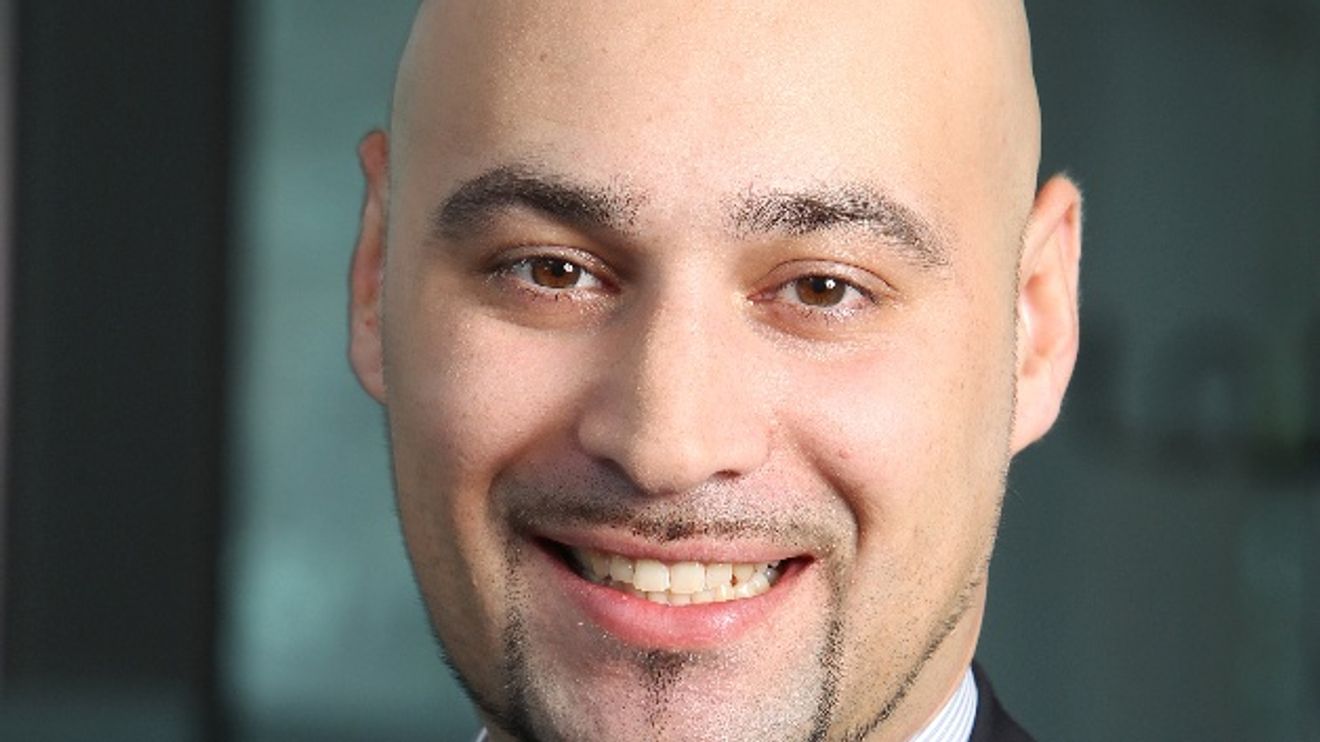
Prof. Dumitrescu, what was the motivation behind the 'Work 4.0' project?
Roman Dumitrescu: In the first funding phase of it's OWL since 2012, we realized that the introduction of new technologies doesn't work if employees don't accept them. We had to learn that digital transformation means more than just introducing new technologies. To a large extent, it affects the people who are supposed to work with it. New technologies are rejected if people do not understand them or why they are being introduced into the operational process. For these reasons, we included the topic of 'Work 4.0' in our strategy in 2016. In five pilot projects, research institutions worked together with company management, production management, HR, employees, the works council and trade unions to find out how the digital transformation of a company can succeed for everyone.
What are the findings from the first phase of the project?
We have noticed a great deal of interest in the companies in actively helping to shape the working world of the future. Together, we have worked on specific areas of Work 4.0. For example, on the development and introduction of digital assistance systems or a vocational qualification series for employees in the manufacturing industry. It has become clear that companies need to find their own individual path. Technical solutions must be adapted to the individual requirements of the company and employees must be involved in the introduction from the outset.
What are the goals for the funding phase that is now starting?
The aim of the continuation is to develop new technologies for SMEs. New technological challenges such as autonomous systems, dynamically networked systems, product-service systems and socio-technical systems will arise in the future. Key topics include artificial intelligence, digital platforms and Work 4.0. One example is the Aware project, where we are developing practical solutions for shaping a digitalized working world. This involves new approaches to leadership and personnel development, learning platforms and the user-friendliness of assistance systems. For example, Weidmüller is researching how augmented and virtual reality can be used in vocational training to enable individualized learning. Benteler and Claas are developing a joint learning platform.
The results and experiences are to be made available to as many companies in our cluster as possible, especially small and medium-sized enterprises. These can develop and introduce new approaches with transfer vouchers from the state.
Who are the project partners?
The project partners are IG Metall, Bielefeld and Paderborn Universities, OWL University, Bielefeld University of Applied Sciences, Fraunhofer IEM and Fraunhofer IOSB-INA. The project is managed by it's OWL Cluster Management. This broad participation enables us to make current research results from engineering and computer science, as well as from work and organizational psychology, available to companies. The companies involved from industry are Weidmüller, Hettich, Lenze, Miele, Claas, Benteler and Bosch/Rexroth. They will create and test specific applications in pilot projects.
Do you think the German education system is equipped for the coming 'Work 4.0' working world?
The most important prerequisite for Work 4.0 is qualification. The training regulations for the metal and electrical professions have now been adapted to the new challenges of Industry 4.0. The universities in Ostwestfalen-Lippe have also created 23 new degree courses with our companies over the past few years, for example in the it's OWL cluster of excellence, in which new technologies and interdisciplinary thinking are taught with a high level of application and practical relevance - in some cases also on a part-time basis.


You might also be interested in
Dekra occupational safety report 2018/2019
Employers do too little to combat stress
The majority of medium-sized companies ignore legal regulations on stress and burnout prevention. Only four out of ten companies carry out the legally required psychological risk assessment to prevent stress-related illnesses.
 read more...
Follow-up with Kevin Carlin, ADI
Entry into the IE business
With the new 'ADI Chronous' brand, Analog Devices wants to have a major say in Industrial Ethernet (IE) in the future. Kevin Carlin, Vice President Industrial Automation & Energy at ADI, explains exactly what this plan looks like.
read more...Follow-up with Dr. Jochen Schlick
Bogged down in individual projects
For the sixth time, the management consultancy Staufen has compiled the 'German Industry 4.0 Index' and surveyed more than 300 German industrial companies on the topic of digitalization. Dr. Jochen Schlick from Staufen Digital Neonex explains the...
read more...The Internet of Production
The Internet of Production (IoP) is based on the idea of enabling a new level of cross-domain collaboration. The Cluster of Excellence IoP at RWTH Aachen University is working to realize this vision. Rahman Jamal, member of the Industrial Advisory...
read more...Follow-up with Benjamin Häfner
The autonomous production system
Researchers from the fields of mechanical engineering, electrical engineering, information technology and computer science are developing an agile production system at KIT that adapts autonomously to changing product specifications. Project...
read more...Follow-up with Dr. Thomas Kuhn
An operating system for Industry 4.0
The three-year BMBF project 'Basic System Industry 4.0' came to an end on June 30, 2019. What goals were achieved? What can be transferred into practice? Where do we go from here? Project manager Dr. Thomas Kuhn gives his opinion.
read more...The interface to the motor
A year and a half ago, the encoder manufacturers Baumer, Hengstler and Kübler joined forces to establish an open single-cable solution between motor and drive with 'SCS open link'. What has become of it? Jonas Urlaub from Kübler takes a stand.
read more...The face of the FLC initiative
At SPS IPC Drives 2018, the OPC Foundation presented the 'Field Level Communication' initiative - FLC for short. Since the Hannover Messe, the initiative has had a director, Peter Lutz, who explains the background to the OPCF's new management...
read more...AI in the industry
How widespread is artificial intelligence in industry today? The ARC Advisory Group is currently getting to the bottom of this question with a study. Ebele Maduekwe explains the upcoming results in advance.
read more...