
Quarterly figures Q1/2025
Siemens reports jump in profits, automation continues to weaken
The first quarter of fiscal year 2025 brings profit surge for Siemens: revenue up 3%, net incomer up 52% – factory automation remains weak.
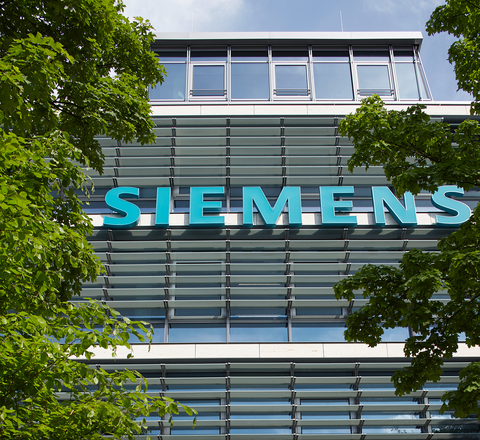
Siemens has reported a solid start to fiscal year 2025. In the first quarter, which ended on December 31, 2024, revenue grew by 3% on a comparable basis to €18.4 billion (Q1 2024: €17.7 billion). However, order intake declined by 8% to €20.1 billion (Q1 2024: €21.6 billion). The book-to-bill ratio reached a solid 1.09. The order backlog reached a record high of €118 billion at the end of the first quarter of the fiscal year.
The industrial business reported an operating profit of €2.5 billion, down from €2.7 billion in the previous year. The profit margin in the industrial business decreased from 15.8% in Q1 2024 to 14.1%.
A particularly strong increase was seen in free cash flow at the group level, which rose to €1.6 billion (Q1 2024: €1.0 billion). This increase was primarily driven by the strong performance of the industrial business, which contributed €1.7 billion in free cash flow (Q1 2024: €1.3 billion).
Boosted by a net gain of €2.1 billion from the sale of Innomotics, Siemens' net income surged by 52% to €3.9 billion (Q1 2024: €2.5 billion). This exceptionally strong performance was largely driven by the Innomotics transaction.
The outlook for fiscal year 2025 has been confirmed. Additionally, the virtual Annual General Meeting will vote on a proposed dividend of €5.20 per share for fiscal year 2024, an increase from the previous year’s dividend of €4.70 per share (FY 2023).
»Our strong start to fiscal year 2025 creates clear momentum for continuous value creation for our stakeholders. Our technologies enable customers to connect the real and digital worlds, enhancing their competitiveness, resilience, and sustainability. Through our leadership in industrial AI, we are making tangible contributions in practice. We see strong momentum in this area,« said CEO Dr. Roland Busch, commenting on the results.
Digital Industries: Factory Automation remains weak
The Digital Industries division recorded a significant increase in order intake, driven by growth in both the software and automation businesses. Geographically, order intake increased across all reporting regions, with the Americas seeing the strongest growth. In Asia and Australia, growth was primarily driven by the automation business. For the first time in two years, the book-to-bill ratio exceeded 1 again.
Revenue performance was mixed: While the software business showed solid growth, this was offset by a substantial decline in automation revenue. In particular, continued inventory reductions by customers led to a significant drop in revenue in the factory automation business. Geographically, revenue developed unevenly—while the Americas recorded growth, revenue declined in all other reporting regions.
The weak performance in automation negatively impacted profitability. Lower capacity utilization amid declining revenue weighed on margins. Additionally, higher personnel restructuring costs further reduced earnings.
Smart Infrastructure: 'Electrification' and 'Electrical Products' drive growth
The Smart Infrastructure division saw order intake grow across all business areas. The biggest contribution came from the ‘Electrification’ business, which secured several large orders from data centers as well as energy and industrial customers.
Revenue also increased across all areas, with the strongest growth in ‘Electrification’ and ‘Electrical Products.’ These businesses benefited from the efficient execution of their large order backlogs, particularly from data centers and energy sector clients.
Geographically, growth in both order intake and revenue was primarily driven by strong developments in the U.S. and Europe.
Earnings even exceeded the first quarter of fiscal year 2024, which had benefited from a one-time gain of €94 million from previous portfolio activities. The strong profit development was mainly due to higher revenue, increased capacity utilization, and ongoing productivity improvements.
Mobility: Customer Service and Rail Vehicle Business drive growth
The Mobility division's order intake included two major contracts: a €0.5 billion order for rail infrastructure and maintenance in the United Kingdom, as well as a €0.3 billion order from an existing framework agreement for train deliveries in Austria. However, the total volume of large orders was lower than in the first quarter of fiscal year 2024, which had included a significantly higher share of such contracts.
All business areas recorded higher revenue, with the strongest contributions coming from the customer service and rail vehicle businesses.
In terms of profitability, the increase in the customer service business had a positive impact, but this was more than offset by a decline in the rail vehicle segment. The decline was primarily due to a less favorable business mix.
Healthineers: Growth across all Business Areas
All business areas at Siemens Healthineers reported increasing volume, with the Imaging business achieving the highest growth. Several large orders also significantly contributed to the growth in order intake.
Earnings improved in almost all business areas. The Diagnostics business saw a particularly strong increase, benefiting from cost reductions as part of its transformation program. The Imaging business also recorded a substantial earnings rise, primarily driven by higher revenue.
Financial Services with solid Earnings Contribution
Siemens Financial Services once again delivered a solid earnings contribution, though it fell short of the exceptionally strong prior-year quarter, which had benefited from a €131 million gain from the sale of a stake in an investment.
Positive currency translation effects led to an increase in total assets compared to the end of fiscal year 2024.
Profit from Share Transfer
In the previous year, the »Financing, Consolidation, and Other Positions« category included a gain of €0.5 billion from the transfer of a stake in Siemens Energy AG to Siemens Pension-Trust e.V. and the resulting discontinuation of equity accounting. In the past quarter, however, earnings included €53 million from revised estimates related to provisions for a legacy project.
Increased expenditures in the Innovation category were linked to recently announced initiatives under the ‘ONE Tech Company’ program.
Starting in the first quarter of fiscal year 2025, the former positions Siemens Energy Investment, Siemens Real Estate, and centrally managed pension expenses were reclassified under »Financing, Consolidation, and Other Positions«. Additionally, reallocations were made between the "Innovation" and »Financing, Consolidation, and Other Positions« categories.


You might also be interested in
Virtual Commissioning as the Key to Competitiveness
Virtual commissioning is becoming a strategic success factor in manufacturing. A study by Visual Components shows why early simulation reduces costs, minimizes risks and ensures competitiveness.
 read more...
Owner Family re-enters the Operating Business
For the first time in almost 20 years, the Lenze Group's owner family is returning to the operational side of the business. Lena Günther and Dr. Moritz Belling take on management roles and are to help shape the automation specialist's future program.
read more...Orientation for Industry and Automation
SPS 2025 shows practical Solutions for 'Industrial AI'
From November 25 to 27, 2025, the automation industry will meet at SPS in Nuremberg. Around 1150 exhibitors will present technologies and solutions for smart production, with a focus on industrial AI, digitalization and safety.
read more...Register now at the Early Bird Price!
The program of the TSN/A Conference 2025 has been announced! On September 23 and 24, the international community from industry, research and development will once again meet in Stuttgart to discuss the latest developments in Time-Sensitive...
read more...Siemens continues its growth trajectory
Siemens continued its growth trajectory in the third quarter of fiscal year 2025 (ending June 30, 2025). However, the Industrial Business recorded a decline of 7 percent.
read more...AI agents in the industry | Part 2
Data Architecture as a Foundation in the AI Era
When an AI Agent recommends replacing critical network infrastructure based on subtle performance degradation patterns, human operators face a trust challenge. Should they allocate budget and resources based on advice from the "digital colleague"?...
read more...Companies Expand Use of AI Agents in Core Processes
A new IBM study shows that companies no longer see AI agents as an experiment, but want to use them on a large scale for core business processes.
read more...Robotics Insider on the Opportunities of Humanoid Robots
Humanoid robots are still in their infancy. Nikolayi Ensslen (Synapticon) and Michael Mayer-Rosa (Delta Electronics) explain why transparency is now more important than PR, what real progress is being made - and how the industry needs to build trust.
read more...Global Platforms for the Industry
SPS - Smart Production Solutions is further expanding its international presence. With expos and stages in China, Italy, the USA, Thailand and Malaysia, it offers the industry international platforms for innovation and networking.
read more...