
Festo
Double-digit growth in the 2022 financial year
The Festo Group achieved double-digit growth for another year in a row: its turnover rose by 13.4% to EUR 3.81 billion in 2022 (previous year: EUR 3.36 billion).
Festo achieved double-digit growth in practically all regions and sectors. Growth was particularly strong in North and South America, China and India. Important growth impetus came from the booming electronics and semiconductor industry, the automotive and electric vehicle sectors, the biotech and lifetech sector and the process industry.
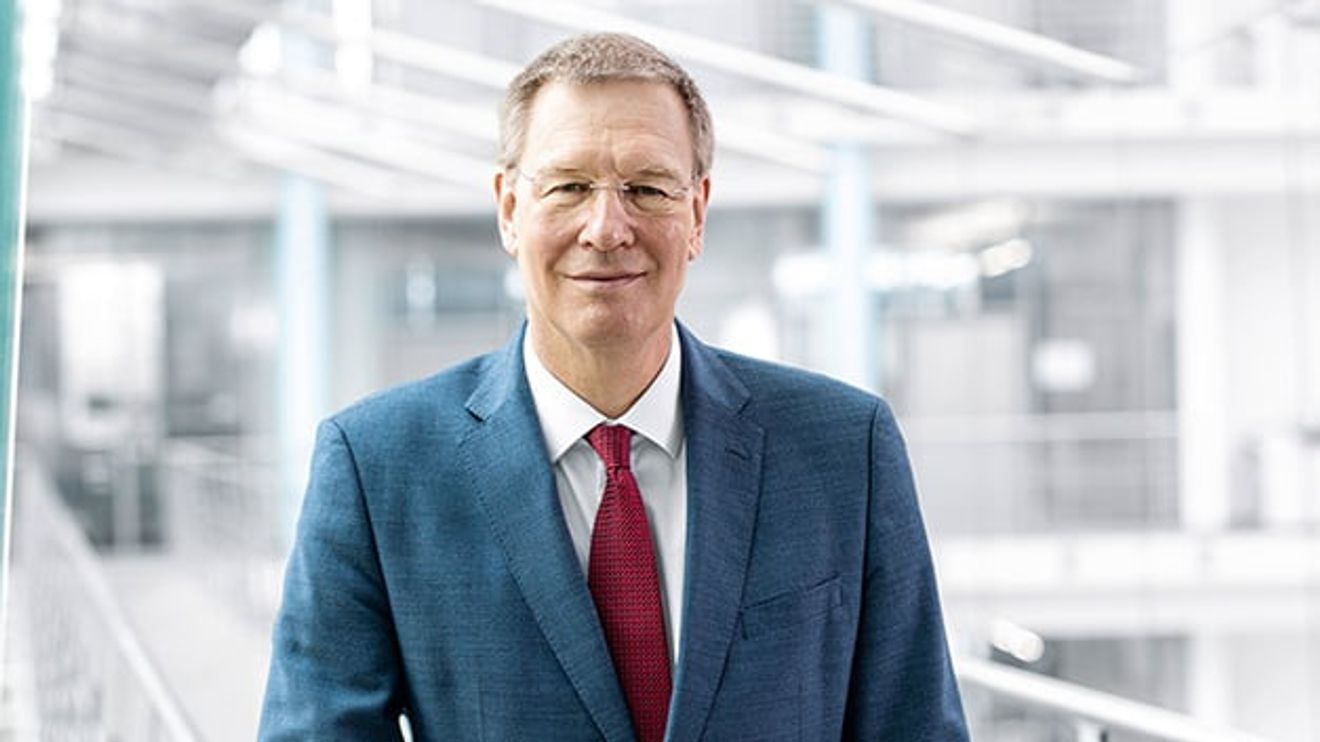
"Massive investments continue to be made worldwide in chip factories, medical technology and laboratory automation, electromobility and sustainability. We can make a contribution everywhere through automation. Energy saving is a key trend. In the current situation, our customers want to position themselves more resiliently with energy-efficient automation solutions," said CEO Dr. h.c. Oliver Jung at a press conference at the Hannover Messe.
Investments in digitalization, IT, software and AI
Festo invested around 7% in research and development last year. The Management Board department 'Information Technology and Digitalization' is driving forward the company's diverse activities in the areas of digitalization, IT, software development and AI.
Artificial intelligence directly in the production process is the next step in Industry 4.0, while intelligent control and AI also form the basis for greater energy efficiency and sustainability on the path to CO2-neutral production. "The importance of electronics, software and AI in our products for automation continues to grow. We are therefore expanding our expertise in this area both globally and locally in our Technical Engineering Centers in the growth markets," explained Dr Oliver Jung. This also includes the Industry-on-Campus cooperation with the University of Tübingen in Baden-Württemberg's 'Cyber Valley'. Festo has its own laboratory there and conducts application-oriented research into various AI methods. The initial focus is on deep reinforcement learning for robotics.
In addition to existing apprenticeships and dual study programs, Festo also offers training in new professions. ݁This year we have our first graduates in data science, infotronics and e-commerce. They have profiles and skills that we can't find on the job market," said Dr. Oliver Jung. In 2023, trainees and students will start at Festo for the first time in IT security and IT and digitalization management.
Sustainability drives structural change
"With our Blue World approach, we are supporting structural change in many sectors worldwide, such as the energy industry in the direction of renewable energies or electromobility. Through automation, we can bring processes such as the production of green hydrogen or batteries for electric vehicles, as well as downstream recycling, into broad industrial application and make them economical. We are also developing automated solutions for biological transformation as the basis for a completely new circular economy. Another enabler is the industrial workforce development of specialists and managers with in-service learning concepts from our Festo Didactic," said Dr. Oliver Jung.
Sustainability is an integral part of Festo's corporate strategy and is aligned with the Sustainable Development Goals (SDGs) of the United Nations. Ecological, economic and social aspects are considered together. For Festo, the focus is on climate protection and reducing the CO2 footprint - from product development to optimized supply chains and efficient use by customers.
Since this year, all Festo buildings in Germany and all production and logistics locations worldwide have been CO2-neutral with regard to Scope 1 and 2. This is to be achieved for the entire Festo Group by 2026 at the latest. The greatest leverage and core of the activities lies in the development of energy-efficient solutions for customers in Scope 3.
"We see great potential here for efficient, resource-saving production across the entire spectrum of factory and process automation, flanked by suitable qualification solutions - from the booming electronics, semiconductor and life tech sectors to food and the agricultural sector, automotive, electric vehicles and batteries through to mining, chemicals, oil, gas, renewable energies and future technologies such as green hydrogen," said Dr. Oliver Jung, explaining the further strategic direction.


You might also be interested in
Schaeffler raises forecast for 2023
Following a noticeable recovery in the second quarter, Schaeffler is more optimistic about the current financial year: the Herzogenaurach-based company expects a return on sales of six to eight percent.
 read more...
Robotics - The winners
Robotics is regarded as one of the key technologies for coping with demographic change. Cobots in particular are predestined for human-robot collaboration. But cobots are nothing without the right gripper, as the winners in the 'Robotics' category...
read more...Biomass on an industrial scale
At the Hannover Messe, Festo is presenting the 'BionicCellFactory', the next step on the way to industrializing biological transformation in order to cultivate biomass efficiently, resource-efficiently and on a large scale.
read more...Pneumatic cobot celebrates its premiere
Festo is launching what it claims is the world's first pneumatic cobot. The aim is to make it economical for SMEs, which are often characterized by manual work processes, to use cobots.
read more...Pneumatics makes technological leap
With Festo's 'Controlled Pneumatics' compressed air technology, the 'VTEP' proportional valve terminal achieves sensitive pressure control down to less than 1 mbar. According to the supplier, the technology also uses piezo valves to reduce...
read more...Autonomous flying in a swarm
The 'BionicBee' is an ultra-light flying object from Festo that can fly in large numbers and completely autonomously in a swarm. The BionicBee performed its first air show at the Hannover Messe 2024.
read more...Expansion in North and South America and India
After years of strong growth, 2023 was a year of consolidation for Festo. At around 3.65 billion euros (- 4.3%), turnover was just below the previous year's level
read more...Phoenix Contact at the Hannover Messe
Strategic technology partnership with Festo
Festo will use PLCnext Technology, the open ecosystem from Phoenix Contact, in future intelligent devices. In this way, both companies want to combine their innovative strength with the aim of taking industrial automation to a new level.
read more...E-Paper: HANNOVER MESSE DAILY Day 2
In today's issue, you can read about the tour of the trade fair by German Chancellor Olaf Scholz and the Prime Minister of the host country Norway, Jonas Gahr Støre, the partnership between Festo and Phoenix Contact and the demands of the...
read more...