

VDW
German machine tool industry stabilizes
After two years of noticeable investment restraint, the German machine tool industry is showing the first signs of stabilization. Overall, however, incoming orders in 2025 remained slightly below the previous year's level.
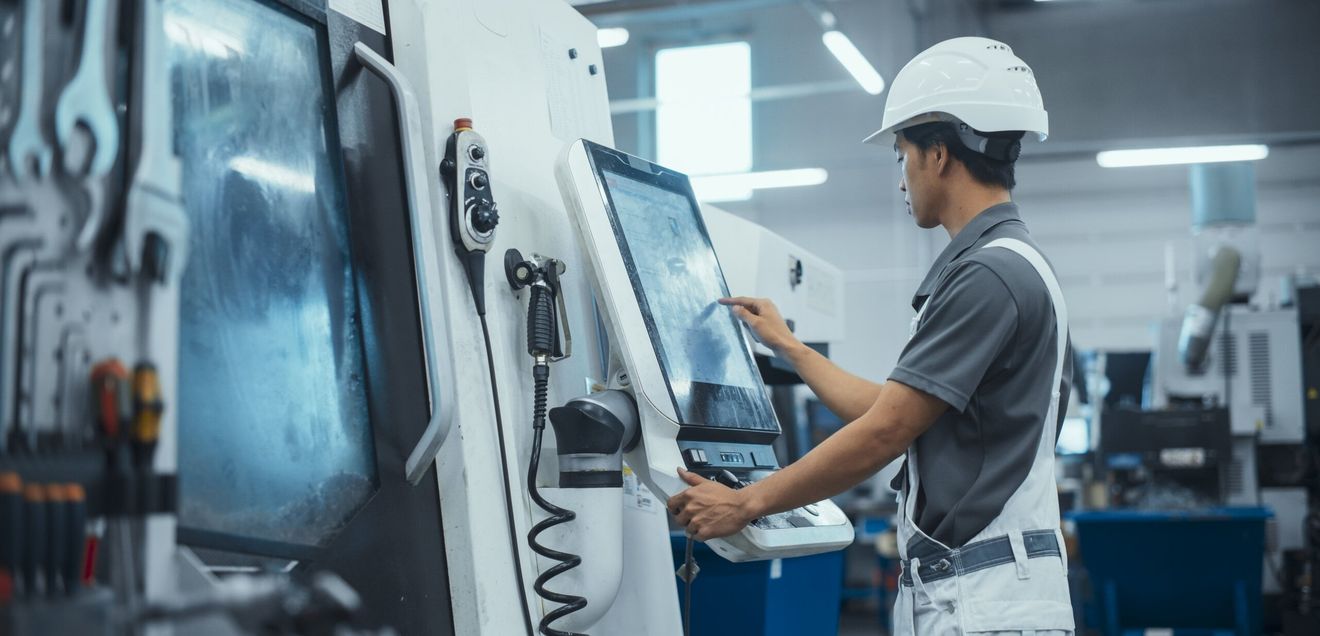
Orders fell by 3%, with significantly different trends in Germany and abroad. While demand from abroad increased by 3%, incoming orders from Germany slumped by 16%. The reluctance of many German industrial customers to invest thus reflects the difficult situation in key user industries, above all the automotive industry and its suppliers. However, there were signs of a slight recovery at the end of the year: In the fourth quarter of 2025, incoming orders were up 4% overall on the previous year's figure.
At the same time, the global balance of power in the machine tool industry continues to change. This is particularly evident in the rapid expansion of the Chinese industry. Machine production (excluding parts and accessories) in the People's Republic reached a new record level of around 30 billion euros in 2025. China is thus further expanding its dominant role in global mechanical engineering. Germany, on the other hand, once again fell short of the EUR 10 billion production volume mark. At €9.4 billion, production was only slightly above the level of the pandemic years 2020 and 2021. Overall, global production continues to be heavily concentrated in just a few countries. China, Germany and Japan together account for 58% of globally produced machine tools. China accounts for 37%, Germany for 12% and Japan for 10%. They are followed by the USA and Italy with shares of 9% and 7% respectively.
Shifts in the global market
There are also clear shifts in international trade. The global export volume for machine tools reached around €41.4 billion in 2025, around 3% below the previous year's level. The change of roles at the top of the export rankings is particularly striking: China overtook Germany as the world's largest exporter for the first time. While German manufacturers delivered 10 percent fewer machines abroad and achieved an export volume of EUR 7 billion, Chinese suppliers increased their exports by 13 percent. At 8.6 billion euros, China thus achieved a new record value. China is also by far the largest sales market for machine tools worldwide. The market volume grew by 5% to €25.2 billion in 2025. This means that the People's Republic accounts for around 32% of global consumption. The USA follows with EUR 11.1 billion and a market share of 14%. Germany has a share of 5.7% and is therefore only just ahead of India with 5.4%.
The VDW experts expect a further upturn in the second half of the year. In addition to the defense and aerospace industries, the traditional customer industries such as automotive and mechanical engineering are not among the most important drivers. Instead, the machine tool industry is currently benefiting in particular from the electronics and semiconductor industries and their value chains. "This is due to the ongoing digitalization push, the AI boom and the global expansion of data centers," explains Dr Markus Heering, Executive Director of the VDW.
Business with the USA is also continuing to develop stably despite ongoing trade policy uncertainties. Investments there are likely to increase further in the coming months. The outlook for demand from China has recently improved slightly, as the government is increasingly promoting investment in future technologies and classifying machine tools as a critical core technology in the new five-year plan. "The changed geopolitical conditions are leading to a stronger reorganization of economic partnerships. The planned free trade agreements with India and Mercosur are an example of this," says Heering.
Background
The German machine tool industry is one of the five largest branches of mechanical engineering. It supplies production technology for metalworking to all branches of industry and makes a significant contribution to innovation and productivity progress in industry. Due to its absolute key position in industrial production, its development is an important indicator of the economic dynamics of the entire industry. In 2025, the sector produced machines and services worth around EUR 13.6 billion with an average of around 64,700 employees (companies with more than 50 employees).


You might also be interested in
Triton Partners takes over Flender
Global investment firm Carlyle has signed an agreement to sell Flender, a provider of mechanical drive technology, to Triton Fund 6, advised by Triton. The terms of the transaction were not disclosed and is expected to close in the fourth quarter of...
 read more...
Schaeffler cooperates with VinDynamics
Schaeffler and VinDynamics, a company of the Vietnamese Vingroup, have agreed on a strategic partnership in the field of humanoid robotics. The collaboration focuses on the development and supply of planetary gearboxes, central components of...
read more...Around 9 percent increase in incoming orders
In the 2025 financial year, Bosch Rexroth generated sales of around 6.5 billion euros. The company thus succeeded in maintaining its business at the previous year's level despite the persistently difficult environment. Order intake recorded...
read more...VDMA at the Hannover Messe 2026
Trade associations provide impetus for networked production
The specialist associations for drive technology and fluid technology will be showcasing their contributions to Industry 4.0, automation, digitalization and defence-related manufacturing technologies at the Hannover Messe.
read more...Wittenstein at the Logimat 2026
Intelligent drive technology for AGVs and AMRs
The compact AGV drive system 'cyber iTAS system 2' from Wittenstein consists of a servo controller from the 'cyber simco drive2' series with integrated, SIL3 and PLe-certified safe torque-off safety function and a space-saving, heavy-duty wheel...
read more...VDMA: Innovation location in danger
The mechanical engineering industry wants to keep production in Germany and Europe. However, better location conditions are urgently needed to prevent research, production and therefore innovation from migrating, it was stated at the association's...
read more...Business opportunities for European manufacturers
More and more large-scale factories for the production of batteries are getting on in years and need to be modernized. These brownfield investments also offer significant new business opportunities for the European mechanical and plant engineering...
read more...Drives with air cooling
KEB Automation is expanding its drive portfolio for turboblowers, compressors and other high-speed applications: In addition to liquid-cooled high-speed drives, an air-cooled version will also be available in future.
read more...Smart gearbox selection
'Gear ProSelect' from WEG is aimed at all those who are regularly involved in the selection and design of gearboxes and geared motors in mechanical and plant engineering, including design engineers, technical purchasers and OEMs.
read more...