

Cybercrime
WannaCry forces companies to rethink
According to Europol, around 230,000 computers in 150 countries were victims of the cyberattack by the ransomware 'WannaCry'. Experts assume that similar attacks will follow and are urging companies and authorities to act quickly.
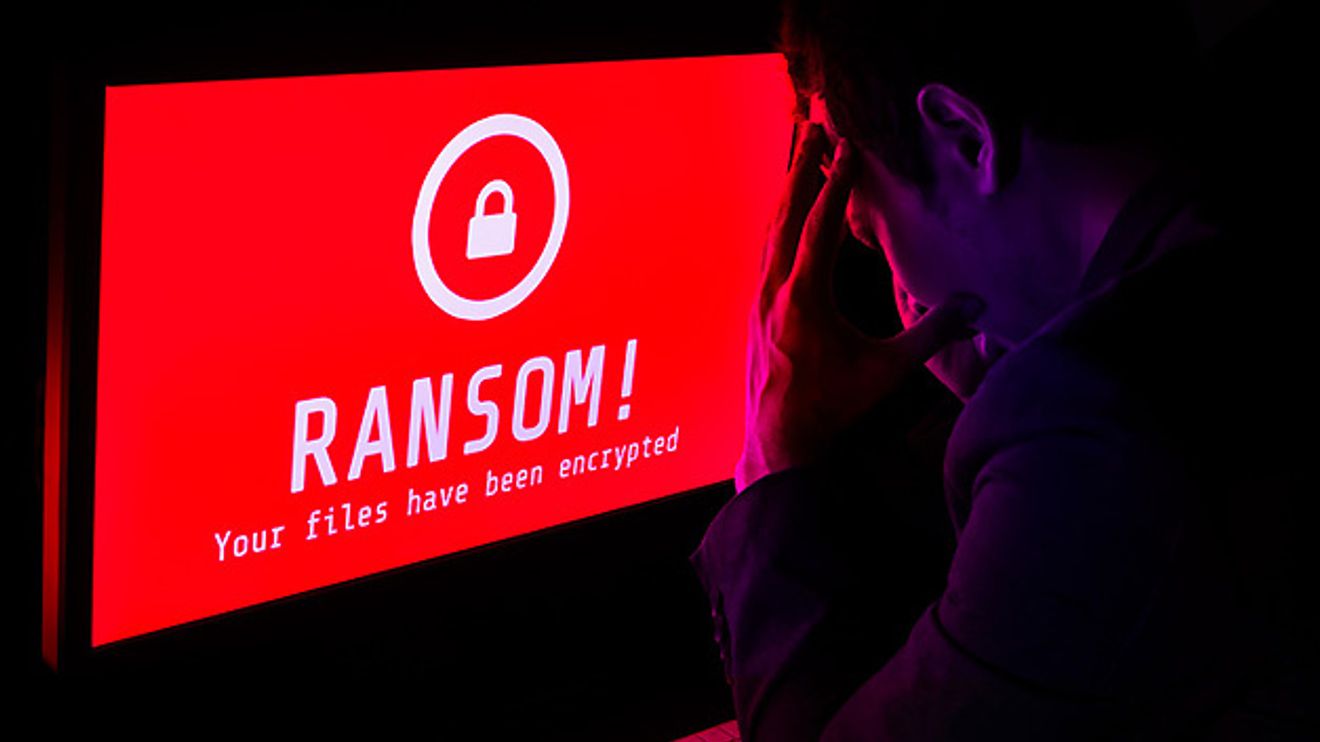
The wave of attacks by 'WannaCry' has been stopped in the meantime. However, experts assume that similar attacks will follow and see a need for action. "The large-scale ransomware attack at the beginning of May is a clear sign of the escalating challenges facing cyber security," says industry analyst Vijay Michalik from Frost & Sullivan. The current attack was stopped abruptly with the help of an emergency stop button that the operator of the blog 'MalwareTech' had come across. "However, it is extremely likely that a new attack will come without this emergency brake built in by the attackers," warns the analyst.
The attack was made possible by a Windows vulnerability for which a security update has been available for some time. "The incidents show dramatically what the consequences can be if updates are not installed on time. The exploited vulnerability was already closed by Microsoft in March," says Tim Berghoff, G Data Security Evangelist. Government organizations, companies and private users should think very quickly about how they can close the respective security gaps. "IT managers in companies should consider the use of patch management in order to be able to roll out updates for all computers in the network quickly," says the expert. The German Federal Office for Information Security (BSI) also sees a need for action. The current attacks are another wake-up call for companies to finally take IT security seriously and take sustainable protective measures. "The current vulnerability has been known for months and corresponding security updates are available. We strongly recommend that you install them," said BSI President Arne Schönbohm.
SMEs and small businesses at a disadvantage
While an IT department steps in for such emergencies in industry and large companies, SMEs and small businesses often have their backs to the wall in the event of a ransomware attack. "If access to data is not possible, no quotation can be written, no order can be processed. Ultimately, depending on the calculation, a company is on the brink of economic disaster after just a few days," says Andreas Schlechter, Managing Director of Telonic, a system house specializing in network and security.
According to Schlechter, targets such as industrial plants, whose internal computer systems often still run on legacy systems such as Windows XP, are particularly at risk - which is intentional on the part of the manufacturer: "Plant and machine manufacturers are lagging behind here, opening the door wide for existential threats," says the Telonic managing director. He recommends solutions that not only protect against viruses, Trojans or ransomware, but also allow proactive monitoring of networks for suspicious activities such as server calls or the forwarding of malware to other computers.
Companies have a duty
Eset security specialist Thomas Uhlemann is convinced that companies need to act now to ward off attacks such as 'WannaCry' in a more targeted manner. "Companies now have a duty to review, adapt and enforce their security guidelines and concepts more consistently." In addition, the government must increase the budgets for Computer Emergency Response Teams (CERTs) at federal and state level and increase the corresponding departments of the criminal investigation departments so that they can be adequately equipped with resources, expertise and personnel. "Only then will it be possible to get to the people behind such attacks and bring them to justice," Uhlemann is convinced.
The analysts at Frost & Sullivan believe that we are approaching a turning point in cyber security in both the public and private sectors. Their advice: companies should invest heavily in order to counter the growing threat of cybercrime. This applies to technology as well as the necessary cyber security personnel and staff training to identify and prevent threats.


You might also be interested in
Together against cybercrime
Two major players in the IT security market - Cisco and IBM - intend to improve the efficiency of IT security for their customers through technology integration, combined services and collaboration on threat intelligence.
 read more...
Industrial Data Space Association
A secure space for data
The Fraunhofer-Gesellschaft founded the 'Industrial Data Space' association over a year ago. An initial reference model of the underlying architecture was published at the Hannover Messe 2017.
read more...Munich under the sign of security
The 'Forum Safety & Security' will once again take place in Munich on July 5 and 6. Experts from both disciplines will discuss current issues and solutions in the field of safe automation at the congress and accompanying trade exhibition.
read more...Kaspersky presents its own operating system
Kaspersky is presenting its 'Kaspersky OS' specifically for embedded systems, which is aimed at the development of cyber-secure devices in three industries.
read more...'Cyber security learning lab' launched in Görlitz
Fraunhofer IOSB has opened the 'Cyber Security for Critical Infrastructures Learning Lab'. It is intended to drive forward research and development in the field of IT security and raise awareness of the topic among companies and authorities.
read more...What cyber threats await us in 2017?
Ransomware - malware that infects computers and demands money to unlock them - is developing rapidly in 2017. Hackers are targeting the business sector, the IoT and the Industrial Internet of Things in particular. This is the outlook provided by IT...
read more...No accidental changes to files
CodeMeter 6.80 from Wibu-Systems supports Universal Write Filter (UWF), a Windows option from Microsoft that prevents accidental changes to files, which is particularly important for embedded systems.
read more...Security through network segments
The Microwall Gigabit from Wiesemann & Theis is the first in a series of easy-to-use security products for industry and manufacturing.
read more...Mushroom is the victim of a targeted hacker attack
The automation technology provider Pilz from Ostfildern was the victim of a targeted cyber attack on Sunday, October 13. All server and PC workstations worldwide, including the company's communication network, were affected.
read more...