

Red Hat Report
Cloud security often inadequate
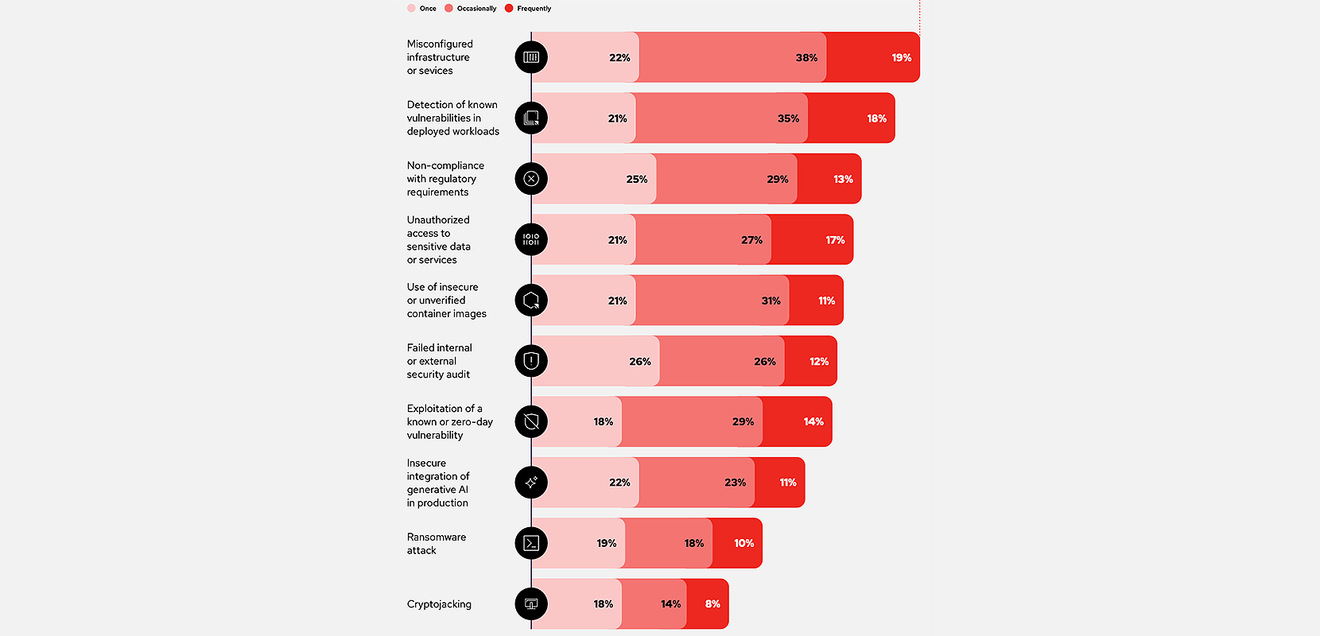
According to Red Hat's "State of Cloud-native Security" Report 2026, 97% of the companies surveyed with hybrid cloud environments reported security incidents within a year. This is based on data from around 600 IT specialists.

The causes are predominantly internal weaknesses such as misconfigurations or unpatched container images, rather than complex external attacks. The consequences range from increased effort in analysis and remediation to delayed releases and loss of productivity. 92% report noticeable effects.
Gap between self-perception and actual security approaches
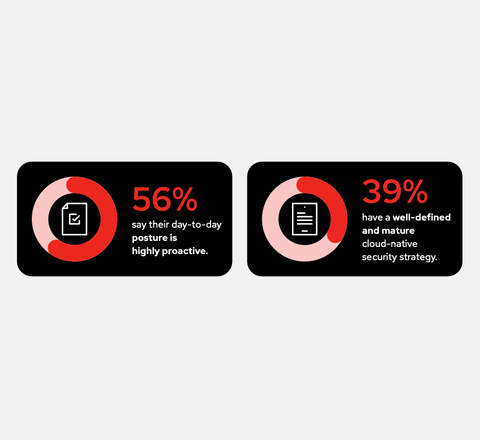
There is a gap between self-image and actual security level: 56% see themselves as "proactive", but only 39% have a mature, well-defined cloud-native security strategy. Technical measures such as signature checks, runtime protection or automated guidelines can only be found in half of the companies.
Nevertheless, the majority of companies are attempting to take countermeasures: more than 60% are planning to invest in the automatic protection of their CI/CD pipelines in the next one to two years in order to implement a "security as code" approach and minimize human error. 56% want to invest in supply chain security and 54% in runtime protection for applications that detects and stops active threats such as cryptojacking or incorrect behavior of containers in real time.
Generative AI causes concern
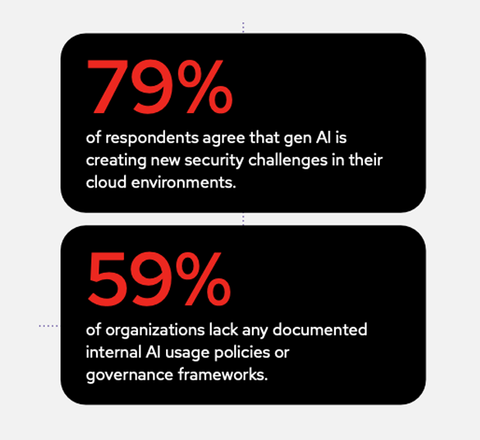
Generative AI (GenAI) continues to be a major concern for companies, with 96% considering its use in cloud environments to be questionable. They fear the disclosure of sensitive data, the use of unauthorized tools (shadow AI) and the integration of insecure third-party AI services. Despite these fears, 59% of companies do not have documented internal guidelines on AI use or governance frameworks.


You might also be interested in
Mitchell Plonski Assumes Global Responsibility
NinjaOne has appointed Mitchell Plonski as Senior Vice President of Global Public Sector. He will be responsible for the global strategy for government agencies and public institutions.
 read more...
Why AI Agents in the SOC Don't Learn Over Time
AI agents support security operations centers, but so far they lack a permanent memory. A technical article explains the challenges facing autonomous security automation.
read more...New Vice President of Global Partner Ecosystem appointed
Effective immediately, John Ryan is the new Vice President of Global Partner Ecosystem at Claroty, a specialist in the security of cyber-physical systems (CPS).
read more...Increasing cyberattacks on the manufacturing sector
A report from Check Point Exposure Management on the threat landscape in the manufacturing industry shows a dramatic increase in ransomware, supply chain attacks and OT-related cyber incidents. As smart factories and connected supply chains become...
read more...Cybersecurity is a top priority for car manufacturers
The latest "Automotive Manufacturing Outlook Survey" from ABB Robotics shows that cyber security has become the most important focus for automotive manufacturers around the world. This indicates a clear change in the perception of digital risks.
read more...CRA guide for Powerlink checked
TÜV Rheinland has audited the "CRA Guide for Powerlink" from B&R. The guide is one of the first independently audited technical documentations for the implementation of the EU Cyber Resilience Act in automation.
read more...Dragos expands collaboration with Microsoft
Dragos, a global provider of cyber security for OT environments, is expanding its collaboration with Microsoft. The aim is to support companies in modernizing and securing their cyber-physical operating processes.
read more...All for One acquires stake in BrightFlare
All for One acquires a minority stake of 25.1% in the Austrian company BrightFlare. BrightFlare is a cybersecurity services provider for the protection of industrial plants and critical infrastructures.
read more...Check Point Cyber Security Report 2026
More attacks on German companies
The new "Cyber Security Report 2026" from Check Point shows a significant increase in cyberattacks on German organizations by 2025. The education sector is particularly affected and is well above the national average.
read more...