

International Federation of Robotics
AI-supported robots to combat labor shortages
Sales of professional service robots for the transportation of goods or merchandise increased by 44% (2021 to 2022). However, the acute shortage of specialists and workers threatens to slow down future growth in the logistics sector. According to the IFR, AI-supported robots are helping to counteract this.
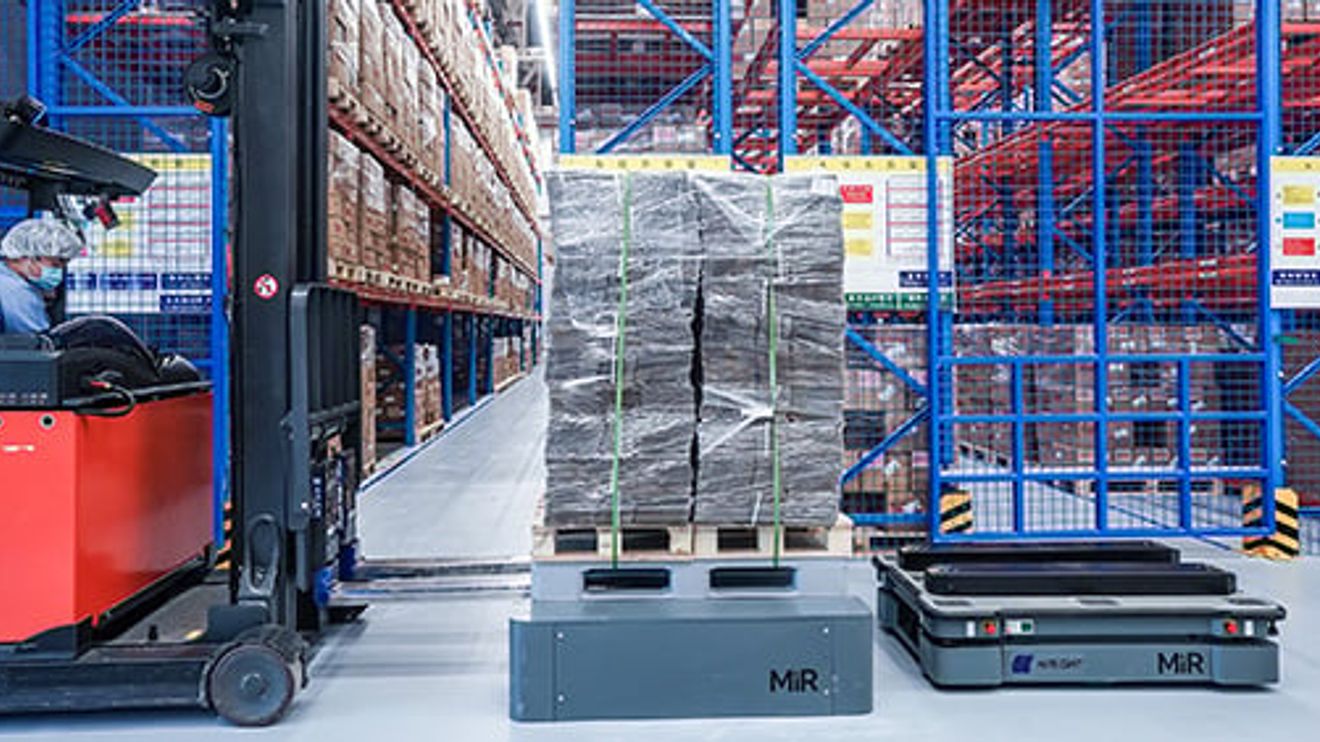
"The shortage of truck drivers, warehouse or port workers is a critical factor in global supply chain management," says Marina Bill, President of the International Federation of Robotics (IFR) at the upcoming Logimat. "Robot manufacturers combine hardware with intelligent software to serve the specific automation needs of the warehousing and logistics industry. Robots equipped with artificial intelligence open up an enormous range of new possibilities for this sector."
Learning to deal with new tasks
The use of AI in robotics is mainly aimed at dealing with variability and unpredictable situations: Logistics service providers are dealing with a mass market for cross-border shipping, e-commerce or last-mile delivery. In this environment, frequently changing products, orders and inventories are processed. To enable machines to support flexible workflows like these, AI software relies on an experience-based learning process rather than programming. For example, these AI-powered robots learn to pick and pack different items at high speed in a logistics center; they use optical systems to autonomously transport items around the factory and provide AI-driven interfaces that turn a once 90-minute maintenance task into a one-second adjustment.
3 million missing truck drivers
For many logistics companies, now is the time to automate further. One reason for this is the global shortage of truck drivers: according to the International Road Transport Union (IRU), there are currently over 3 million vacancies for truck drivers worldwide. The demographic gap between young and older drivers is widening, so the driver shortage is expected to double by 2028.
While the labor shortage affects logistics supply chains in Europe, Asia and the USA equally, the specific reasons and extent of the shortage differ significantly in some cases. For example, new legal regulations on working hours are forcing companies in Japan to install additional automation solutions. In the United States, a shortage of qualified logistics specialists in e-commerce centers requires new technological support. And in Germany, older workers need better support in the workplace for physically demanding tasks in order to be able to work longer.
"Robotics is suitable for a variety of different tasks in the logistics industry: while service robots work hand-in-hand with human colleagues to create more efficient workplaces, industrial robots help to automate dirty, tedious and dangerous tasks behind fences," says IFR President Marina Bill. "The combined use of a wide range of robotics and automation applications will play a crucial role in addressing the labor shortage and enabling future growth in this key industry."


You might also be interested in
Sysgo at the embedded world 2024
Cooperation for safe cobot solution
Sysgo, Nexcobot and Vectioneer are working together with Intel to develop a platform that serves as the basis for cobots. The platform will be presented at the upcoming embedded world.
 read more...
Indus takes over Gestalt Robotics
Indus Holding has acquired Gestalt Robotics, thereby expanding its portfolio in the Engineering segment. Gestalt Robotics primarily has technological expertise in the field of AI-based industrial automation.
read more...Pramac/BlueBotics at the Logimat 2024
Robots for dynamic environments
Pramac has teamed up with BlueBotics, a Swiss specialist in autonomous navigation, to launch its first range of mobile robotic solutions under the X-ACT brand.
read more...International Federation of Robotics
Top 5 robot trends 2024
The global inventory of industrial robots has reached a new record of around 3.9 million units. The International Federation of Robotics (IFR) defines the key trends that will shape robotics and automation in 2024.
read more...International Federation of Robotics
Service robot sales increase by 48% worldwide
The number of service robots for professional use has risen by 48% worldwide to a total of 158,000 units sold. Staff shortages are prompting many companies to automate with service robots.
read more...International Federation of Robotics
World Robot Report 2023: Asia at the top
The current 'World Robotics Report' records 553,052 newly installed industrial robots worldwide for 2022 - this corresponds to a growth rate of 5% compared to the previous year. Europe accounts for a market share of 15%.
read more...IFR World Robotics Report 2024
Record number of robots in use worldwide
Over four million robots are in use in factories worldwide, reports the IFR in the current "World Robotics Report 2024" - a record number. However, sales of industrial robots have fallen.
read more...International Federation of Robotics
Beijing wants to use robots to drive growth
During the third plenary session of the Central Committee, China repositioned its economic policy and announced a technology-centered approach. Chinese robot manufacturers are strategically preparing for this.
read more...Realtime Robotics honored
The 'Award for Innovation and Entrepreneurship in Robotics & Automation' (IERA) 2024 goes to Realtime Robotics. The US company from Boston received the prestigious award for its program that plans the movements of industrial robots fully...
read more...