

Visualization
Driven by the consumer market
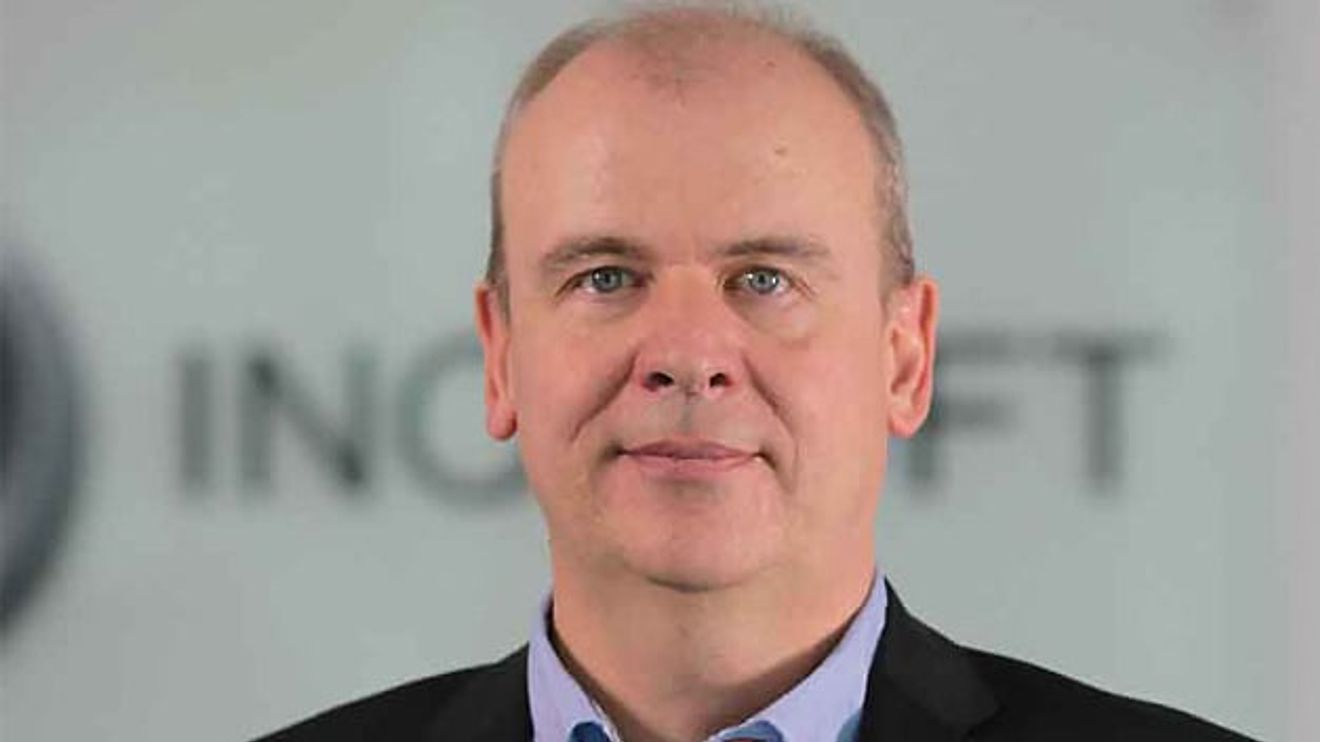
When it comes to process visualization, the requirements in mechanical and plant engineering are changing. Stefan Niermann, responsible for sales and marketing at Inosoft, talks about the status quo and the future prospects of process visualization.

Inosoft's VisiWin process visualization supports various user interfaces and is suitable for machine-oriented operation and monitoring as well as for complex SCADA applications.
© InosoftMr. Niermann, what requirements do users currently have for process visualization?
Niermann: In our experience, there are currently three main aspects in mechanical and plant engineering: Flexibility, modularity and future-proofing. Discussions with our customers have shown that they are less and less willing to scale back their requirements due to limitations in the process visualization software. The tool should have the necessary flexibility to implement individual functionalities and design requirements. It is also important to support a wide range of stationary and mobile devices as well as remote access, depending on requirements. Multi-touch operating concepts are already a prerequisite today.
The topic of modularization has been driving machine and plant engineering for several years now. However, modularization today is usually defined in terms of mechanical design. But only when the software also maps and supports such a concept can the advantages of reusability of modules be fully exploited. The aim here is to make engineering more efficient overall. Many users today still face the challenge of good version management. This is because projects that are repeatedly copied and then changed on site are often accompanied by the fact that errors are copied further and changes are not maintained centrally. For this reason alone, it pays off for users to integrate modularization concepts into their workflow.
In terms of future viability, users attach great importance to the software being supported and further developed in the long term. In this context, the keyword 'upgradability' plays an important role. On the other hand, future viability in this context means openness with regard to software technologies and interfaces. The user interface, which should support various platforms, is also becoming increasingly important in terms of networking as a link to the cloud.
What is important when designing modern user interfaces?
Niermann: In principle, the user interface is very important. However, in many cases this is not yet sufficiently taken into account. This is because the user interface is often created in the first draft and then handed over to the design team to make the whole thing look nicer. However, this approach is not expedient. As a first step, it is advisable to analyze the processes, talk to the various users - such as operators, maintenance personnel or machine park managers - and possibly observe them in their current working environment. Based on the knowledge gained, the wireframe is created, which contains the rough layout of the screen with the stored functions and should be tested as a prototype. The next step is to develop and implement a visually appealing, attractive design. In terms of usability aspects and design, we rely on close cooperation with user experience (UX) experts as part of our HMI Alliance. UX makes a decisive contribution to increasing acceptance and encouraging users to engage with the interface. We talk about the 'joy of use', with which machine manufacturers can create added value for their end customers.
In the future, it will also be increasingly important to integrate powerful and open graphic interfaces and to give machine manufacturers the opportunity to integrate their own components. The separation of logic and design is an important aspect of the architecture here. It should be possible to make design elements reusable, add your own elements to the toolbox and combine more complex structures in one component.
What is the HMI Alliance all about?
Niermann : Our HMI Alliance is a network of experts that we have set up to provide users with optimum support in the implementation of modern and intuitive display and operating solutions. We have been working closely and successfully in partnership with Ergosign in Saarbrücken, a design service provider for user interfaces specializing in 'User Experience - Strategy and Design', for many years. As part of the collaboration, Ergosign takes on the user analysis and design aspects of the projects and we focus on the technical implementation of visually appealing HMI solutions.
Which technologies are used at Inosoft?
Niermann : When developing our VisiWin process visualization system, we consistently focus on openness and industry standards. Our technology basis is the .Net framework and the very powerful graphics interface WPF (Windows Presentation Foundation). A highlight of our VisiWin platform is the fact that our software allows users to seamlessly integrate tools such as Microsoft Visual Studio and Blend for graphics and logic. This enables users to individually design their process visualization and use all degrees of freedom when implementing their own functions. At the same time, we enable them to create client projects using HTML5 technology so that our interfaces can also be displayed in any browser and on smartphones or tablets. Our user interface supports responsive web design specifically for this purpose. As a long-standing member of the OPC Foundation, we rely on OPC UA for our interfaces. With this technology mix, we are well positioned to integrate future technologies - such as the Microsoft Hololens.

Operating a system step by step: The Hololens glasses from Microsoft can project instructions into the user's field of vision.
© InosoftWhat does the future of process visualization look like?
Niermann: In our opinion, the first step is to manage the increasing flood of data. The aim here is to ensure that the relevant data is sent securely and efficiently to the right person in the right way. As part of this, role-based operating concepts and therefore new devices are becoming increasingly important. We are already talking about the 'post-touch' era, which means that in future, data will be processed for all kinds of devices and wearables such as data glasses or watches.
At recent trade fairs, we and other companies have already presented initial ideas and applications for augmented reality (AR) with data glasses. A combination with virtual reality (VR) is also conceivable. For example, AR glasses worn by service personnel on site, such as the Hololense, could generate a scanned 3D image of the room and the machines in it and forward this to an expert who is located elsewhere, for example in a company headquarters, and is equipped with VR glasses. The expert would then be able to analyze the situation in 3D and transmit 3D instructions. Up to now, such scenarios have mainly involved maintenance and servicing tasks. The next step is then machine operation. However, we believe that it will take some time before AR and VR glasses become established in industry, as the technologies are not yet fully developed in terms of suitability for everyday use and readiness for industrial applications. The first applications could be in environments where helmets and protective goggles are mandatory and visualization is merging with protective equipment. In general, we assume that these applications will establish themselves alongside the classic industrial PC in the future. However, they are unlikely to replace them any time soon.
At the same time, the topic of 'fog computing' is gaining in importance. We are seeing a trend where data increasingly needs to be processed and anonymized locally before the meaningful data is stored in the cloud and processed further. Inosoft is already able to support these requirements in addition to the interfaces.


You might also be interested in
Siemens cooperates with Sony
Together with Sony, Siemens presented a solution at the CES that redefines the workflow of engineers and designers.
 read more...
Securely networked - even in the Ex zone
Seamless communication and fast data transfer are the guarantors of success for digital workflows in the smart factory. In order to benefit from the digital transformation in potentially explosive areas, lone workers need suitable mobile devices.
read more...followed up! - with Rainer Brehm, Siemens
An All Automation Society?
Industrial automation has experienced an enormous upswing in the last 25 years. But where exactly is automation today and where should or must it be in the future? Rainer Brehm takes a stand in this interview.
read more..."Unnecessary uncertainty for companies"
The EU institutions have agreed on the "Data Act", which regulates the use of collected data. The VDMA takes a critical view of the agreement.
read more...Group companies merged under one brand
At automatica 2023, the Hahn Group will be appearing for the first time with a new brand design and under a new name. This step will unite more than ten individual brands into a globally positioned automation company under one brand.
read more...The arrival of augmented reality
With the new version of 'Eplan eView Free', the AR function is now directly accessible via a 3D visualization. Navigation in the project is much easier.
read more...From Multicloud to Metaverse
A whole range of exciting developments in the tech world await the industry in the new year. Dr. Thomas King, CTO of DE-CIX, has identified five trends that will shape the interconnection business and the networked world in 2023.
read more...The most important technology trends of the year
The CES in Las Vegas is one of the largest technology trade fairs in the world. This is where innovations are pompously presented and celebrated, which then provide a talking point throughout the year.
read more...Modular AR service platform for industrial production
A cloud-based service platform with open industry interfaces is being developed as part of the "secureAR" project. An AR assistance system plays a central role in this.
read more...