
Industry 4.0
A revolution with many question marks
The number in the term 'Industry 4.0' stands for nothing less than the fourth industrial revolution. However, in order to exploit the much-cited benefits of this new era of manufacturing technology, it is essential to get to grips with the risks involved!
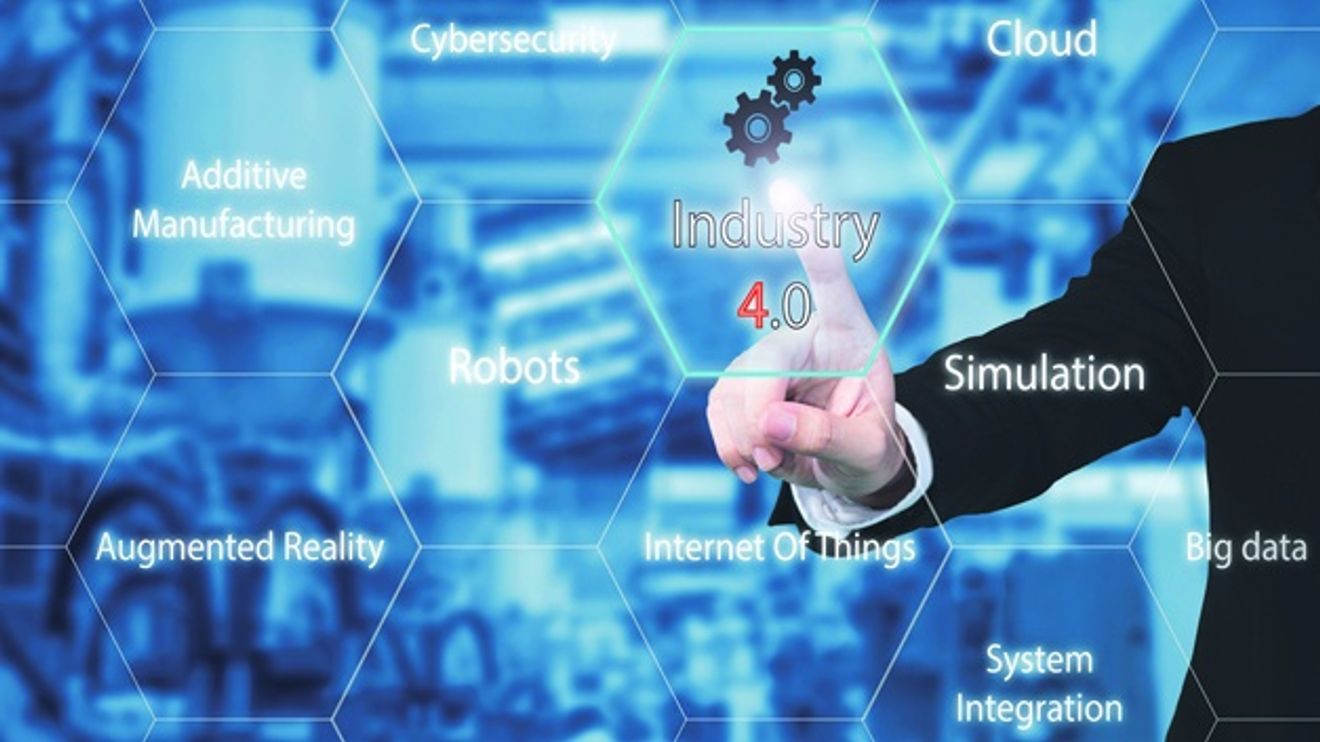
Whether you call it the 'Industrial Internet of Things', 'Smart Manufacturing' or - especially in German-speaking countries - 'Industry 4.0', the digitalization of production processes and products is indeed a revolutionary upheaval. Production facilities are being created from cyber-physical systems that are comprehensively networked with one another. While there were around five billion people connected to the internet in 2010, there will be around 50 billion connected things by 2020. In many industries, traditional business models are increasingly losing their raison d'être - which makes them increasingly vulnerable. In addition, the various developments from the smart factory to the connected car, connected home and smart metering are placing completely new demands on security. In short: at the beginning of every revolution, it is foreseeable that the old order will disappear. But no one really knows what the new one will look like in the end.
One thing is certain, however: for manufacturers and suppliers, safety will be a core component of the implementation process of Industry 4.0. It is also foreseeable that production processes will be different in a world of 'smart manufacturing'. The automotive industry is already providing a glimpse of this trend: the same black 'Ford Model T' has long since ceased to exist for every customer. Modern additive manufacturing technologies in particular - also known as 3D printing - promise the possibility of almost unlimited customization.
All of this also has an impact on the core business of safety and certification companies such as UL. Founded more than 120 years ago in the USA as Underwriters Laboratories, UL has always been involved in the development of standards and safety solutions for the protection of the living and working environment. If, for example, a charger is to be sold today, it needs to be approved in accordance with the existing standards. Such a certification process, i.e. checking conformity with the relevant safety standard, is easy to carry out as long as there is a prototype or pre-series of the charger. However, when the batch size of products shrinks to 1, internal quality assurance and external certification face a completely new challenge - one that can only be solved on an international scale!
Who is responsible for 3D printing?
The number of unanswered questions still outweighs the answers. For example, it is currently not clear who is responsible for safety in an additive manufacturing process, nor who has a legal warranty obligation for the product: Is it the manufacturer of the 3D printer, the supplier of the raw material or the user of the 3D printer? One of the biggest challenges for quality assurance and certification in additive manufacturing is therefore to create suitable standards: for the materials, the processes and the products.
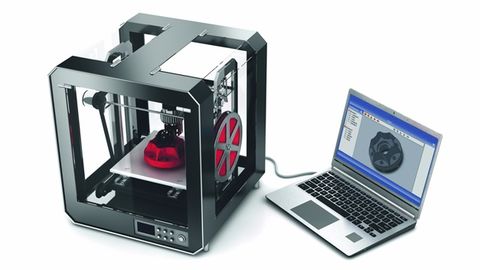
An open question: Who assumes the warranty for 3D printing or additive manufacturing?
© Fotolia / Wire_manThe first step in quality assurance for an additively manufactured product is to test and characterize the raw materials. 3D printing with metals, for example, essentially takes place with a metal powder as the raw material - its properties alone play a key role in the quality of the end product: be it the chemical composition of the powder, the size distribution of the particles, the flowability or the temperature. The density of the raw powder material also has an important influence on the porosity of the finished product. In addition, in-process tests are necessary to ensure that the actual manufacturing process takes place within the required tolerance ranges. Tests of the finished product are also required. When it comes to quality assurance, validation, testing and certification of products from additive manufacturing, there are still major gaps. Although UL, for example, supports the standardization efforts of organizations such as ISO and ASTM in the field of additive manufacturing, much is still unclear in practice.
Occupational safety in the autonomous factory
An important aspect of Industry 4.0 is the high degree of self-organization that will characterize production in the smart factory of the future. The cyber-physical systems should be intelligent enough to define and autonomously control production processes themselves. The cyber-physical smart factory will be highly flexible and will be able to react ad hoc to specific demand thanks to comprehensive vertical integration: If, for example, the failure of a component in a car becomes apparent, the smart factory already orders the required raw materials, changes the location of operating resources, sets up the production line and produces the replacement part.
Our working environment will also change permanently as a result of this dynamization. In the highly flexible smart manufacturing of the future, production employees will probably be reduced to the role of controllers for autonomously operating systems. At the same time, an extremely dynamic working environment will have serious consequences for occupational safety. This raises the big question: How can occupational safety be ensured in an Industry 4.0 world? How can we create a safe framework for the flexible working environment and protect employees from harm? It will be the joint task of industry on the one hand and safety and certification companies on the other to research how safety can be meaningfully defined and guaranteed in this context.
Who owns the data?
The cyber-physical systems of Industry 4.0 not only focus on the smart factory. They should also ensure close networking and comprehensive vertical integration of the entire supply chain. This means that manufacturers along the entire value chain will have to cooperate with each other much more closely than they do now. Cooperation with trade associations, political decision-makers and even competitors will also play a role here. In the Industry 4.0 world, the question is no longer how strong the spider is, but rather: How strong and large is its web?
A crucial question when it comes to digitalization: Who owns the data? This is a challenge for the legislator!
© Fotolia / the_lightwriterHowever, horizontal integration of the supply chain raises another question: who actually owns the data and who can benefit from it? An Industry 4.0 world is a world of 'big data'. And the power of Google, for example, is based on being able to access and exploit a valuable treasure trove of data. Against this backdrop, questions of data protection and data security take on a new relevance. It will be the task of legislators to ensure clarity about the legal situation: who is allowed to trigger and control which process along the supply chain based on which data and with which access rights? And who is responsible for what?
In the world of Industry 4.0 and the Internet of Things, it is no longer the exception but the rule that production facilities and products have interfaces to the Internet. The fact that entire production plants can already be controlled from any location - via an iPad, so to speak - is certainly a step forward, but it also places completely new demands on security. If, for example, a saboteur wanted to change the tripping characteristic of a circuit breaker in the future and thus cause damage to people, machines and buildings, all he would have to do is hack into the system via the Internet.
No networking without cyber security
Protecting cyber-physical systems from unauthorized access and incorrect control is an enormous challenge - due to the comprehensive networking and enormous flexibility of the new systems. A completely new interplay of operational safety, data protection (privacy) and information security (cyber security) needs to be realized and all these security aspects need to be integrated into the components and systems. In the context of Industry 4.0, cyber security is not just an abstract topic, but has a very real, physical dimension.
All interventions in the cyber side of a cyber-physical system potentially also have an impact on its physical side. UL is therefore working together with independent research partners to link the two safety dimensions more closely together: the new IT standards and protocols on the one hand and the traditional electrical safety standards and functional safety requirements on the other. Nevertheless, many questions relating to the security requirements of a comprehensively networked and correspondingly vulnerable Industry 4.0 world have not even been formulated yet, let alone answered.
In view of this current situation, the major task for research, industry and standardization and certification companies will be to jointly define suitable security requirements for the dynamic Industry 4.0 world and the Internet of Things. We are certainly still a long way from reaching an agreement on which standards our cyber-physical systems of the future will have to meet. In the current situation - still at the very beginning of the fourth industrial revolution - much can be gained if we succeed in outlining the numerous 'blind spots', identifying key research areas and formulating meaningful, target-oriented questions. Ultimately, there is still a long way to go - but it is worth the effort.
Author: Ingo M. Rübenach is Vice President DACH Region at UL International Germany.


You might also be interested in
The first steps towards digitization
Real-time transparency in the material flow: this was the goal set by Miba when it set out to digitalize its internal logistics processes. But how successful was the close link between ERP and MES in the end? - A field report.
 read more...
How will the IoT change companies in 2020?
How will network technology in companies change in 2020? Axel Simon, Chief Technologist at HPE Aruba, takes a look into the crystal ball
read more...Digital twin revolutionizes maintenance
As virtual representatives of real machines, digital twins open up new possibilities for maintaining and servicing complex industrial plants and systems. A project report.
read more...You can't do without Edge and Swarm
The IoT has changed the requirements for processing data provided by machine sensors and actuators. This needs to happen as quickly as possible - preferably where the data is generated. Edge nodes and swarm computing systems take on this task.
read more...Online machine data under control
Turning huge amounts of data into valuable information - how can this smart industry approach be implemented? Linking PC-based controllers with Matlab and a cloud-based IoT analytics service can be a viable approach.
read more...From modeling directly into the PLC
Despite digitalization and I4.0, the technical functions in a process plant do not become simpler if you break them down to the smallest detail. Nevertheless, the high level of difficulty can be overcome by combining the right tools in the right way.
read more...Where are the new business models?
The necessary new business models are repeatedly cited as the hallmark of an Industry 4.0 environment. But to date, very few companies have seen any of this. Schneider Electric now has a few models up and running.
read more...Why predictive maintenance?
Investments in predictive maintenance systems are worthwhile in order to proactively detect damage. Not only does this increase the service life of a machine, it also opens up new business models for machine manufacturers.
read more...First customer projects via BaSys 4.0
The BMBF project 'Basissystem Industrie 4.0' expired at the end of June 2019. Together with NetApp and Objective Partner, Fraunhofer IESE now offers Industry 4.0 solutions with support and adaptation to customer systems on the basis of this project....
read more...