
Sick
Financial statements almost at previous year's level
Despite challenging economic conditions, the Sick Group achieved solid results in 2020. The sensor company recorded a slight decline in sales of 2.9% to 1.7 billion euros (2019: 1.75 billion euros).
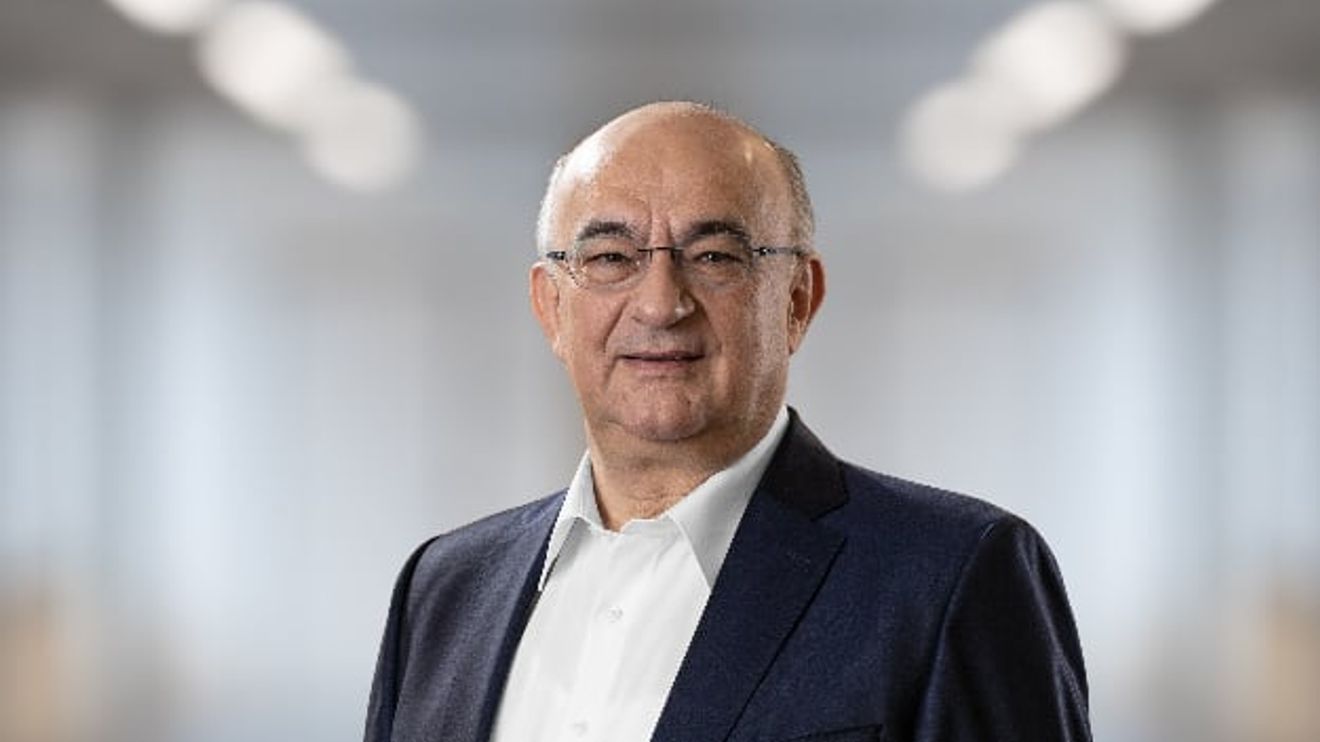
Dr. Robert Bauer, Chairman of the Management Board of Sick
© SickAccording to Sick' s own statements at the annual press conference on April 21, 2021, this significantly exceeded the sales development of the German mechanical engineering industry: the VDMA forecast this with production growth of minus 14% for 2020. Demand for sensor solutions remained high in the 2020 financial year and resulted in incoming orders of EUR 1,726.4 million (2019: EUR 1,774.1 million). The number of employees worldwide rose by 2.2% to 10,433 in the crisis year.
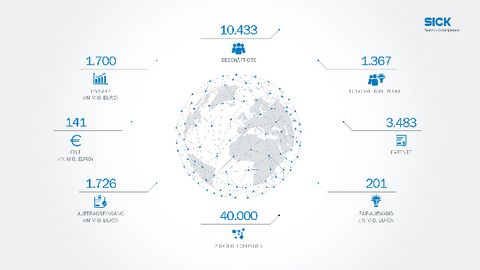
The course of the 2020 financial year was strongly influenced by the negative impact of the coronavirus pandemic on global economic development. After a significant decline in sales in the spring due to lockdowns in many countries and affected sectors, sales recovered in the second half of 2020. The sales trend exceeded the forecasts at the start of the pandemic and, together with cost discipline, ensured a satisfactory operating result. Forward-looking cost management contributed to a 5.8% increase in EBIT to € 140.6 million, which recorded a slight increase to 8.3% of sales (EBIT margin 2019: 7.6%). With the exception of consolidated sales revenue, the Sick Group achieved its forecast targets in the 2020 financial year. At 11.8% (2019: 11.5% ), the company invested an even higher proportion of revenue in research and development and continued its innovation strategy undeterred.
"Despite the effects of the pandemic, we achieved a stable result, which we owe above all to the special commitment of our employees. We countered the decline in orders in the first half of 2020 by quickly adjusting our costs and investments," commented Dr. Robert Bauer, Sick CEO, on the publication of the 2020 balance sheet figures.
Sensor solutions for logistics automation
Demand for sensor products and applications developed very positively in the business areas over the course of the year, with varying degrees of intensity, particularly in the area of logistics automation. The Group's broad industry positioning compensated for economic weaknesses in individual target industries. In addition, the company's international focus enabled it to bridge lockdowns in individual regions and maintain sales at approximately the previous year's level through sales activities in growth regions.
In the domestic market of Germany, the reluctance of companies to invest in the factory automation sector had a particular impact on sales development, as a result of which sales were 10.1% down on the previous year at EUR 283.9 million. The Europe, Middle East and Africa (EMEA) sales region was also heavily impacted by the effects of the coronavirus pandemic and fell short of the forecast with sales of EUR 601.4 million. The 6.7% decline in sales was particularly pronounced in Italy, France and the Czech Republic. The financial year was much more stable in North, Central and South America (Americas). At EUR 387.3 million, sales growth amounted to 1.9% and was characterized in particular by high demand in the logistics automation sector in North America. Growth was also positive in the Asia-Pacific region, where sales increased by 4.3% to EUR 427.6 million. In China in particular, the sales trend gained significant momentum in the financial year. Currency effects had a negative impact on the development of Group sales in the 2020 financial year. Assuming unchanged average exchange rates compared to the previous year, this would have resulted in a decline in sales of only around 0.9 %.
The further forecast for the 2021 financial year is made considerably more difficult by the ongoing coronavirus pandemic and disruptive factors in the global economy. However, catch-up effects are expected in the coming years, which will already be reflected in encouraging incoming orders in the first quarter of 2021.


You might also be interested in
The industry's smallest LiDAR safety laser scanner
Maxim Integrated Products helps reduce the size of Sick's LiDAR-based safety laser scanner 'microScan3 Core I/O' by 50% with software-configurable digital IO products.
 read more...
Generational change in the Management Board and Supervisory Board
Sick will bid farewell to Dr. Robert Bauer as Chairman of the Management Board on September 30, 2021. His move to the top of the Sick Supervisory Board is planned for May 2022 to take over from Klaus M. Bukenberger.
read more...Key to the 'factory of tomorrow'?
5G can play a key role in the digitalization of manufacturing processes in the future. This series of articles deals with the prerequisites that need to be created for this. The first part deals with the characteristics of 5G and typical...
read more...New Management Board structure
The Sick Management Board will be expanded as of January 1, 2021: Feng Jiao has been newly appointed to the Management Board and will be responsible for Sales & Service. Dr. Mats Gökstorp, previously responsible for Sales & Service, will...
read more...Scans an area of up to 200 m²
With the 'TiM2xx' product family, Sick is expanding its range to include 2D LiDAR sensors for localization and anti-collision applications. The TiM240 is the first variant in the series and complies with protection class IP65 for indoor use.
read more...Sick and Microsoft cooperate on 3DToF
Together with Microsoft, Sick wants to drive forward the development of commercial industrial 3D cameras and related solutions. These are compatible with a Microsoft ecosystem based on the Microsoft Depth, Intelligent Cloud and Intelligent Edge...
read more...Increased revenue and expanded production capacity
The Fraba Group, a manufacturer of sensors for industrial motion control, looks back on a successful 2025, during which both revenue and the number of employees increased.
read more...Rosenberger joins the EBO MSA initiative
Rosenberger has joined the newly formed Expanded Beam Optical Multi-Source Agreement (EBO MSA). This industry initiative is developing open and interoperable standards for optical connectivity in next-generation AI data centers.
read more...Benoît Thooris takes over as president
Benoît Thooris is taking over as head of UniversalAutomation.Org. The organization is also adding two new members to its Board of Directors.
read more...