
Safe Motion
Dangerous movements well secured
How can dangerous movements be safeguarded? A challenge for the user, as there are a wide range of options and functional and normative requirements. An overview.
When it comes to the requirements of 'Safe Motion', the focus is generally on five central topics: The first area concerns working on the workpiece or machine during movement and the avoidance of potentially dangerous operation. The second area includes, for example, the bursting of tools or the loosening of workpieces from holders. Somewhat less common, but no less important, is guaranteed operation, for example ventilation. Even if this cannot usually be guaranteed, access can be prevented in the event of a fault, for example. The fourth subject area deals with all work on the machine where anti-trap protection or a safe standstill is to be achieved. Common applications here are hazards caused by the operator being pulled in between rollers or workpieces sagging. Requirements similar to those for the prevention of dangerous operation also exist for ensuring process quality or collision avoidance. Finally, the fifth area comprises the optimization of work processes by means of safe movements. This can include shorter stop times, free movement or access prevention during a movement.
Functional challenges
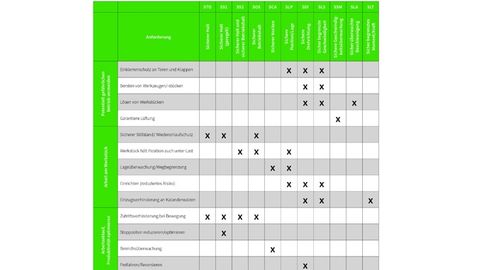
Table 1: Drive functions in accordance with DIN EN 61800-5-2, assignment of safety functions to applications.
© Wieland ElectricIrrespective of the respective application-related requirements, there are also often a number of challenges from a design perspective. Retrofitting in particular can lead to problems if, for example, there are no options for a safe stop (STO) in the frequency inverter or drive. The lack of encoders for detecting movement is similarly problematic. This is sometimes exacerbated by the fact that there are no structural options for the installation of encoders. It becomes particularly tricky when vibrations in the environment make the measurement itself difficult or if there is a risk of sagging in the case of suspended loads. Situations in which several axes have to be monitored for synchronization or a certain interaction also pose a major challenge. However, the simultaneous or alternative monitoring of several limit values or aspects of a movement, such as speed and position, is generally unproblematic. DIN EN 61800-5-2 specifies a large number of drive functions that can be used here.
Normative requirements
In addition to the functional restrictions, there are normative requirements that make common approaches more difficult or even rule them out. The most stringent requirement comes from EN ISO 13849-1, which practically limits the single-channel use of complex electronics to PL b if no safety qualification can be demonstrated for the corresponding products. As all common standard rotary encoders are also built with microcontrollers in some form, the use of two similar rotary encoders is limited to PL d. This is due to common cause failures (CCF) in the software, which EN ISO 13849-1 also assumes for different devices of the same type.
Irrespective of the systematic limitations of standard encoders, there are basically two key problems: Firstly, encoder loss must be detected at standstill. Secondly, it is important to rule out errors when loosening the code disks of the encoders or when loosening the encoder itself.
Key factor encoder
n most applications, rotary encoders with an absolute position signal must be dispensed with for cost reasons. As these are complex in their design and evaluation, they are practically only used in combination with special NC controllers. As a result, the position and direction of rotation can only be determined by using two independent (incremental) encoders. These then together represent a function channel. If PL e is to be achieved, a total of four individual sensor signals are required. At first glance, this appears to be easy to achieve, as standard rotary encoders have four or more tracks (A, A/, B, B/, Z, Z/). However, as these are generated in the encoder from the same source signal, the functional independence required for PL e is not given. From a safety point of view, such a safety-related unevaluated rotary encoder can generally only be regarded as a single function channel, even if it supplies several signals.
In view of these considerations and the challenges mentioned above, it can therefore be stated that no sensor technology is required in the case of safe shutdown. Only when a speed is monitored is at least one individual sensor required. As soon as position or direction come into play, two incremental encoder signals are required for each safety channel. This results in a total of 2x2 independent signals for PL-e monitoring for two function channels.
Actuators ensure fast shutdown
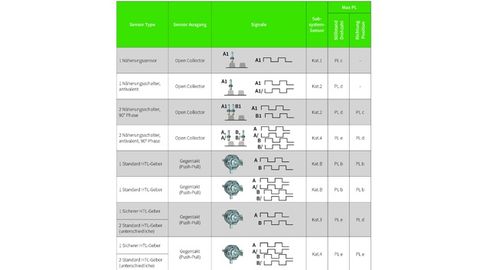
Table 2: Hardware architectures and their achievable performance levels. The typical effort required for monitoring and sensor technology and the achievable performance level (PL) are visualized.
© Wieland ElectricThe situation is simpler with actuators. Ultimately, all safety functions - with the exception of Safe Speed Motor, SSM - have only one safe error response: shutdown. If a speed is exceeded, an incorrect direction of rotation is activated or acceleration is too fast, the system always switches off safely. In the simplest case, this can be achieved with a contactor in PL c or with two contactors in PL e. It is more convenient to use a frequency inverter that has one of the safe stop functions STO or SS1. SS1 is preferable because the movement generally comes to a standstill more quickly and the distances to protective devices can therefore be selected more compactly. If a frequency inverter is used, there are also variants of many product lines that directly support the other safety functions. However, this is usually only worthwhile if several different safety functions are used.
A question of logic
As everywhere in control technology, logic processing is located between the sensors and actuators. This determines which of the functions (listed in Table 1) can actually be used. While the actuators determine the reaction time in the event of an error, the logic determines how fast or dynamic movements can be. If a conventional drive is operated at 50 or 60 Hz, it usually has a speed of 3000 to 3600 rpm. In order to be able to react quickly to unwanted movements, the angular resolution of the measurement should be less than 1°. Typical rotary encoders with 512 lines per revolution are used for this purpose. However, this combination requires the signals to be evaluated at 25 to 50 kHz - which would be too much for a normal input on a safety controller. This is why special inputs or 'motion monitors' are used here. These must be able to evaluate up to four tracks and detect possible line faults. Only in this way can a PL-e evaluation of a direction of rotation or position be carried out. If these four inputs can alternatively be grouped as two pairs to form two inputs, two independent axes can also be monitored in a lower PL or only for standstill and speed.
However, two seemingly harmless application-related boundary conditions can make reliable standstill monitoring more difficult: Vibrations and creeping movements at standstill. The former can occur anywhere, while the latter are mainly found in vertical axes. In both cases, the typical monitoring of the speed to v=0 fails and false triggering of the safety function is to be expected. This cannot be avoided technologically with pure speed monitoring alone. This can be remedied by motion monitors that monitor the position as well as the speed. However, this increases the complexity of the sensor system. As already explained, position monitoring means that two sensors are required per channel. In total, almost twice the investment in sensors and processing is required.
Weigh up priorities
Intelligent logic also enables priorities to be weighed up in the application: The triangle of reaction speed, precision and availability of the system is limited by the processing power. If, for example, the measuring frequency is increased by using an encoder with more lines per revolution, this has a positive effect on response speed and response time. However, this also requires better shielded cables and faster processing in the controller, which in turn drives up costs.
Finally, there are a number of other control variables that can be used to shift the positions in the triangle in one direction or the other. Expert advice is required to find the right configuration.
Author:
Thomas Kramer-Wolf is Head of Training & Services at Wieland Electric in Bamberg.


You might also be interested in
Safety first
The development of cobots into a commodity product is closely linked to the issue of safety in robotics - a challenge that needs to be mastered efficiently.
 read more...
Locking with need for clarification - help with risk assessment
DIN EN ISO 1419 has already been available for five years. However, there are always uncertainties regarding the actual safety functions of a guard locking device, which the machine manufacturer must evaluate based on his risk assessment. Here is...
read more...Safe operation via radio - (how) does it work?
Many machine builders want to use tablets in addition to the existing machine operation. Demanded features such as WLAN, camera, multi-touch and much more are available here - but if safety functions are required, these devices reach their limits.
read more...Heavy-duty HRC requires new safety approaches
The topic of HRC is not just for 'lightweights'. In the field of heavy-duty robotics, solutions will also be in demand in the future that allow humans and robots to work together directly without the need for a safety fence. However, this requires...
read more...Secure hold in the slip ring
Transmitting safety-relevant data via slip rings is no trivial matter. Motion control experts from Kollmorgen have developed a TÜV-certified safety solution, including UL approval, together with slip ring manufacturer Stemmann-Technik.
read more...Validation neglected
EN ISO 13849 is decisive for the integration of safety-related control functions in machines. However, the part of the standard relating to validation is often neglected in practice - a major shortcoming.
read more...The intelligent safety switch
Safety modules and safety switches that communicate at I4.0 level simplify troubleshooting. However, the communication capability also has interesting potential for predictive maintenance and tamper protection.
read more...The vampire effect of quantification
There are always controversial discussions regarding the determination of risks for products and systems. But which approaches actually make sense in the context of safety and security? What approach does the new framework for safety and security -...
read more...Warnings - less is often more!
Many operating instructions contain warnings 'to death'. This may be reassuring for the manufacturer, but for the reader it means that relevant information is barely noticed - possibly with fatal consequences for people, the environment and the...
read more...