

Syntax
5 trends for digital manufacturing in 2022
What are the most important trends for digital manufacturing in 2022? The IT service and cloud provider Syntax assumes that companies will be dealing with five important topics in particular.
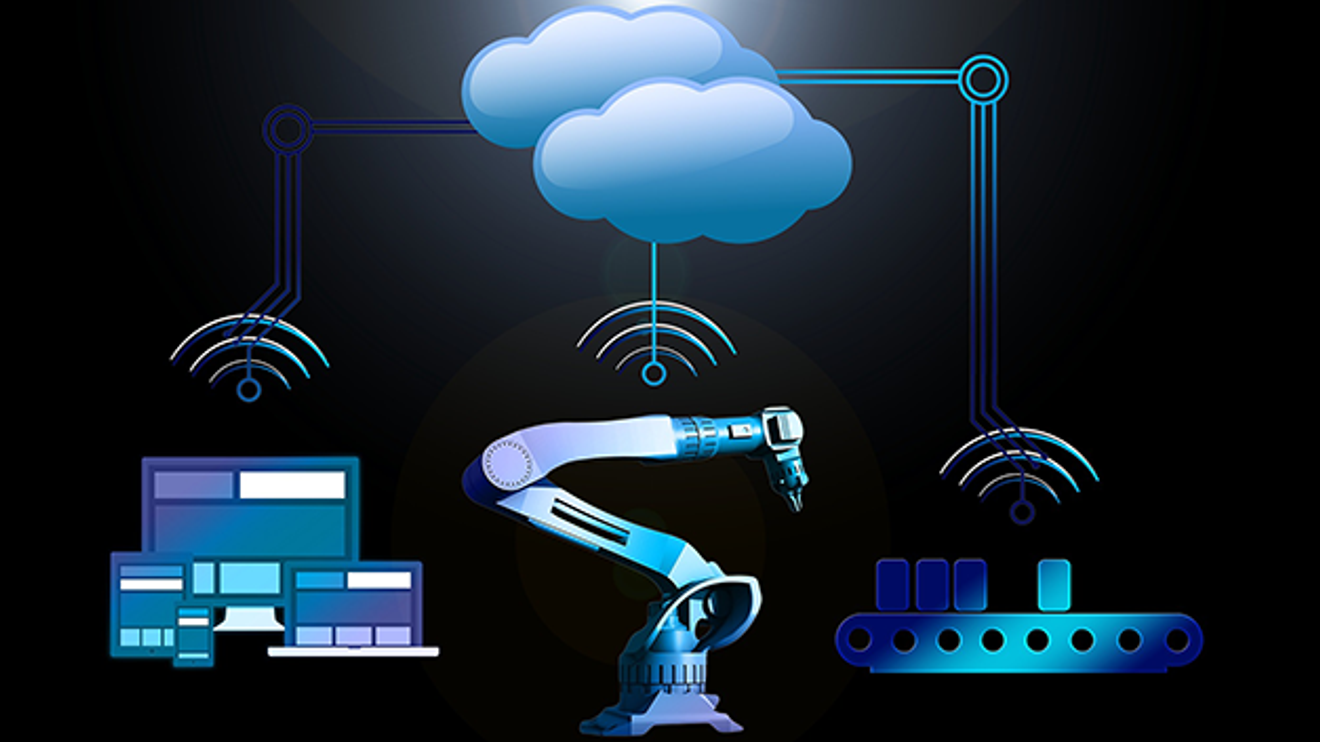
Trend 1: MES in the cloud
The cloud has arrived in production and is becoming more important every day - and not just as a "data reservoir" for analytics, but to integrate production-related processes even more closely into the company-wide supply chain. More and more companies will operate their production management completely in the cloud via the Manufacturing Execution System (MES) and increasingly rely on solutions such as the SAP Digital Manufacturing Cloud (DMC).
Trend 2: Integration of SAP and Microsoft
Stronger integration of SAP processes with Microsoft 365 apps such as Teams, Power Apps or Power Automate for workflows will make work easier for workers. Employees, for example from maintenance, who do not regularly use SAP, can plan and control orders in the familiar MS environment and thus trigger the necessary SAP processes in the backend.
Trend 3: Agile project approaches
Agile and dynamic project approaches will also increasingly replace traditional top-down organizational structures in production in 2022 and replace rigid process structures with small, effective teams in short iteration cycles. Hundreds of pages of specification documents will be a thing of the past. Companies need to involve end users much earlier and pick them up when explaining complex issues, for example via visual representations.
Trend 4: Digital supply chain

The pandemic has shown many manufacturing companies how important a well-managed digital supply chain is. However, the efficient management of value-adding processes with the help of digital solutions is also becoming increasingly important, regardless of crises. By keeping an eye on your processes at all times, you can react to potential bottlenecks in good time and prevent machines from coming to a standstill due to a lack of material, for example.
Trend 5: Predictive analytics
Pure KPI dashboarding is a thing of the past: thanks to artificial intelligence and machine learning-supported data analysis, manufacturing companies combine recorded process data with order and quality data - and benefit from new, important insights: In addition to predictive maintenance, predictive quality can also improve process stability and achieve higher product quality with fewer rejects.


You might also be interested in
The trends in 2022
The experts at Webcon see five important automation trends for the current year - low-code and no-code tools, citizen-assisted development and content management play a decisive role here.
 read more...
The cybersecurity trends of 2022
Cybercrime-as-a-Service, growing awareness and securing the entire supply chain are among the most important trends in cyber security in 2022.
read more...Billions for artificial intelligence
SAP wants to boost AI business with major reorganization
SAP wants to profit more from business with artificial intelligence. The DAX-listed company is restructuring the company for this purpose. 8,000 employees are affected.
read more...Record interest in AI online course
Two young stars of the AI scene are providing the Hasso Plattner Institute's most popular free online course to date. Since 14 June, the two 25-year-olds have been familiarizing laypeople with ChatGPT, DALL-E, Midjourney and the like in an...
read more...These are the trends for 2023
What will be the key issues surrounding the cloud in 2023? Peter Schmidt, Director of Business Development Public Cloud Services at Syntax, sees five key trends in particular.
read more...Severe setbacks, positive conclusion
German companies have had extremely positive experiences with digitalization projects and want to invest significantly more in them in the future. This is the result of the annual study on digital transformation by Couchbase.
read more...Mobile instead of stationary
In addition to the technical steps of inspection, maintenance, repair and improvement, administrative aspects such as planning, evaluation and feedback are also important in maintenance management. This works efficiently with a mobile solution for...
read more...The top articles in February 2022
The most-read articles in February show: There is a need to talk about the cloud. You can also read about what needs to be considered when implementing 5G and find out how data communication via light is made possible in the top 10.
read more...Sven Mulder becomes Managing Director
On March 1, Sven Mulder will become Managing Director of SAP Germany. As Alex Kläger's successor, he will be responsible for the Group's business in Germany.
read more...