

Kinaxis survey
Transparency in supply chains
Three out of four manufacturers in Germany are confronted with disruptions to their supply chains several times a year. A recent survey by Kinaxis, a provider of supply chain management, shows that many still find it difficult to react quickly enough.
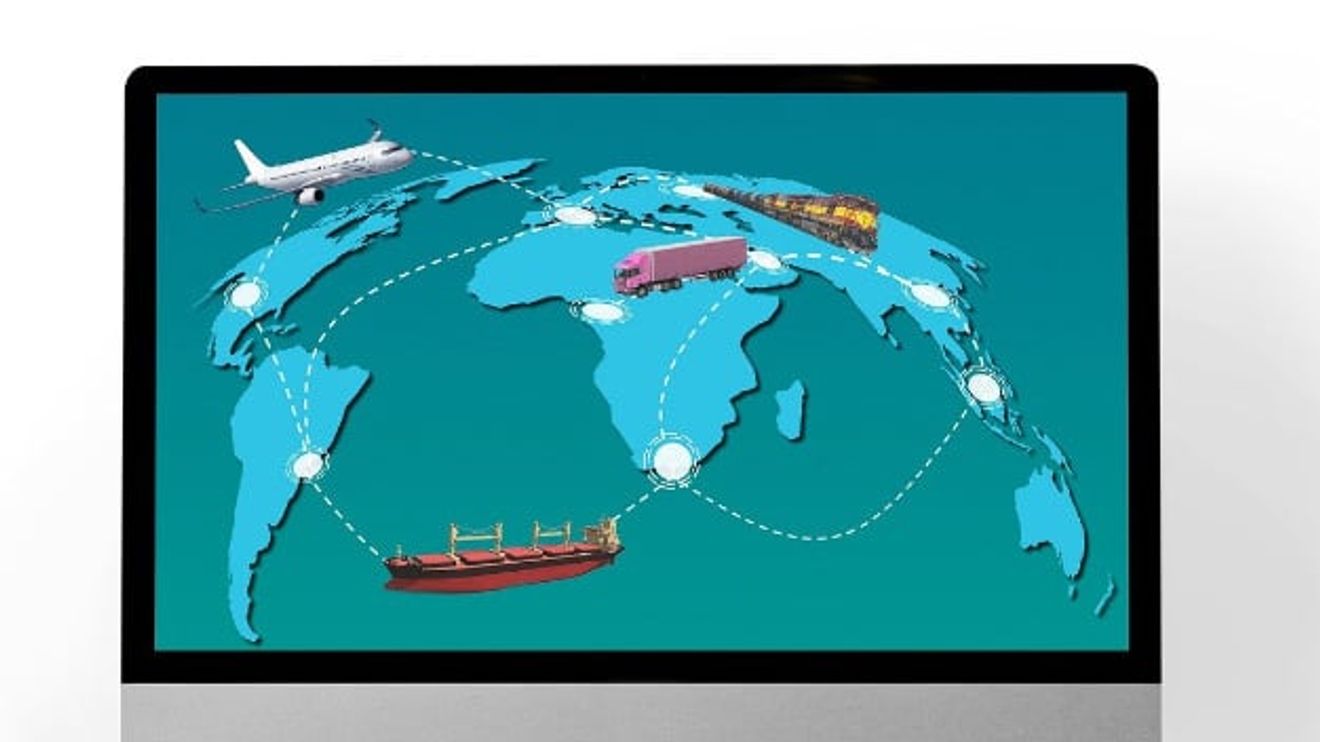
If goods cannot be delivered on time or at all, quick action is crucial - 76% of manufacturers in Germany are confronted with disruptions to their supply chains several times a year. For the majority (82%), it is ideal to be able to respond to a disruption within two to three days or faster. At the same time, 75% expect artificial intelligence to help better manage supply chain disruptions and minimize risks. This was the result of a survey conducted by Kinaxis, in which 112 supply chain managers in German manufacturing companies with an annual turnover of at least 200 million euros were questioned.
While 35% of German manufacturers say they have a real-time overview of all departments and can immediately identify which departments in their company are affected by an unexpected disruption, others struggle to gather information in a timely manner: 31% of respondents said it takes several hours to gather their compartmentalized information and for 22% it takes several days - further extending the time between impact and response.

"In addition to the visibility of when and where a disruption has occurred, most companies lack transparency regarding the actual impact on their business," emphasizes Martin Bilstein, Regional Vice President for the DACH region at Kinaxis. He specifies: "When a disruption occurs, not even half of manufacturers can understand the resulting costs (40%), and only about one in three (29%) can understand the CO2 impact. Given the increasing pressure for transparent ESG targets and reporting, this is a remarkably low number of companies."
The data also shows that companies in the manufacturing industry are still a long way from being able to respond to a disruption in real time: If a natural disaster or major maritime bottleneck - such as the Suez Canal incident in 2021 - were to cause extended delivery times, only around 13% would be able to respond within a few hours.
AI can support risk management
As developments in the field of artificial intelligence (AI) continue to dominate discussions, optimism about its ability to mitigate risk is justified. According to the survey, attitudes towards AI depend on companies' own ambitions and existing capabilities, regardless of industry. Almost one in five manufacturers in Germany (17%) believe that AI still needs to improve itself. "AI is therefore not seen as the holy grail for optimizing transparency in supply chains. Instead, it is more of a useful additional tool that can help to improve processes that are already working well," says Bilstein.

Beyond the discussion surrounding AI, more than a third of manufacturing companies in Germany expect international conflicts (31%) and the resulting energy prices (39%) to have the greatest impact on their supply chain in the next five years, closely followed by raw material shortages (35%).
"In order to be able to react quickly to crises, companies need to introduce robust processes," explains Bilstein. "This is where interlinked planning comes into play, which links each individual element in the supply chain with all other elements end-to-end. A change in one part of the chain triggers a corresponding reaction in the rest of the chain - and thus allows the current status and the consequences of changes to be monitored in real time. The survey shows that fast action and well-founded decisions based on the right data are still a problem for the majority of companies. Interleaved planning combined with AI, heuristics and optimization can help to remedy this and ensure that supply chain managers are equipped for the challenges of today."
Survey methodology
The survey was conducted among 112 supply chain managers in German manufacturing companies with an annual turnover of at least 200 million euros. Sapio Research conducted the interviews online in October 2023, using an email invitation and an online survey.


You might also be interested in
What German companies can expect
The German Supply Chain Act comes into force at the beginning of the year. Business complains about the high costs involved, while non-governmental organizations consider the law to be too lax.
 read more...
Improvement in supply bottlenecks in sight
The coronavirus pandemic caused severe disruption to global supply chains. Many companies found themselves in the unpleasant position of not being able to process full order books. In this respect at least, there is now light at the end of the...
read more...Companies with new delivery strategies
Due to supply chain problems, most companies in Germany have changed their purchasing strategy.
read more...Supply chain remains the industry's problem child
As the "Performance Drivers 2024" study shows, more than two thirds of companies in the DACH region are complaining about bottlenecks with their suppliers. Other burdens include quality problems at suppliers and a sharp rise in transportation costs....
read more...New member of the Group Management Board
Dr. Helena Garriga has been a member of the Körber Group Executive Board since September 1, 2024. She is responsible for the Business Area Supply Chain.
read more...Business organizations call for a new start
Although the EU Supply Chain Directive pursues a correct and important goal, it is simply not feasible in practice for European companies. Eight business organizations, including VDMA and ZVEI, are calling for a new draft.
read more...One year of the Supply Chain Act
Since the beginning of the year, German companies have been required by law to take responsibility for child and forced labor in the supply chain of their products. The responsible federal office has drawn a positive balance - the economy is less...
read more...A look at the supply chain
Zebra has taken a closer look at the supply chain for the coming year: According to this, sensors and fixed infrastructures will play a decisive role in data collection and thus in the supply chain, and investments in automation solutions are also...
read more...Inventory management 4.0
When the cable reel is empty, production comes to a standstill. This is not an unlikely scenario, as many companies can only guess at the remaining quantity of cables in the warehouse. Smart sensor technology for the cable drum rack provides a...
read more...