

Interview with Frank Stührenberg
A question of balance
In this interview, Frank Stührenberg, CEO of Phoenix Contact, talks about the future of energy supply, value-oriented action, competition from China and what excuses he will not accept when it comes to the further development of his company.
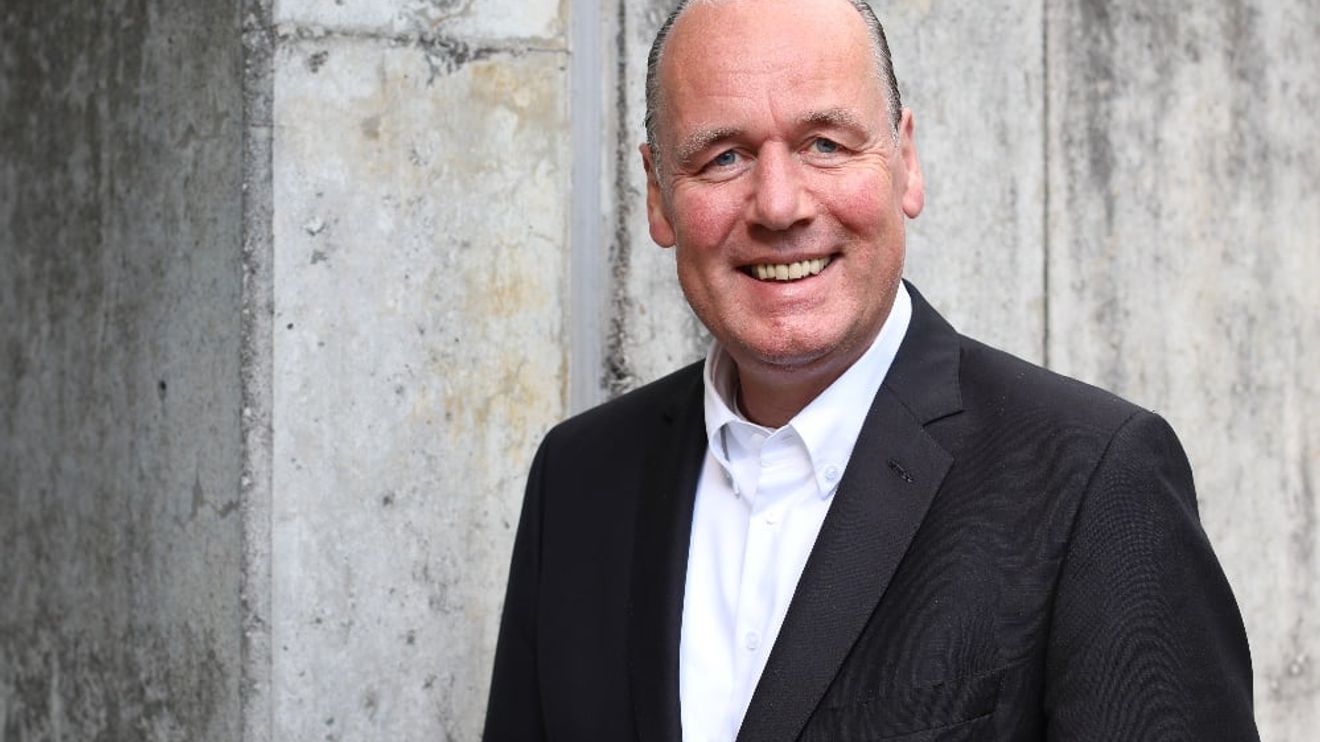
As an advocate of the All Electric Society, what action do you see as necessary for your company and society in this context?
Frank Stührenberg: Basically, the 'All Electric Society' defines three fields of action: Firstly, the primary form of energy of the future is regeneratively generated electrical energy. Secondly, this energy must be made available at the right time and in the right region. And thirdly, energy efficiency-enhancing technologies must be developed and implemented. All three fields of action are interlinked and must be discussed - without any form of ideological or dogmatic positions. What does that mean?
We are convinced that renewable electrical energy is the future, not least because it will be by far the most commercially competitive in the long term. But it is also permissible to discuss what role nuclear energy or hydrogen, for example, can play in the energy supply.
The next step will be to make decentralized energy available in a way that is both stable and comprehensive in terms of time and region. At the end of the day, it is about the conversion of electrical energy as a primary form, i.e. 'Power to X'.
According to our presentation of the 'All Electric Society', efficiency-enhancing technologies must also be included. On the one hand, there is the direct increase in efficiency that results from a direct switch to electricity as the primary form of energy, for example in the automotive sector from combustion engines to electric motors. On the other hand, there are classic efficiency technologies, such as those resulting from automation or sector coupling.
Sector coupling is about combining forms of energy in order to avoid losses, for example by connecting the electrical generation sector with thermal energy sectors. We show what such sector coupling can look like in our 'All Electric Society Park' at the Blomberg site.
With the growing proportion of AI applications and the increasing digitalization and electrification of transport, the demand for energy is increasing enormously. How can this demand be met with renewable energies?
Stührenberg : More electrification, more digitalization, more networking and therefore more data are increasing the demand for electrical energy - worldwide. According to the World Energy Outlook 2023 study, an increase of an additional 80,000 TWh is expected by 2050. The question of energy supply is therefore a very important one, but not exclusively one of primary energy. It is important to drive forward system networking and sector coupling. Networking creates transparency, for example about energy consumption in one sector and energy generation in another. Energy flows can be automated and optimized on the basis of this data.
Production can be made more efficient with direct current. The first projects for the implementation of DC in industry are already underway, including at Phoenix Contact. How do you assess the potential of this technology and how long will it take for direct current to become established in the factory?
Stührenberg: The advantage of DC technology is that it minimizes conversion losses and increases efficiency. In this respect, it makes sense to check where a DC network can be operated in production. There is a considerable efficiency advantage, especially in applications with a lot of movement: in robotics applications or turning and milling centers, for example, energy can be recovered with every braking movement.
"I believe that DC technology will only be found in island applications for the foreseeable future."
At the moment, factories are almost exclusively equipped with AC grids. This means that a DC infrastructure would have to be installed first. In contrast to conventional networks, DC networks also have to meet certain requirements in terms of safety - just think of pulling a plug under load. Despite all the challenges, we at Phoenix Contact will develop DC components and also set up DC networks ourselves. In our new Building 60, we are relying on direct current, among other things, to enable the most efficient energy flow possible - from energy generation using photovoltaics to energy storage, bidirectional charging and LED lighting through to heat supply using an ice storage system. The aim for the Blomberg site is to develop it into a closed campus that requires as little energy as possible from the public grid.
But to cut a long story short: I believe that DC technology will only be found in isolated applications for the foreseeable future. In the medium term, there will be a coexistence of DC and AC grids for decades, because an immediate change to an established infrastructure does not make sense in terms of resource efficiency alone.
One goal of the All Electric Society is to reduce dependence on fossil fuels. However, electrification also requires raw materials such as gallium, platinum and copper. Is this replacing one raw material dependency with another?
Stührenberg: The primary objective of the All Electric Society is to achieveCO2 neutrality and stop the negative effects of climate change. This includes breaking the dependence on fossil fuels as a driver of climate change. The second effect is to reduce regional dependence on the producing countries.
"We should therefore try to create a balance in the value chain to create interdependence."
Renewable energies are much more decentralized, but here too, raw materials are used at many points along the value chain, creating dependencies on their manufacturers. Let's take energy storage systems as an example: most batteries are based on lithium, while nickel, cobalt and other raw materials are required for electrodes. Everyone knows the sources and the circumstances under which the materials are extracted. This situation means that dependencies on raw materials are being critically scrutinized, and in my view that is good and right.
Various approaches are being taken to reduce these dependencies. On the one hand, research is being carried out into new technologies, such as sodium-ion batteries. The energy density is still lower, but the raw materials would be readily available. On the other hand, mines are being reopened in Europe, for example in Spain and Scandinavia, to extract lithium and other raw materials. In principle, this is possible, but currently often uneconomical compared to the supply conditions in other regions. However, there will be no complete self-sufficiency or mere dependence on economic and social circles that are closer to you personally. There are countries rich in raw materials, but they have little know-how in other areas of the value chain; European countries have an advantage here. We should therefore try to create mutual dependency through a balance in the value chain.
"But we Germans also tend to see everything as problematic"
Work is also underway on a supply chain due diligence law to protect people in resource-rich countries. How do you view the planned law?
Stührenberg: So far, the discussions about the Supply Chain Due Diligence Act have been very critical, with talk of a bureaucratic monster. As a family business, we stand for certain values that have grown with each new generation of shareholders over the last 100 years. This means we have a very clear view of how a company should behave - regardless of the legal framework. I therefore take a positive view of the Supply Chain Duty of Care Act, as it also obliges other companies to act in the same way as we already do due to our value orientation - in a way, it creates an economic balance.
However, it does not apply to the electrical industry. Unlike a T-shirt, a printed circuit board quickly contains 150 components, and no one is able to keep track of these stages of the value chain. In the case of a T-shirt, there is the cotton plantation, the weaving mill, the sewing mill, the dyeing mill and the supplier - here I can hold the buyer in Europe accountable. In the industry, finished components are bought in. You talk to the first and second level of suppliers, but as a rule you don't even get to the source of the raw materials. It is frustrating to put effort into something that is unlikely to prevent precarious working conditions or critical circumstances. But making this a bureaucratic necessity will only lead to more reluctance - nothing would be gained by the law.
As a way out of the situation, some experts are talking about increasing the depth of value creation in Germany and Europe.
Stührenberg: Entrepreneurial action means striking a balance between the distribution of turnover and value creation. This means that the production conditions in one region have to meet the competitive conditions in another region. There are also currency effects. It's not always easy to reconcile everything.
"Entrepreneurial action means striking a balance between sales and value creation."
At Phoenix Contact, around 60 percent of value creation takes place in Germany and around 70 to 75 percent in Europe. However, we generate around 75 percent of our sales outside Germany. In this respect, we are currently on the path of bringing our value creation closer to the sales markets. We are currently focusing on India and the USA.
In other words, local production for regional markets.
Stührenberg: Exactly. In China, for example, we have the setup to develop and produce locally and also serve regional markets. Markets in South East Asia, for example, require a certain price orientation, which is why we will continue to push the 'local for local' concept there.
This leads us to the question of how competitive Germany and Europe are in an international comparison.
Stührenberg: I have to differentiate between the general economic perspective and the perspective of our company. Energy costs, for example, are difficult to calculate in Germany. But as Phoenix Contact, I find it difficult to see them as a decisive competitive factor, because they only account for between three and five percent of our costs. They are therefore not a decisive factor in the decision to relocate production to the USA, for example. In all neutrality, we are currently in the process of building up certain skills in the USA. You quickly learn to appreciate the level of training in Germany.
But we Germans also tend to see everything as problematic: too much bureaucracy, prices are too high, wages are too high, there is a lack of skilled workers and the grass is always greener elsewhere. Yes, it's true: It's not easy, it's also grueling at times and political decisions simply have to be brought about from time to time. But to cite these as reasons for not being able to develop further as a company, for not being able to compete, is not an excuse I will accept, at least not for our company.
So you're basically complaining at a high level?
Stührenberg: Let me be clear: I don't want to play down concerns from industry and business, it always depends on the perspective. Let's stay with the example of the Supply Chain Duty of Care Act: For us as Phoenix Contact, it is easy to assign a small group of people to the bureaucratic effort; for a company with an annual turnover of around 250 million euros, it is a completely different burden.
"There are more pressing problems than reporting obligations."
What I would like to say is that there are more pressing problems than reporting obligations. For many companies - including ours - they are more to do with taxes. Of course, the high tax burden leads to the decision not to invest at all or to invest in another region. However, I am much more critical of the inheritance tax rules for family businesses. I understand the socio-political approach of distributing inherited wealth to the general public. However, it is a critical situation for family businesses: heirs can no longer afford to remain shareholders if the funds are not provided by the company.
What do you think of the competition from China in general?
Stührenberg : We have been active in China for a good 30 years and have gained some experience in the market. During this time, Chinese competition has changed considerably. In the beginning, there was great concern about plagiarism, i.e. products that were 100 percent modeled on our components and were also sold under our name. Outside of China, we have good legal options to take action against counterfeit products. We have moved beyond this period: Chinese competition has become much more qualified and has strongly promoted in-house development. Chinese and, above all, Taiwanese competitors are now part of the classic competition that we know from Germany, Europe and the USA.
In terms of technology or price?
Stührenberg: The companies are extremely competitive. But at the moment we are still finding ways to survive, either through innovative developments or economies of scale in our portfolio. In terms of technology, the Chinese competition has arrived at eye level, while in terms of price they are still strongly positioned, at least for individual products or competitive categories. Chinese companies have the political advantage, especially in China, but now they need to leave their home market in order to establish locations in Europe or the USA and create customer proximity. They need a logistics network and suddenly have to present country-specific certificates - and they don't come for free.
"Chinese and, above all, Taiwanese competitors are now part of the traditional competition that we know from Germany, Europe and the USA."
However, China is taking great care to build up its own technology leaders and position them very prominently in China. In the ICT sector, this includes Huawei, and in the e-commerce sector, Alibaba. This is now also increasingly starting to happen in the field of automation technology. There are extremely efficient companies in application areas such as drive technology or sensor technology, but let me put it this way: the Chinese Siemens does not yet exist in this form, but we are still very careful to keep dependencies under control.


You might also be interested in
Interview with Gunther Koschnick, ZVEI
The energy efficiency scenario
ZVEI is organizing the 'All Electric Society Arena' at the Hannover Messe for the first time. ZVEI Division Manager Gunther Koschnik explains in an interview why the All Electric Society is gaining in importance right now.
 read more...
followed up! - with Dr. Gunther Kegel
"Recognizably alien to the industry"
More and more regulations and bureaucracy are being imposed on companies. In an interview, ZVEI President Dr. Gunther Kegel criticizes politicians and calls for consistent action.
read more...checked up on! - with Dieter Hess
The new payment model
Until now, Codesys has sold its Soft PLC with a device-based license model. Now the company is switching to an application-based payment model. Managing Director Dieter Hess explains the background to the license changeover.
read more...checked up on! - with Steffen Winkler
AI - a lever in the industry
Steffen Winkler from Bosch Rexroth explains how important artificial intelligence has become in industry and how automation specialists are using AI.
read more...followed up! - with Rainer Brehm, Siemens
An All Automation Society?
Industrial automation has experienced an enormous upswing in the last 25 years. But where exactly is automation today and where should or must it be in the future? Rainer Brehm takes a stand in this interview.
read more...New Automation Management Board strengthened
New Automation, the training association for industrial companies in the field of automation technology, has expanded its board and set up new projects for young talent.
read more...Monitor and protect DC microgrids
Sustainable production using renewable energies begins with the establishment of an industrial DC grid. A multifunctional DC switching device is responsible for switching, protecting, monitoring and precharging DC sectors.
read more...The e-paper of issue 08/2024
How can data centers be cooled for AI? How successful is malware programmed with WormGPT? And how can virtualized control systems be integrated into production using TSN? Computer&Automation issue 08/2024 provides answers to these questions and...
read more...Frank Stührenberg hands over to Dirk Görlitzer
Frank Stührenberg will hand over the chairmanship of the Phoenix Contact management board to Dirk Görlitzer at the end of the year. Until then, there will be dual leadership.
read more...