

Interview with Barbara Frei
"The skills shortage is definitely real"
Digitalization in companies is bringing about change in terms of work organization and design. But what about the coveted skilled workers? Barbara Frei from Schneider Electric assesses the situation.
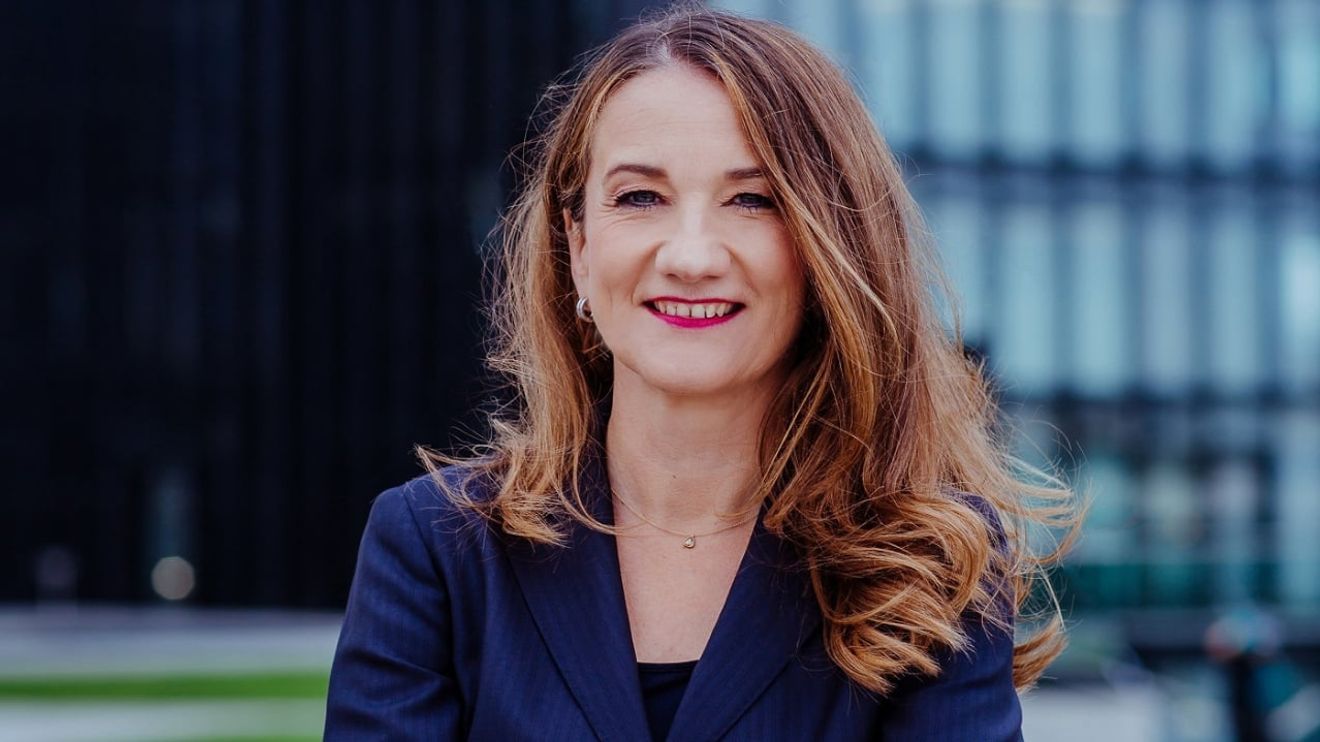
Ms. Frei, how competitive is Germany on the international labor market?
Barbara Frei: My impression: very competitive! But that doesn't mean that there is no room for improvement. On the contrary, especially when it comes to the immigration of skilled workers, the framework conditions could be much better. Without qualified immigration, it will not be possible to close the skills gap. I also share the view of some observers that Germany and the EU need to take measures to create a more attractive environment for high-tech companies in the IT and AI sector. This would make it much easier to attract and retain highly qualified female graduates. However, I have the impression that a rethink is taking place on both issues. And apart from that: Germany is and remains an internationally attractive labor market.
Speaking of a shortage of skilled workers: there are those who doubt that this even exists. How do you assess the current situation on the labor market?
In view of the speed at which automation and AI are developing, some jobs that are still advertised today may no longer need to be filled by a person in the future. But that is pure speculation at the moment. I can only speak for the Schneider Electric markets: The skills shortage there is definitely real and cannot be argued away. And it can threaten the existence of companies.
Digitalization and networking have an impact on almost every occupational group. What skills and qualifications are particularly in demand in relation to Industry 4.0 and the IoT?
If you ask about professional qualifications, then IT skills are particularly in demand. In other words, people who are familiar with topics such as big data, blockchain, cloud or artificial intelligence. And I'm not just talking about dedicated IT specialists. Basically, this is relevant for all (technical) professions. However, this does not mean that we all have to deal only with rocket science. However, in order not to lose touch or be helplessly at the mercy of certain market developments, we need at least a basic technical understanding - and, very importantly, of the effects of digitalization on production methods and business models. Above all, I appeal to managers in the SME sector: keep abreast of technological developments, cultivate and exemplify an open attitude and see digitalization as a core entrepreneurial competence.
What challenges will companies face as a result of demographic change?
Clearly, there will be even fewer people in work in the future, especially younger people. And that will initially have negative consequences for an economic system. At the same time, however, the demographic trend that characterizes Germany is by no means representative of the entire world population. On the contrary, there are extremely young and up-and-coming societies in many parts of the world. So creating more attractive immigration conditions and opportunities is an important solution. Furthermore, I am not sure whether the reduction in the working population will actually have as negative an impact as is often feared. After all, there is not only a demographic change, but also a technological change. Almost all of our industrial and mechanical engineering customers are currently looking at how they can massively increase the level of automation in their systems. We are noticing this very clearly in the demand for our recently introduced collaborative robot. It can take over tasks for which it is already impossible to find personnel.
What is Schneider Electric doing to attract qualified specialists?
Fortunately, we are in a comparatively comfortable position here. Our business model alone - enabling companies to operate sustainably - is very attractive to younger specialists. We hear this again and again in job interviews. In order to retain specialists and offer them suitable career opportunities, we use a matching software called "Open Talent Market", which covers open positions or projects within the company. We pursue the so-called 3E strategy: Experience, Exposure, Education. In addition to traditional further training, employees can also participate in projects that do not fall within their actual areas of responsibility. And this is very well received.
Video tip: What has happened in 10 years of Industry 4.0
At Hannover Messe 2023, Acatech issued a final declaration with clear implementation recommendations for Industry 4.0. At this year's trade fair, Dr. Barbara Frei took a reflective look back at the past decade.


You might also be interested in
The empathetic manager as an employee magnet
Companies are complaining about the shortage of skilled workers - and rightly so, as the latest study by the German Economic Institute shows: there was a shortage of 630,000 skilled workers last year. What's more, the higher the qualifications...
 read more...
Data server for intelligent energy distribution
The Ethernet gateway 'EcoStruxure Panel Server' from Schneider Electric is a data server for the control cabinet that connects intelligent components with each other regardless of the manufacturer.
read more...Plant honored as Sustainability Lighthouse
Schneider Electric's plant in Hyderabad, India - one of India's most important technology locations - has been recognized as a Sustainability Lighthouse by the Davos World Economic Forum. This is the third award of this kind for Schneider Electric.
read more...All-in-one protection for electrical systems
The 'Acti9 AFDD' protective device from Schneider Electric offers safety for buildings of all sizes by combining the protective functions of AFDD (fire circuit breaker), residual current and miniature circuit breakers and mains voltage monitoring in...
read more...25 years of Computer&Automation - The e-paper
For 25 years, Computer&Automation has accompanied the growing influence of IT in automation technology. Ultimately, IT and automation can no longer be clearly separated. In this anniversary issue, you can read about the importance that...
read more...The top articles in February 2023
In addition to annual trends and new developments, the topic of security and how to maintain it played a key role in our most-read articles of the past month. Find out which negative headlines also made it into the ranking here.
read more...Multi Carrier for compact machine designs
Schneider Electric has developed Lexium MC12, a multi-carrier for transporting, positioning and grouping objects. With its modular installation method, the solution enables the implementation of new machine designs.
read more...Safety controller functionally expanded
Schneider Electric has expanded the functionality of the Modicon MCM series of safety controllers. In particular, the processing capacity of the function blocks in the CPU has been significantly increased.
read more...Available with up to 600 kW UPS capacity
Schneider Electric is expanding its range of 3-phase UPS systems: The Easy UPS 3L series supports the operation of external battery cabinets and is available in various power sizes from 250 to 600 kVA (400 V).
read more...