Mastering the dangers of arcing faults
An arc flash can pose a danger to equipment and employees in industrial plants. Dekra now offers an innovative test procedure to identify and analyze arc flash risks.
 read more...

Articles and background information on the topic
An arc flash can pose a danger to equipment and employees in industrial plants. Dekra now offers an innovative test procedure to identify and analyze arc flash risks.
read more...Sensitive electronic components can be damaged or even destroyed by electrostatic discharge (ESD). Working in an ESD-protected environment is therefore highly relevant in production or assembly.
read more...K.A. Schmersal at the Hannover Messe
The 'DHS' door handle system from Schmersal combines the functions of a robust door handle with the display of various machine statuses via the illumination of the handle.
read more...Nexcobot at the Hannover Messe
Nexcobot was officially awarded the certificate for functional safety in accordance with IEC 61508 and ISO 13849-1 by TÜV Rheinland at the Hannover Messe.
read more...The Schmersal Group is restructuring its service business: tec.nicum's range of safety services is being significantly expanded - particularly with regard to digitalization and complete solutions for machine safety.
read more...In theory, protection against unauthorized access is the declared aim of all winners in the 'Safety & Security' category. In practice, however, they could not be more different.
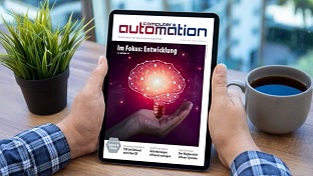
read more...The e-paper for the special issue
What needs to be considered when implementing the new MVO by January 2027? How do safety and security interact? And how do you develop a suitable cybersecurity strategy? You can find answers to these questions, among others, in our special issue on Safety & Security.
read more...Sysgo at the embedded world 2024
Sysgo, Nexcobot and Vectioneer are working together with Intel to develop a platform that serves as the basis for cobots. The platform will be presented at the upcoming embedded world.
read more...Within the EU, the Machinery Directive regulates the safety of machinery. The regulations came into force in July 2023 and will replace the previous Machinery Directive in the future. A transition period runs until January 2027. TÜV Süd supports those affected by the implementation.
read more...A wide range of normative requirements apply to safe direct collaboration between humans and robots without physical separation, for example by means of safety fences. What are these and how can they be implemented in practice?
read more...