

University of Cambridge
Human-like sense of touch for robots
The sense of touch is one of robots' greatest weaknesses. Researchers have now developed a miniaturized tactile sensor that could give robots something much closer to the human sense of touch.
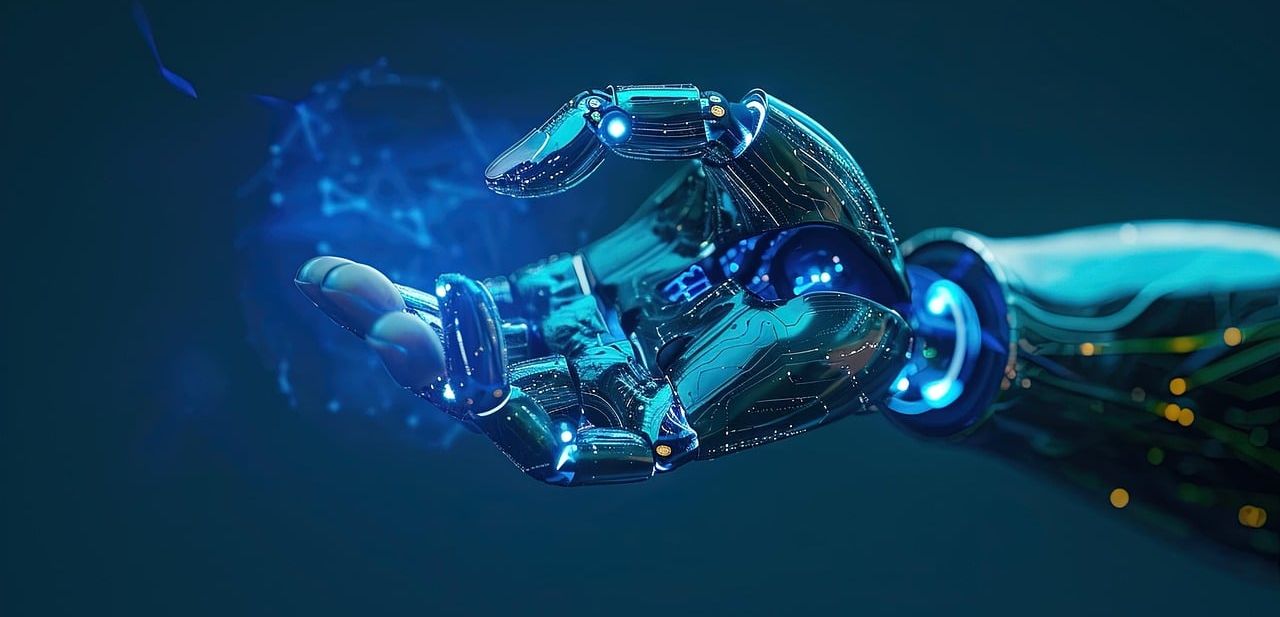
The technology was developed by researchers at the University of Cambridge and is based on liquid metal composites and graphene, a two-dimensional form of carbon. The 'skin' enables robots not only to detect how hard they are pressing on an object, but also to determine the direction of the forces acting, determine whether an object is starting to slip, and even perceive the roughness of a surface - at a resolution that rivals the spatial sensitivity of human fingertips. The results were published in the journal 'Nature Materials'.
Human fingers use multiple types of mechanoreceptors to simultaneously perceive pressure, force, vibration and texture. Replicating this level of multidimensional tactile perception in artificial systems is a major challenge, especially for devices that need to be small and robust enough for practical applications.
"Most existing tactile sensors are either too bulky, too sensitive, too complex to manufacture or cannot reliably distinguish normal and tangential forces," said Professor Tawfique Hasan from the Cambridge Graphene Centre, who led the research. "This has been a major obstacle to truly dexterous robotic manipulation."
To solve this problem, the research team developed a soft, flexible composite material. It combines graphene layers, deformable metal microdroplets and nickel particles embedded in a silicone matrix. Inspired by the microstructures of human skin, the researchers formed the material into tiny pyramids, some of which are only around 200 µm wide. These pyramid structures concentrate mechanical stresses at their tips, allowing the sensor to detect extremely small forces while maintaining a large measurement range. The result is a tactile sensor that is sensitive enough to detect a single grain of sand. Compared to existing flexible tactile sensors, the new device improves both size and detection limits by about an order of magnitude.
The sensor can also distinguish between shear forces and normal pressure. This enables it to detect when an object starts to slip. By measuring the signals from four electrodes under each pyramid, the sensor can mathematically reconstruct the complete three-dimensional force vector in real time.
In demonstrations, the team integrated the sensors into robotic grippers. The robots were able to grip fragile objects, such as thin paper tubes, without crushing them. In contrast to conventional force sensors, which rely on prior information about the properties of an object, the new system adapts in real time thanks to slip detection.
At even smaller scales, arrays of microsensors were able to determine the mass, geometry and material density of tiny metal spheres by analyzing the strength and direction of the forces. This opens up potential applications in minimally invasive surgery or in microrobotics, where conventional force sensors are far too large.
Beyond robotics, the technology could also have a major impact on prostheses. Modern artificial limbs are increasingly using tactile feedback to provide users with a sense of touch. Highly sensitive, miniaturized 3D force sensors could enable more natural interactions with objects, improving user control, safety and confidence.
"Our approach shows that bulky mechanical structures or complex optical systems are not required to achieve high-resolution three-dimensional tactile sensing," said first author Dr. Guolin Yun, former Royal Society Newton International Fellow at Cambridge and now a professor at the University of Science and Technology of China. "By combining smart materials with skin-inspired structures, we achieve a performance that is amazingly close to the human sense of touch."
For the future, the researchers believe that the sensors can be miniaturized even further - possibly to less than 50 µm - and could thus approach the density of mechanoreceptors in human skin. Future versions could also integrate temperature and humidity sensors, bringing them even closer to a fully multimodal artificial skin.
As robots increasingly leave the controlled environments of factories and are deployed in homes, hospitals and unpredictable real-world environments, advances in touch could have transformative effects, enabling machines to not only see and act, but actually 'feel'.
A patent application was submitted through Cambridge Enterprise, the University's innovation arm. The research was supported by the Royal Society, the Henry Royce Institute and the Advanced Research and Invention Agency (ARIA). Tawfique Hasan is a Fellow of Churchill College, Cambridge.


You might also be interested in
International Federation of Robotics
U.S. Robotics Industry Sees Double-Digit Growth
In the U.S., sales of industrial robots rose by 11% compared to the previous year: 38,000 units were newly installed in 2025. This significant recovery is driven by robust growth in the food industry and other non-manufacturing sectors. However, the...
 read more...
Development Collaboration for Humanoid Robotic Hands Launched
Schunk is entering into a new development partnership with Robert Bosch Robotics. Their shared goal is to develop an industrial-grade robotic hand that can be integrated into various humanoid robot systems.
read more...International Federation of Robotics
The 2026 IERA Award was presented
The 2026 “Award for Innovation and Entrepreneurship in Robotics & Automation” (IERA) goes to the Swiss deep-tech company Verity for its fully autonomous indoor drone system. The flying robots support the logistics and retail sectors by...
read more...Quantum-resistant hardware security for Nvidia robotics platform
Infineon Technologies integrates the hardware security module 'Optiga TPM SLB 9672' into Nvidia's 'Jetson Thor' computing platforms for robotics and autonomous systems. The module secures cryptographic keys directly at chip level and thus protects...
read more...AI-supported lighting robot wins German Innovation Award 2026
Ledvance, provider of innovative lighting solutions, was named "Winner" in the Excellence in Business to Consumer Lighting category at the German Innovation Awards 2026. With the AI Companion Lighting Robot 'Elix', the company presents an...
read more...Regulation and safety slow down robotics projects in Germany
QNX has published the study "Inside the Robot: Architecture Benchmark Report". The results of the global survey of 1000 robotics developers show that software and safety requirements are increasingly becoming the central bottleneck for innovations...
read more...Michael Ardelt becomes first COO at Robco
Robco, a company for autonomous industrial robotics, is further expanding its management team. As the company's first Chief Operating Officer, Michael Ardelt will assume responsibility for structuring and scaling Robco's growth in operational terms.
read more...Takeover of Invent Smart Intralogistics Solutions
Comau has signed a binding agreement to acquire Invent, a Brazil-based company specializing in intralogistics and warehouse automation solutions, with a strong focus on e-commerce and high-throughput distribution environments.
read more...Embedded system for OR robotics via voice command
A robotic assistance system is designed to relieve surgeons during minimally invasive procedures by taking over camera control. It is based on an industrial embedded platform designed for low latency, system stability and long-term availability.
read more...