

Kuka
Finalists for the Innovation Award 2025 have been announced
The motto of the Kuka Innovation Award 2025 is 'Medical Robotics Challenge 2.0'. Five international teams have made it to the final with their robotics ideas for the future of medicine. The winner will receive 20,000 euros in prize money.
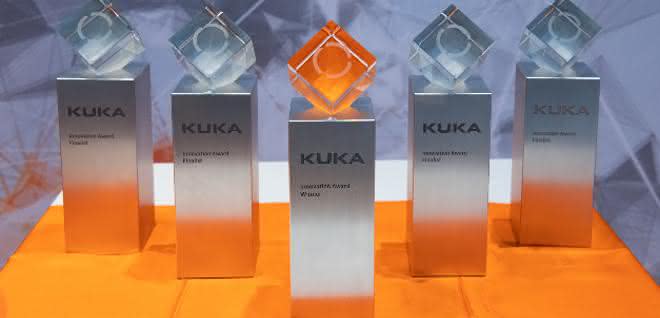
"Robotics will be increasingly used in the healthcare sector in the coming years and will open up countless new possibilities for the benefit of patients," says Axel Weber, Vice President of the Medical Robotics business unit at Kuka. "This is also demonstrated by the ideas for the Medical Robotics Challenge 2.0 that we received from all over the world. Five teams particularly impressed the jury with their robotics concepts for improving prevention, medical treatment or surgical interventions."
The finalists of the Innovation Award 2025
- Robots used in orthopaedic surgery today have limited cross-surgery capabilities, although many procedures have similar tasks to assess and repair damaged joints. The idea of the Canadian team Sera from the University of Waterloo aims to develop a robust collaborative multi-tasking robotic assistant for orthopaedic surgery. The basis of this approach is to divide typical workflows into modules where different types of tasks and tools can be adapted to the needs of a surgical procedure.
- There is a shortage of personnel in the medical sector. This is why there are no ultrasound screening campaigns to detect dangerous and asymptomatic vascular diseases. The concept of the Italian team Aurovas from the University of Ferrara therefore includes an autonomous robotic system that performs standardized ultrasound procedures and determines relevant vascular indicators. The ultrasound image generated by the ultrasound probe moved by the robot is processed using AI technology, which segments the vascular structures and provides the final indicators. The system is suitable for three use cases: Detection of abdominal aortic aneurysms, assessment of jugular vein pulsation in chronic heart failure and performing compression ultrasound to detect deep vein thrombosis.
- Pedicle screw placement (PSP) is a surgical technique used in spinal surgery to stabilize the spine in an anatomically difficult environment. It is most commonly used for spinal fractures, scoliosis and degenerative disc disease. Team Ultratopia from the Belgian KU Leuven and the Swiss Balgrist University Hospital of the University of Zurich, partners in the EU-funded Faros project, present an advanced approach using collaborative multi-robotic systems. They improve the accuracy of PSP placement through non-radiative imaging. The systems include a robotic arm equipped with ultrasound that monitors and guides the second robotic drill arm during the procedure. This approach aims to improve PSP precision, reduce registration errors and account for physiological movements to ultimately improve surgical outcomes.
- The conventional MRI scanner offers excellent soft tissue contrast, 3D visualization and physiological monitoring capabilities. However, the high cost of integrating such imaging devices into hospitals limits their widespread use at smaller clinics and in resource-limited countries. However, the advent of low-field MRI technology has enabled cost-effective diagnostic solutions that expand access to magnetic resonance imaging (MRI) scanners worldwide. These portable low-field MRI scanners are designed to image a specific region of the body due to their limited range of motion, working space and magnetic field strength. EndoSurge, a spin-off of the Max Planck Institute for Intelligent Systems, aims to solve these problems with the design and development of HERMIS (Human Endovascular Robotic Magnetic Imaging System), the world's first robotic, portable MRI scanner for versatile diagnostics.
- The BEC Robotics team is developing an image- and tracking-supported robotic assistance system to plan and perform spinal interventions with straight surgical instruments and implants more efficiently. The biggest challenge is the close proximity to the spinal cord, which poses a significant risk of injury to the nerve cord. The challenges of the procedure can be exacerbated by possible displacement of the target vertebra during the procedure, for example due to the patient's breathing or movements, or the force exerted during the procedure. The robotic assistance system offers extremely high precision under load. This enables better health outcomes while reducing the likelihood of damaging nerves or arteries. Applications include tumour ablation near the spinal cord or the insertion of pedicle screws for spinal fusion, which are used to stabilize the spine.
This is how it continues
Kuka will provide the finalists with a collaborative robot for the duration of the competition, which can be extended with an NDI tracking system. The sensitive LBR Med is specially adapted to medical requirements and, thanks to its ability for human-robot collaboration, is particularly suitable for versatile assistance systems in medical technology. The final teams will present their concepts to an international audience of trade fair visitors, the media and investors at a major trade fair in 2025. The jury will then select the winner of the 20,000 euro innovation prize.


You might also be interested in
Division for software and digital business established
Kuka has founded a new business division. With 'Kuka Digital', the Augsburg-based company known for its orange industrial robots and automation solutions is expanding its software and digital business.
 read more...
Great career opportunities for women in robotics
The IFR supports the career advancement of women in the robotics industry because, according to a World Bank forecast, the gross domestic product per capita would increase by almost 20 percent worldwide if the employment of women reached the same...
read more...Cobot assistant for SMEs
A user-friendly cobot application for small and medium-sized companies that can be used without programming - a team of researchers from Belgium received the Kuka Innovation Award 2024 for this concept.
read more...Handles handling and spot welding
The 'KR Fortec' from Kuka is an energy-efficient and dynamic heavy-duty robot that can be used in particular for tasks such as handling and spot welding.
read more...The top articles in March 2024
New technological developments lead the most-read articles in March. Motors that redefine energy saving, a plastic wheel that discovers the road, a new Ecolabel and, last but not least, the arrival of ChatGPT in the industry. Read for yourself.
read more...Cobot in quality assurance
The 'Ligre' brand is conquering the consumer sector with the function of grinding coffee to the exact gram, which was previously reserved for coffee machines for the catering trade. Gronbach relied on Cobot support in the test setup for quality...
read more...The partner world is growing
Bosch Rexroth launched the automation platform ctrlX and the associated App Store in 2019. The App Store now has 90 partners with over 60 apps. The partner companies currently cover more than 150 use cases.
read more..."From product manufacturer to provider of solutions and software"
Robot systems play a decisive role in overcoming current challenges such as demographic change and the shortage of skilled workers, says Andreas Röhring from Kuka. He talks about this and about resilience and adaptability as a recipe for success in...
read more...Portfolio in mobile robotics expanded
Kuka is expanding its range of autonomous mobile robots (AMR) with the mobile cobot 'KMR iisy' and the mobile platform 'KMP 1500P'.
read more...