

Adesso
Intelligent automation - hand in hand with a bot
How far can the automation of processes using software robots go? Software robots now support their human counterparts in many areas of manual processes or repetitive activities.

"The machine here has stopped and I've been waiting half a day for a callback. Your service is really great." A customer email that doesn't bode well - wrapped up in an ironic remark. The complaint management team begins to look for the cause of the displeasure: Who is the customer? What did he order? What problem does he have? Which departments in the company have they already contacted? What is the status of the processing? This triggers a chain of research work, e-mails and phone calls. The clerks collect the information from various sources and process it. Depending on the complexity of the product and the internal processes, the importance of the customer and the order volume, they invest a lot of time in this. Time that is lacking for contact with the customer.
This everyday process is an example of the potential that lies in intelligent automation approaches. Until now, there was no alternative to this "manual work" in service - and many other areas of work - which was often coupled with disadvantages such as high processing costs and fluctuating quality of results. A new generation of applications now allows those responsible to redesign this and dozens of other processes. Artificial intelligence and intelligent bots play a decisive role in this.
Automation on a new level
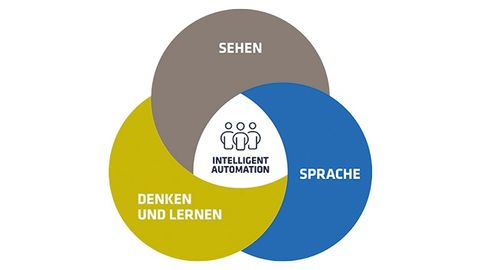
Robotic process automation (RPA) applications show that the automation of processes is already quite far-reaching. Software robots now support their human counterparts in manual processes or repetitive activities in many sectors. Intelligent automation - understood as RPA enriched with artificial intelligence - takes the possibilities to a new level. Intelligent Automation is a concept that heralds a new generation of software-based automation. The approach combines methods and technologies for the automatic and intelligent execution of processes. It aims to create automated end-to-end business processes. The applications learn, think and adapt with minimal human intervention.
This approach also makes it possible to automate processes that were previously inaccessible, as shown in the service example at the beginning of the article. From finance to logistics, from sales to marketing, from HR to the legal department. There is no area in a company that cannot benefit from intelligent automation. The advantages are obvious: employees can concentrate on demanding tasks; customers can enjoy services around the clock, processing times are shorter and processes are more flexible. Other examples of the potential of intelligent automation include
- In-call support: the Intelligent Automation application retrieves all customer information relevant to a call from different systems. It summarizes the information clearly for the service employee. It points out up-selling or cross-selling opportunities during the ongoing contact.
- Reducing after-call work: The Intelligent Automation application runs during the service call. It works as a digital assistant to the service employee and creates notes during content_id:373901034 the call. It then transfers the information to the CRM.
The basis for this wide range of services is the ability of intelligent automation applications to process texts and images and derive "intelligent behavior" from them. Identifying a person or an object in a picture is just as possible as understanding an extensive text. What AI solutions can do today as a matter of course was unimaginable just a short time ago. Optical Character Recognition (OCR), Intelligent Character Recognition (ICR) or Speech Analysis are some of the keywords. They handle unstructured data just as confidently as structured data, for example from ERP or CRM systems. This rapid development is one of the drivers of progress in intelligent automation applications. AI applications collect, aggregate, condense and visualize all this data - and much more besides. They recognize correlations and derive forecasts.
A look inside companies reveals: This data, the basis for every AI application, is distributed across various sources. To stay with the initial example: The service team knows about the contacts made by the customer. The sales department knows the order history. The design department knows the configuration of the machine in question and the technicians have information about the last maintenance job. What nobody has, however, is a complete overview of the complaint.
Creating a uniform basis from this mixture of data sources is often a lengthy and costly integration project. Intelligent automation approaches offer an alternative that those responsible can set up and implement quickly. They rely on bots that find and merge the data required for the application in the various systems. The intelligent automation application then prepares the data ad hoc so that users can use it directly for their task. It is often not necessary to develop your own AI applications. An ecosystem of providers has emerged around the individual intelligent automation aspects, which also cover very specific requirements. From this range of offerings, companies can put together exactly the technology package that suits their goals and technological foundations.
If those responsible tackle such a project correctly, it only takes a few weeks from the initial idea to a functioning intelligent automation application that delivers visible results. In practice, a four-stage approach has proven its worth.
Four steps to application
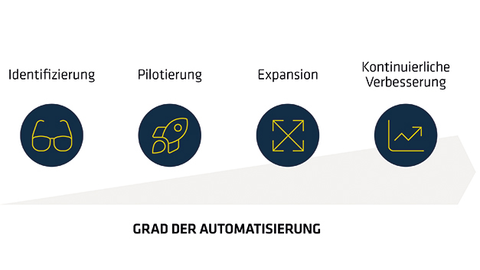
Figure 2: The orchestration of intelligent automation components and the introduction of new processes should be based on a structured approach with four key points.
© AdessoThe orchestration of intelligent automation components and the introduction of new processes should be based on a structured approach. This is the only way for companies to ensure that the concept delivers the desired results in the long term and is not just a flash in the pan. Those involved test technologies, adapt processes and increase the degree of automation. This reduces complexity step by step.
Step 1: Identified - first implementation
An opportunity assessment and a proof of concept form the basis for all intelligent automation activities.
This phase includes, among other things
- Developing the business case
- Designing and implementing a proof of concept
- Defining the basic elements of the governance model
- Identifying and prioritizing the process candidates
- Opportunity assessment for the creation of the automation roadmap
Step 2: Piloting - basis operational model
Those responsible develop intelligent automation capabilities in the teams and prepare the robotization process.
This phase includes, among other things
- Organizational changes
- Training for the first employees
- Deployment of the first intelligent automation candidates
- Development of architecture, methodology and rules
- Communication of the results
- Implementing the governance model
Step 3: Expand - multi-technology transformation activities
Based on the experience gained previously, the participants implement an Intelligent Automation roadmap.
This phase includes, among other things
- Expanding training
- Expanding the use of Intelligent Automation
- Monitoring the results
- Establishing best practices
- Very important: Celebrating successes
Step 4: Improve - operational model for an intelligent company
The whole team ensures that the quality of the Intelligent Automation applications continuously improves.
This phase includes, among other things
- Introducing a Lean Intelligent Automation methodology as an operational process approach
- Continuous demand generation
- Developing new products and services
This approach ensures that the topic of intelligent automation gains a foothold in a company without overburdening the organization and those involved. As with almost all major IT topics, the success of intelligent automation initiatives depends on employee acceptance. They can be critical of the automation of processes in which their experience and intuition play a role. Areas of responsibility are changing and new qualifications are required. Those responsible must consider the necessary organizational change process from the outset. Involving everyone involved in the early identification phase is crucial for success.
In the accompanying communication, it is also important to focus on the opportunities that intelligent automation opens up. It frees you from routine tasks and creates space to invest more time in value-adding activities. For example, engaging with a customer with a problem and listening to them. Giving them the feeling that the company is doing everything it can to solve their situation. This is something that no bot or application will be able to do in the future. That is and remains the strength of people.
In the future, employees will work hand in hand with a bot - but not as equal partners. Intelligent Automation projects do not relegate people to the role of software executors. Instead, the use of technology relieves the burden of operational activities and creates space for creative and challenging tasks. Automation is therefore not an end in itself; it requires a rethink and the pursuit of necessary business objectives. People are still at the heart of technology - even when developing an intelligent automation approach.


You might also be interested in
Which jobs are threatened by artificial intelligence
Artificial intelligence is raising hopes of a new golden age of information. However, many people also fear that AI will harm the world. Two recent studies show that AI applications will at least have a major impact on the world of work.
 read more...
OpenAI introduces next version of the technology behind ChatGPT
The text robot ChatGPT, which can imitate human speech, has been causing a stir for months. The technology that runs ChatGPT has just been given a major upgrade. However, the software's weaknesses and risks remain.
read more...Google counters Microsoft's AI push with cloud initiative
Microsoft is currently trying to reshuffle the cards in the internet economy with the help of artificial intelligence applications. Google is now responding to the push and is making its AI infrastructure and suitable AI construction kits available...
read more..."System hardly critically reflected"
The text robot ChatGPT from the US start-up OpenAI amazes with its polished dialogs and has triggered a lot of hype around the topic of artificial intelligence. However, scientists still have important questions to ask and warn of data protection...
read more...One year of ChatGPT
Almost a year ago, on November 30, 2022, OpenAI presented the chatbot ChatGPT to the public - a sensation for business and society. IT service provider Adesso has investigated how the application has been received in business.
read more...Sustainability test bench for software applications
In the ECO:DIGIT project, the German Informatics Society, the Öko-Institut, the Open Source Business Alliance, Adesso and Siemens want to create a platform for evaluating the sustainability of software applications.
read more...The top articles in May 2023
The fact that the fight against climate change is undisputedly the biggest global challenge is also reflected in the most-read articles of May. New applications with the digital twin and trends in AI in dialog continue to top the list.
read more...Visualize data - here's how!
Analyzing and visualizing data is essential for gaining deep insights into manufacturing processes. Microsoft's Power BI platform - which relies on optimal data models - is ideal for this purpose. A helping hand.
read more...Room for discussion
In the development of cyber-physical systems, the classic development concept is opposed to the agile concept. This leads to problems between the different disciplines that an 'interaction room' can solve.
read more...