

Karlsruhe Institute of Technology
New President at KIT
On October 1, 2024, Professor Jan S. Hesthaven will take office as President of the Karlsruhe Institute of Technology (KIT). The 58-year-old Dane's first term of office will focus on positioning KIT more clearly in the national and international scientific landscape.
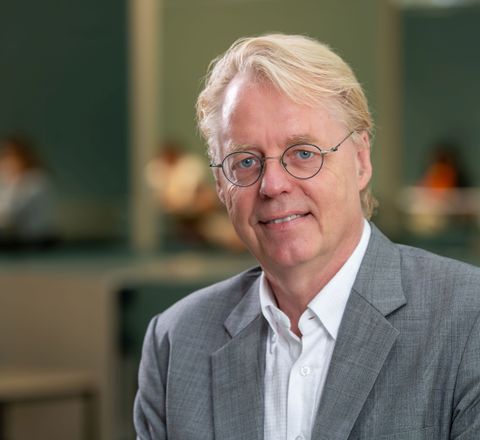
" KIT is an institution with enormous potential, both nationally and internationally. My clear goal is to expand its strengths, to make them even more visible and to make even better use of the numerous fields with special strengths," says the designated President of KIT, Professor Jan S. Hesthaven.
"With Professor Hesthaven taking office, the Executive Board of KIT is complete again after a transition period of just over a year," says Professor Oliver Kraft, Vice President Research of KIT, who has taken over the internal and external representation of KIT during the transition period. "I am very pleased that we can tackle the upcoming major tasks together - including, for example, the upcoming reviews in the Excellence Strategy and in the Helmholtz Association's program-oriented funding at the beginning of 2025."
Strong partnerships in Germany and internationally
According to Hesthaven, research and teaching will face fundamental changes in the coming years, not least due to the opportunities and challenges of artificial intelligence. The discussion about how KIT as an institution wants to deal with this is something that needs to be conducted now. In order to continue to be well positioned and to position itself even better among the best international institutions, KIT also needs strong partners: "I believe much more in cooperation than in competition. We need trustworthy partners in the region, in Germany and worldwide whose strengths are complementary to ours and with whom we can work together in our core tasks of research, teaching and transfer as well as in the exchange with society," says Hesthaven.
Science for the benefit of society
It is important to always have one goal in mind: "Science and technology are there to ultimately give something back to society - which finances them - and to help change it for the better. In research, by developing solutions for social challenges. But teaching is just as important: it is a core part of our mission to educate young people as the future workforce to help tackle current and future challenges. Successfully shaping these tasks is our contract with society."
Attracting bright minds from all over the world
Overall, the KIT needs to open up even more internationally. To achieve this, it is essential to attract talent worldwide. In terms of diversity, however, it is also about socio-economic diversity. "We cannot afford to lose young people who are talented and committed, but who decide not to study because they are unfamiliar with the university world," says Hesthaven.
Central role in the Helmholtz Association
Within the Helmholtz Association, KIT should assume a central role as a research university, emphasizes Hesthaven: "The particular strength of a university lies precisely in the fact that, in contrast to a pure research center, it can also conduct high-risk research and occasionally fail - while fulfilling its educational mission and thus hedging the risk. This offers a unique opportunity for closer collaboration with the research centers of the Helmholtz Association, which in turn opens up exciting opportunities for our students. We need to make the best use of our resources in the Helmholtz Association to work together even better across disciplines in research and teaching. In this way, we can facilitate a realistic and practicable transition from basic research to applied research and develop solutions for the challenges facing society."
As President of KIT, Hesthaven succeeds Professor Holger Hanselka, who moved to the top of the Fraunhofer-Gesellschaft in August 2023. In January 2024, the KIT Supervisory Board elected Hesthaven as President, and the KIT Senate confirmed him in February. During the transition period, Professor Oliver Kraft, Vice President Research at KIT, has taken over the internal and external representation of KIT.
About the person
Professor Jan S. Hesthaven, born in 1965, has been Provost and Vice President responsible for all academic affairs at the École Polytechnique Fédérale de Lausanne (EPFL) since 2021. In addition to the strong integration of research and teaching, this included all appointment procedures and close collaboration with the President of EPFL, including on the strategic direction of the university. Hesthaven has been Professor of Mathematics at EPFL since 2013. Prior to that, he had been a faculty member at Brown University, one of the oldest and most prestigious universities in the USA, since 1995. Among other things, he was the founding director of the Center for Computation and Visualization (2006 to 2013) and co-founder of the Institute for Computational and Experimental Research in Mathematics. Hesthaven studied computational physics and received his doctorate from the Technical University of Denmark in Copenhagen. Hesthaven is a Fellow of the Royal Danish Academy of Sciences and Letters, the American Mathematical Society and the Society of Industrial and Applied Mathematics. He is also a member of the European Academy of Sciences and the Academia Europaea. In May 2024, Denmark's Technical University awarded him an honorary doctorate.


You might also be interested in
AI Platform Aims to Enable Energy Sharing in Industry
As part of the EU project FlexBit, Fraunhofer IFF is developing an AI-powered platform to optimize energy storage systems and manage industrial energy-sharing systems. The concept is being tested in an Industrial Energy Community in Magdeburg and is...
 read more...
Vertiv and Nvidia link physical infrastructure with digital twins
Digital twins instead of a flood of documents: Vertiv integrates 'SmartRun' into 'Nvidia Omniverse DSX' to accelerate the planning and implementation of AI factories.
read more...Quantum-resistant hardware security for Nvidia robotics platform
Infineon Technologies integrates the hardware security module 'Optiga TPM SLB 9672' into Nvidia's 'Jetson Thor' computing platforms for robotics and autonomous systems. The module secures cryptographic keys directly at chip level and thus protects...
read more...Ionos and Q.ANT cooperate on AI
Ionos and Q.ANT want to jointly advance photonic processor technologies for AI and high-performance computers. The aim of the partnership is to build energy-efficient and sovereign AI infrastructures in Europe.
read more...AI-supported lighting robot wins German Innovation Award 2026
Ledvance, provider of innovative lighting solutions, was named "Winner" in the Excellence in Business to Consumer Lighting category at the German Innovation Awards 2026. With the AI Companion Lighting Robot 'Elix', the company presents an...
read more...Paderborn University becomes part of 'ELLIS NRW'
Paderborn University is one of the founding members of the new research unit 'ELLIS Unit NRW'. The European network bundles AI research in North Rhine-Westphalia with a focus on machine learning and explainable AI.
read more...AI 'CheckMate' optimizes industrial processes
With 'CheckMate', the University of Klagenfurt has developed an AI system that independently creates algorithms for complex combinatorics and optimization problems. The technology is designed to make industrial planning and logistics processes more...
read more...New approaches in drive technology
Nabtesco develops physical AI solutions
Nabtesco is working on intelligent drive systems for industrial applications. The focus here is on the use of physical AI, the combination of artificial intelligence with real physical systems.
read more...Regulation and safety slow down robotics projects in Germany
QNX has published the study "Inside the Robot: Architecture Benchmark Report". The results of the global survey of 1000 robotics developers show that software and safety requirements are increasingly becoming the central bottleneck for innovations...
read more...