

Follow-up with Rahman Jamal
The Internet of Production
The Internet of Production (IoP) is based on the idea of enabling a new level of cross-domain collaboration. The Cluster of Excellence IoP at RWTH Aachen University is working to realize this vision. Rahman Jamal, member of the Industrial Advisory Board, explains the goals.
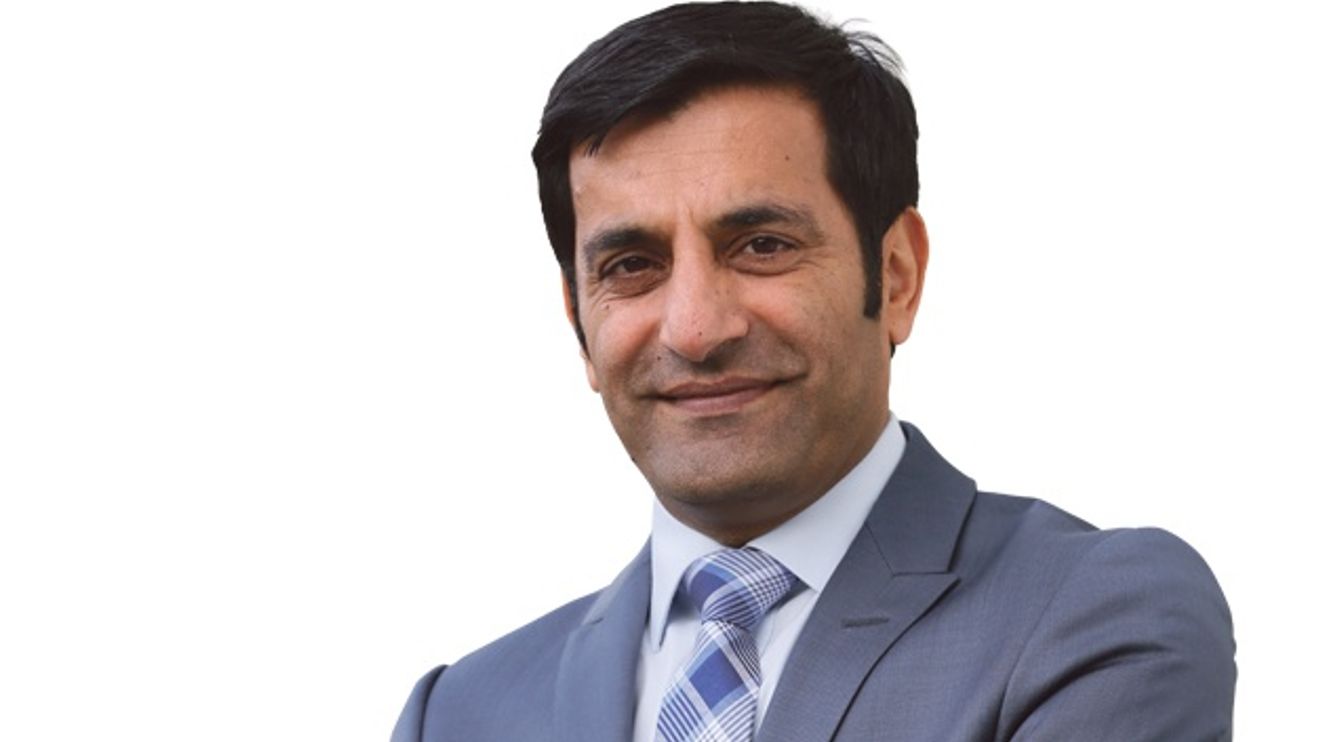
Mr. Jamal, what exactly is this cluster about?
Rahman Jamal: The internet, in its role as a global socio-technical network, has revolutionized the availability of data and knowledge. However, it is currently not possible to apply the idea of the Internet of Things - IoT for short - directly to production, as production technology is characterized by significantly more parameters but less available data than other big data domains. This means that although large amounts of data are available in modern production technology, they are neither easily accessible and interpretable nor networked in such a way that knowledge can be generated from them. Consequently, this means that In order to implement an Internet of Things for production - an IoP - there is still a lot to do!
How should we imagine an Internet of Production?
Rahman Jamal: Imagine if you could simply ask an app what the most effective, best and cheapest next steps would be to control, redesign and optimize your production at the touch of a button! What sounds too good to be true is one of the basic ideas of tomorrow's production for the Aachen-based scientists of the Cluster of Excellence IoP: production will be digitally networked, intelligently cooperating and optimally equipped with the essence of the most important data from the machines' big data pool.
So the backbone of production will be the IoP?
Rahman Jamal: The IoP will offer real-time, secure information availability of all relevant data at any time and any place. And yes, the IoP will be the core element of Industry 4.0. Ultimately, the IoP will pave the way for a new era of production. The sum of the generated and aggregated data - the high-volume 'digital shadow' of production - creates predictive capability with the aim of consistently controlled production. Cross-domain knowledge is generated and used, starting with the entire product development process through to the rapid, error-free implementation of quickly required changes in series production. This approach of needs-based data analysis and the application of machine learning algorithms holds great potential and important impulses for the entire production technology.
Which key topics will be dealt with and in what time frame?
Rahman Jamal: The Internet of Production is based on the vision of enabling a new level of cross-domain collaboration by making semantically adequate and context-related data from production, development and use available in real time and at an adapted granularity. The central scientific approach for this is represented by digital shadows as application-specific aggregated and multi-perspective data sets. The Cluster of Excellence will design and implement a conceptual reference infrastructure that enables the generation and use of digital shadows. In addition to the area of infrastructure, the cluster's research areas include 'Materials', 'Production Engineering', 'Production Management', 'Agile Production Development' and 'Integrated Utilization'.
Can you tell us something about the origins of this cluster?
Rahman Jamal : Since January 1, we have been continuing the work of the Cluster of Excellence 'Integrative Production Technology for High-Wage Countries' in the new cluster, which was completed in 2018.
To what extent is industry involved in the new cluster?
Rahman Jamal: The cluster has two external advisory boards: a scientific advisory board and an industrial advisory board. The industrial advisory board is made up of representatives from German companies in the automotive and aviation sectors and the mechanical and plant engineering industry. In terms of industrial collaboration, we share our views with providers of products such as Siemens Mindsphere, PTC ThingWorx, SAP HANA, Amazon Web Services and Microsoft Azure. The scientists are also closely linked to industrial associations such as the VDMA, VDW and VDA.


You might also be interested in
SmartFactory-KL presents production of the future
Under the slogan 'Production Level 4', the SmartFactory-KL technology initiative has defined a new stage in Industry 4.0 - with people at the center! A corresponding demonstrator is already under construction. It is to be presented at the Hannover...
 read more...
The success of Industry 4.0 is at risk
A new study by the VDMA's Impuls Foundation on digital market foreclosure concludes that the free exchange of data will be massively impaired. The effects will hit SMEs particularly hard.
read more...SmartFactory established at EU level
On September 26, the European association SmartFactory-EU EWIV was founded in Eindhoven (NL). Prof. Dr. Detlef Zühlke, long-time head of SmartFactory-KL, was appointed as the founding managing director.
read more...Lack of trust in employees
Since 2016, the importance of digital transformation has steadily increased in large German companies. Now it is declining for the first time, according to the latest survey by digital consultancy Etventure. One of the main reasons: trust in their...
read more...Follow-up with Kevin Carlin, ADI
Entry into the IE business
With the new 'ADI Chronous' brand, Analog Devices wants to have a major say in Industrial Ethernet (IE) in the future. Kevin Carlin, Vice President Industrial Automation & Energy at ADI, explains exactly what this plan looks like.
read more...Follow-up with Dr. Jochen Schlick
Bogged down in individual projects
For the sixth time, the management consultancy Staufen has compiled the 'German Industry 4.0 Index' and surveyed more than 300 German industrial companies on the topic of digitalization. Dr. Jochen Schlick from Staufen Digital Neonex explains the...
read more...Follow-up with Benjamin Häfner
The autonomous production system
Researchers from the fields of mechanical engineering, electrical engineering, information technology and computer science are developing an agile production system at KIT that adapts autonomously to changing product specifications. Project...
read more...Follow-up with Dr. Thomas Kuhn
An operating system for Industry 4.0
The three-year BMBF project 'Basic System Industry 4.0' came to an end on June 30, 2019. What goals were achieved? What can be transferred into practice? Where do we go from here? Project manager Dr. Thomas Kuhn gives his opinion.
read more...The interface to the motor
A year and a half ago, the encoder manufacturers Baumer, Hengstler and Kübler joined forces to establish an open single-cable solution between motor and drive with 'SCS open link'. What has become of it? Jonas Urlaub from Kübler takes a stand.
read more...