

VDMA
"Europe needs a single market for secondary raw materials"
For Europe to become climate-neutral, the circular economy must be introduced into all production processes. These circular processes offer enormous potential for medium-sized mechanical and plant engineering companies. The announced Circular Economy Act is an important signal.
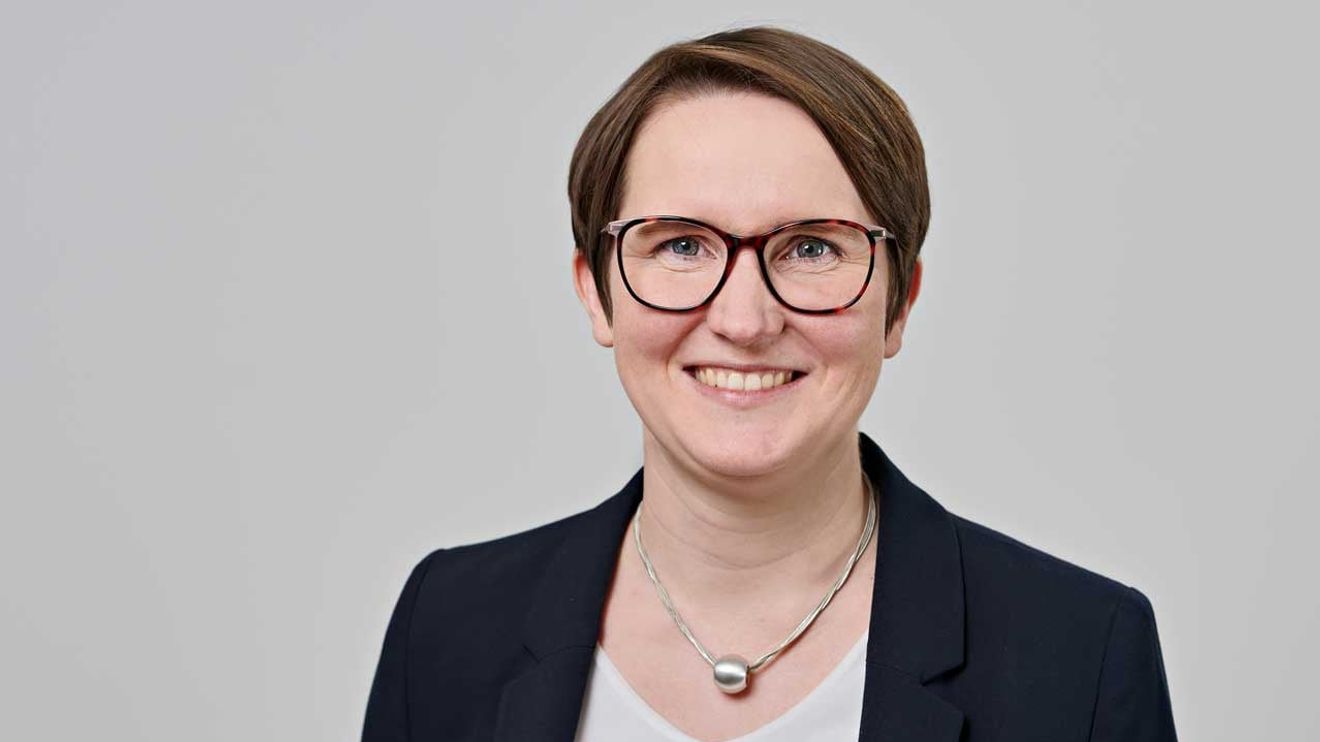
The mechanical and plant engineering industry is behind the Circular Economy Act announced by the Commission, according to the VDMA. However, certain conditions must be met for the circular economy to succeed. First of all, a single European market for secondary raw materials is needed. This means that secondary materials must be traded and used at competitive prices within the EU. According to the VDMA, this requires quality criteria and standards for secondary raw materials and their reuse. "Due to volatile prices, the market is currently under severe pressure and secondary plastics in particular are often more expensive and therefore not economically attractive," says Dr. Sarah Brückner, Head of the VDMA's Environment and Sustainability Department. "Both the relationship between quantity and quality and the price structure are simply not right today, and this is where the EU can set a positive course with concrete measures," Dr. Brückner continues.
How can the secondary raw materials market be strengthened?
One approach to strengthening the secondary raw materials market in Europe could be a product-specific recyclate usage quota. This means that a minimum quantity of secondary raw materials should be reused for certain products. This would allow the market to be realigned and the price imbalance between recyclates and virgin materials to be better balanced. It is important that this quota system and market monitoring apply throughout Europe and are implemented quickly. It must also be implemented with little bureaucracy and without any significant negative economic impact on small and medium-sized enterprises and competitiveness.
The Circular Economy Act is to be published in the coming legislative period. The VDMA has clear ideas on this: "We hope that the Circular Economy Act will help to avoid a patchwork quilt in the circular economy. This is because the situation in Europe is currently rather chaotic with regard to national waste regulations, materials policy and measures for circular product policy," says Dr. Brückner. National measures, such as the draft of a national circular economy strategy (NKWS) recently published in Germany, must fit into the European framework; only then will they lead to long-term success, emphasizes the VDMA expert.


You might also be interested in
Fewer orders in May
The high order intake in April proved to be a flash in the pan for the German mechanical engineering industry. Disillusionment set in the following month.
 read more...
China's industry drives internationalization
China is positioning itself on the global market with higher quality and technologically advanced products at lower prices. A recent VDMA study shows how China's mechanical and plant engineering industry is proceeding and how companies and...
read more...AI Platform Aims to Enable Energy Sharing in Industry
As part of the EU project FlexBit, Fraunhofer IFF is developing an AI-powered platform to optimize energy storage systems and manage industrial energy-sharing systems. The concept is being tested in an Industrial Energy Community in Magdeburg and is...
read more...Rittal wins Electrifying Ideas Award 2026
The ZVEI has chosen Rittal as the winner of the Electrifying Ideas Award 2026. With this award, the German electrical and digital industry honors innovations and solutions that use energy efficiently, conserve resources and have an economic and...
read more...Nominations for Electrifying Ideas Award have been announced
An independent jury of top-class experts from business, research and society has nominated three companies for the Electrifying Ideas Award 2026: Ideas from Philips, Rittal and ZeMA - Center for Mechatronics and Automation Technology convinced the...
read more...Circular economy for flexible materials
With a budget of 7.5 million euros and twelve partners from six countries, the European research project 'FlexCycle' is pursuing the goal of making recycling processes for the reuse of flexible materials suitable for industrial use. To this end, it...
read more...Siemens Nanjing plant becomes Lighthouse Factory
The World Economic Forum has recognized the Siemens plant in Nanjing as a Lighthouse Factory. The factory was recognized for its AI-supported, fully digitalized production and significant improvements in productivity, quality and sustainability.
read more...Analysis: These websites are the most harmful to the climate
According to a recent analysis by the University of Europe for Applied Sciences (UE), Amazon's website causes the most emissions of the 200 most visited websites in Germany, at around 1,753 tons of CO₂ per year.
read more...Franco-German research project
GreenBotAI: AI makes robotics efficient and sustainable
The Franco-German lighthouse project GreenBotAI has succeeded in making robotics more sustainable and efficient. The project shows how trustworthy AI "made in Europe" can not only speed up production processes, but also significantly reduce the...
read more...