

BDI - Industry Day
Government must deliver - a "mountain" of unfinished business
The industry is stepping up its tone towards the federal government. Impatience is palpable at the annual congress. Companies want clarity from the federal government on how to proceed.
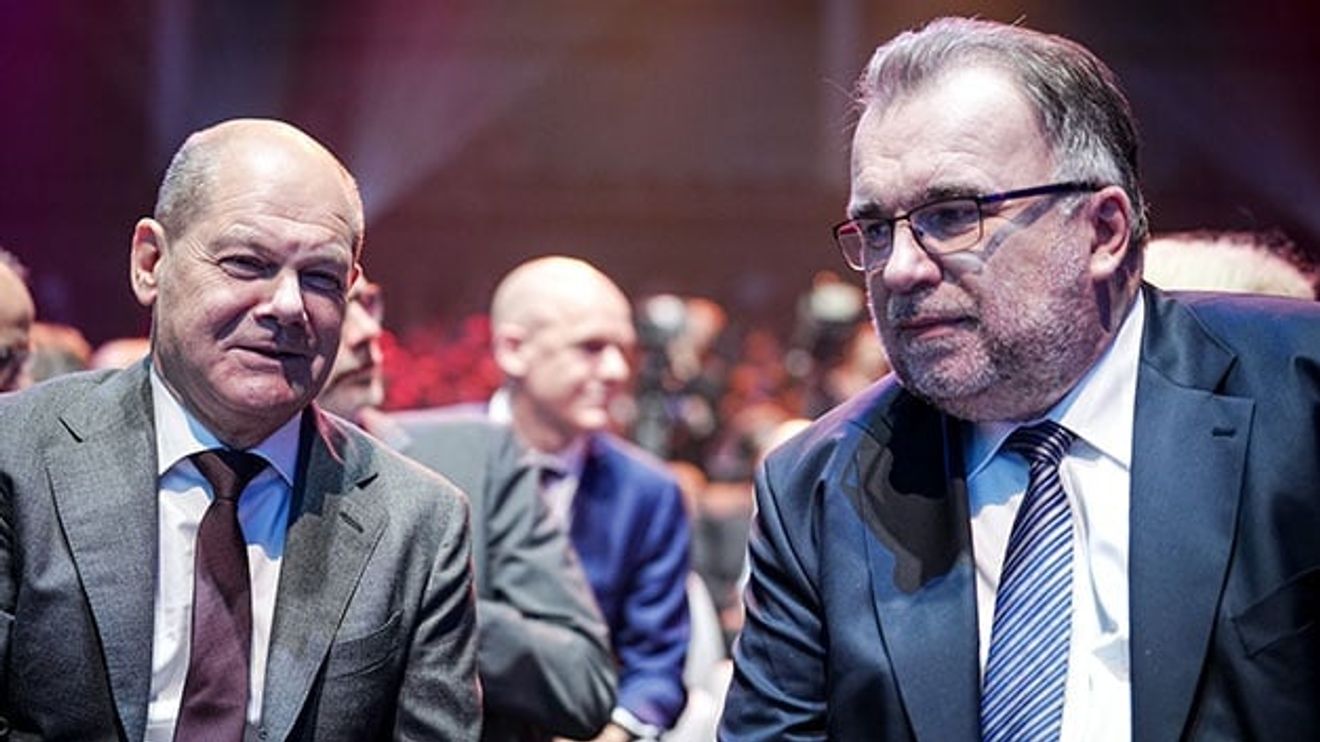
Berlin (dpa) - Alarm bells are ringing in German industry, which employs millions of people. This is what industry president Siegfried Russwurm said on Monday (June 19) at the Day of Industry. And he made it clear that the Federal Government must now deliver. Deliver in order to prevent companies from moving abroad - and thus preserve jobs. High energy prices in an international comparison, a shortage of skilled workers and high costs for the energy transition and digitalization are a burden on companies. Added to this is economic stagnation in Germany.
Russwurm: "Some things are going completely in the wrong direction."
Russwurm made it clear that for the most part there was no sign of the "Germany" speed in planning and approval procedures announced by Chancellor Olaf Scholz (SPD) - or of the year of industrial policy announced by Economics Minister Robert Habeck (Greens).
Companies are actually struggling with an active state industrial policy. However, politicians must now set the right framework conditions, and quickly. The "delta" between ambitions and implementation practice is getting bigger every day, criticized Russwurm. "Some things are going completely in the wrong direction."
The country is facing a "mountain" of growing challenges, said Russwurm. Politicians must systematically tackle structural reforms. For example, there must be better tax conditions for investments. "The impatience and uncertainty of many entrepreneurs is increasing." According to Russwurm, more and more German companies, including SMEs, are considering moving parts of their value creation away from Germany. More and more companies are overwhelmed by the current electricity prices or energy prices in global competition. The BDI expects the Federal Government to quickly come up with a concrete, implementable concept that guarantees a secure supply of electricity at internationally competitive costs in the long term.
Industrial electricity price controversy - "bridge electricity price" until 2030
Habeck had proposed a state-subsidized, lower industrial electricity price. In the long term, industry should benefit from cheaper electricity from renewable energies. However, as measures to achieve this take time, there is to be a "bridging electricity price" of six cents per kilowatt hour in an interim phase until 2030.
Russwurm said it was good that the federal government recognized the need to do something. However, the question of what exactly is on the other side of the bridge remains unanswered. This is aimed, for example, at the still sluggish expansion of green electricity from the industry's point of view and some unresolved issues, such as investment incentives for the construction of new gas-fired power plants.
And the Federal Chancellor? Two years ago, Scholz, then the SPD candidate for chancellor, announced an industrial electricity price target of four cents at the Industry Day. There was no sign of this in his speech on Monday. A state-subsidized industrial electricity price is controversial in the traffic light coalition, with the FDP in particular opposing it.
Scholz said that the government had a plan - a "transformation plan". It is working on restructuring the energy system and building a hydrogen infrastructure. The "German pace" of the transformation of the energy system is law or will soon be. The costs of generating energy from wind and solar power are already significantly lower than those from all other forms of energy, said the Chancellor and could not resist a dig at states such as Bavaria: "If we were expanding wind power in the south and west where we already are in the north and east, and if we already had the necessary grids, then we would already have significantly lower energy costs across Germany today."
Politics and industry at odds
Overall, however, Scholz believes Germany is on course - industry sees things differently. "Anyone who believes that the energy transition could become the seedbed of a new economic miracle is underestimating the fact that the investments are largely just replacing an existing capital stock," said Russwurm. The energy transition will not bring any additional economic growth for the time being - Scholz had said that high growth rates like those seen during the "economic miracle" of the 1950s and 1960s could be expected due to the high level of investment in climate protection.
For many climate activists, however, the government's climate protection policy is far from sufficient. Protests took place on the fringes of Industry Day. Venues were sprayed with orange paint. "The influence of individual lobbies on politics means that climate policy is repeatedly defused and the necessary resolutions that could slow down the path to catastrophe fail to materialize," said the climate group Letzte Generation on Twitter about the action.
Federal Finance Minister Christian Lindner (FDP) criticized the actions. The country's social stability and ecological goals needed an economic basis, he said. Industry should not be hindered and blocked in the transition, but must be empowered - sentences that at least went down well in the hall.


You might also be interested in
3G at work soon?
The economy is sounding the alarm about the rising coronavirus figures. The industry president is calling for concepts to break the wave. This could also have consequences for employees.
 read more...
The e-paper of issue 05/2024
Strategies for the future are one of the topics covered in the current issue of Computer&Automation. Read about the reforms that associations are demanding from politicians, the opportunities offered by technologies such as ChatGPT and SPE and...
read more...Associations at the Hannover Messe 2024
Politicians are called upon
At their joint press conference at the Hannover Messe, the three major associations BDI, ZVEI and VDMA called on politicians in Berlin and Brussels to implement "courageous reforms" in order to strengthen Germany and Europe as an industrial location.
read more...BDI President Russwurm warns against the AfD
BDI President Siegfried Russwurm warns against the AfD. As an exporting country, Germany benefits more than almost any other from openness to the world, international cooperation and trade and European unification, said Russwurm in Berlin on Tuesday.
read more...EU regulation for AI divides
How risky is the use of artificial intelligence? The EU has now presented rules to make the dangers of computer technology manageable. For some, this goes too far, others complain about excessive restrictions.
read more...The associations at the Hannover Messe
Loss of competitiveness?
The major associations BDI, VDMA and ZVEI are calling for more efforts to ensure that Germany remains competitive in an international comparison. At the moment, however, Germany is falling behind in international comparison.
read more...Hannover Messe in multiple crisis mode
For the first time in three years, the largest industry exhibition is once again being held in person. High-level politicians are also trying to instil confidence in the German economy after all the coronavirus stress. But the uncertainty cannot be...
read more...More energy imports from "green sources" required
Industry President Siegfried Russwurm has urged the German government to push ahead with the import of renewable energies.
read more...EU Commission strives for pioneering role
In the race for uniform standards for the industry, the EU Commission believes that Europe must put up a stronger fight against competitors such as China.
read more...