

Tips from the coach
Step by step to an orderly succession
An orderly generational change is crucial for the long-term success of a family business. But how do you go about it? Coach Köberle-Schmid has drawn up a checklist.

The successful continuation of a family business through a successful succession is a key concern for every SME. Despite this clarity, planning is often postponed. Understandably, the business owner is attached to his life's work and wants the successor to follow in his footsteps without making any significant changes. Financial fairness, legal security and entrepreneurial foresight play a crucial role in this, which can pose challenges even for experienced company patriarchs.
Recognizing that succession is a complex process involving family, business, individual, legal, tax and financial aspects forms the basis for a successful transition. A good generational change requires the intelligent coordination of these different levels so that all those involved are behind the decisions made both in terms of content and emotion.
This is precisely where the succession strategy comes in: The comprehensive analysis forms the basis for a well thought-out strategy, from which a precise operational succession roadmap is derived that specifically regulates "what-who-when". In this way, an orderly generation change forms the basis for long-term company success and continuous family harmony. Seven questions cover important topics in a succession strategy:
1. is the company ready for the generation change?
- Examination of strategy, structure, management and finances.
- Consideration of company size and development.
- Analysis of how many owners the company can cope with in the next generation.
2. analysis of family dynamics: identify potential for conflict
- Review of family influences on the company.
- Analyze potential conflicts and unfinished business.
- Inquire about the goals of each family member in relation to the transfer of the business.
3. development of the succession model: planning the joint future
- Discussion of various succession constellations.
- Determining the management and ownership of the business in the next generation.
- Clarification of the control function and the rights and obligations of the shareholders.
4. focus on company management: who will be the new boss?
- Discussion about the best constellation for the management.
- Consideration of alternatives such as dual leadership or external management.
5. ownership: transfer or inherit company shares?
- Clarification of whether company shares should be given away, sold or inherited.
- Early partial transfer for tax advantages and familiarization with the future role.
- Consideration of individual preferences and avoidance of the formation of trunks in the next generation.
6. implementation of the succession model: work out the details
- Develop succession details, including organization, rights/obligations, communication.
- Outline the corporate strategy for the coming years.
- Definition of key points for management and other bodies.
- Detailed documentation of the transfer of ownership through gift agreements and will.
7. personal development and exit plan: Key to a successful transition period
- Drawing up personal development plans for the successor.
- Drawing up an exit plan for the outgoing boss.
- Arrangements for cooperation during the transition period.
The author
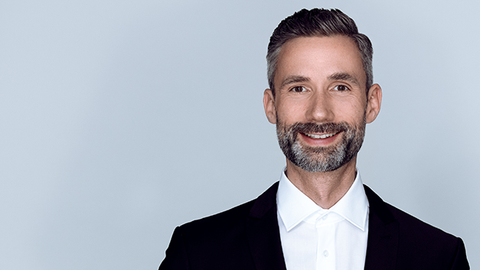
Prof. Dr. Alexander Koeberle-Schmid is a conflict mediator for family businesses and business families, owner strategy consultant, mediator (BM), family business coach (ICF) and INTES Endowed Professor for Business Families and Family Businesses at the Digital Business University (DBU).


You might also be interested in
Andreas Zerfas is Vice President Product Management
MES/MOM provider iTAC Software has a new Vice President Product Management: Andreas Zerfas is returning to the company after around five years.
 read more...
Mike Hughes is Zone President DACH
On February 1, Mike Hughes took over the position of Zone President DACH at Schneider Electric. He succeeds Stefan Gierse, who has left the company.
read more...Martin Heinz takes over as Chairman of the Executive Board
Witheffect from January 1, 2025, Martin Heinz has taken overthe position of CEO of MES/MOM provider iTAC Software. Together with CFO Andreas Eckert, he now forms the company's Management Board.
read more...Industry 4.0 Research Advisory Board
Marc Hüske is a new member
Marc Hüske is the 31st member of the Industry 4.0 Research Advisory Board, which is coordinated by Acatech and has the task of identifying research-based solutions for the further development and implementation of Industry 4.0.
read more...Sonja Pierer heads the German business
In addition to her position as Country Manager of the Sales and Marketing Group (SMG), Intel has appointed Sonja Pierer as the new Managing Director in Germany.
read more...Sonja Pierer manages the German business
In addition to her role as Country Manager of the Sales and Marketing Group (SMG), Intel has appointed Sonja Pierer as the new Managing Director in Germany.
read more...Abhijit Dubey is the new Chief Executive Officer
As the new CEO, Abhijit Dubey is responsible for NTT Data's business outside Japan.
read more...Dr. Alexander Meckelnborg is CTO
Denios, a company in the field of hazardous materials storage and occupational safety, is strengthening its management team with Dr. Alexander Meckelnborg. He joins as CTO from Stephan Machinery in Hamelin.
read more...Sabine Scheunert is Managing Director Eurocentral
Dassault Systèmes announced the appointment of Sabine Scheunert as Managing Director, Eurocentral. She is a passionate advocate and role-model for women in STEM and IT.
read more...