

90 years of Omron
"There is a clear customer demand for automation solutions"
Omron celebrates its 90th anniversary in 2023. Dr. Klaus Kluger, Sales Director Central and Eastern Europe at Omron, tells us more in an interview.
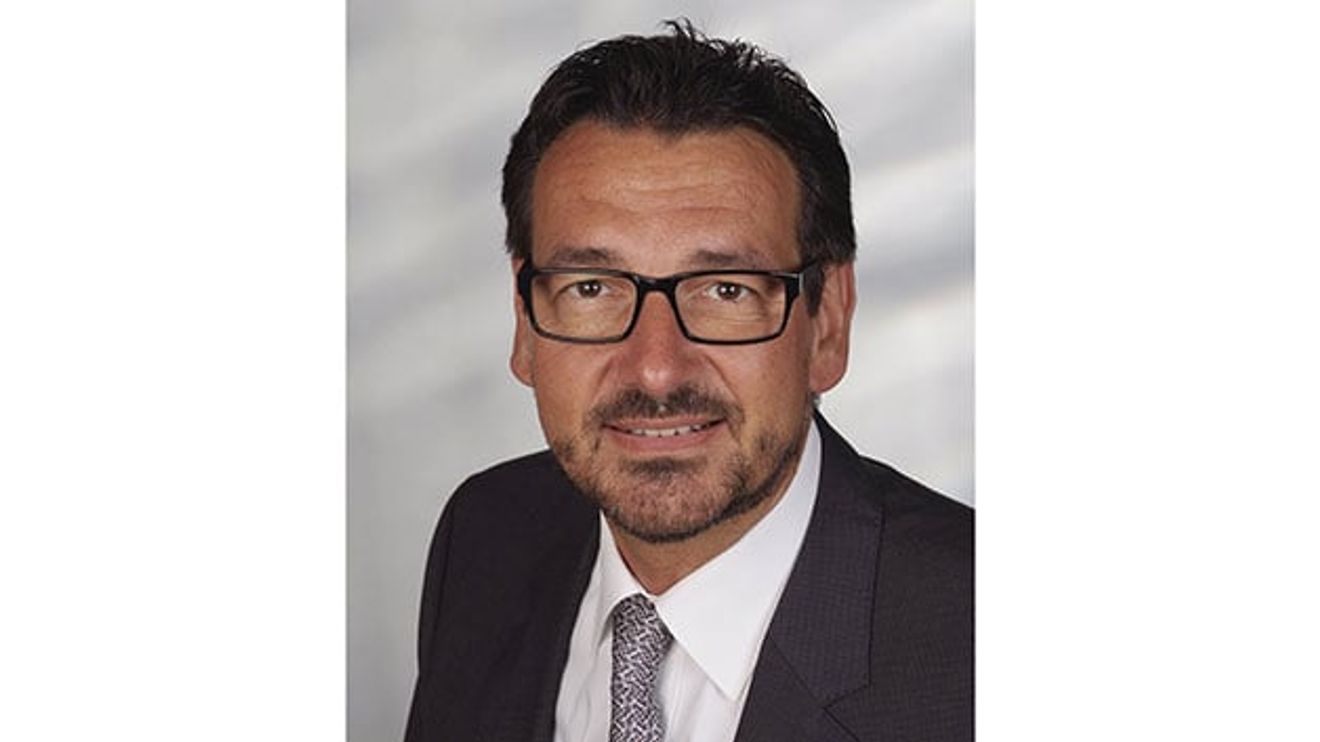
Dr. Klaus Kluger, Sales Director Central and Eastern Europe at Omron
© OmronDr. Kluger, first of all, congratulations on 90 years of Omron! Looking back: What was the most significant technological development of your company?
It is almost impossible to name just one product here, because we are very versatile and support a wide range of industries. In 1930, Kazuma Tateisi, founder of Omron Corporation, started his business by manufacturing and marketing trouser presses in Kyoto. Anticipating social needs and meeting them through innovative technologies is a good description of the role the company has played over the past 90 years. In the 1930s, there was a great need in hospitals for faster timing relays for X-ray machines. Omron developed and offered these. They therefore mark the beginning of Omron's journey towards solutions for social challenges.
The introduction of the first contactless proximity switch in 1960 was another important milestone that accelerated the development of advanced machines that could operate in mass production without failure or wear and tear. Since then, we have developed many more technologies that have transformed industry and improved people's lives. These include the world's first automatic traffic signal, an unmanned train station system, a portable blood pressure monitor, an ultra-fast fuzzy logic controller and an automatic device for diagnosing cancer cells. We have made significant contributions in numerous fields over the past 90 years - examples include industrial automation, household and office appliances, automobiles, social and financial systems and healthcare.
Is there an absolute 'bestseller'?
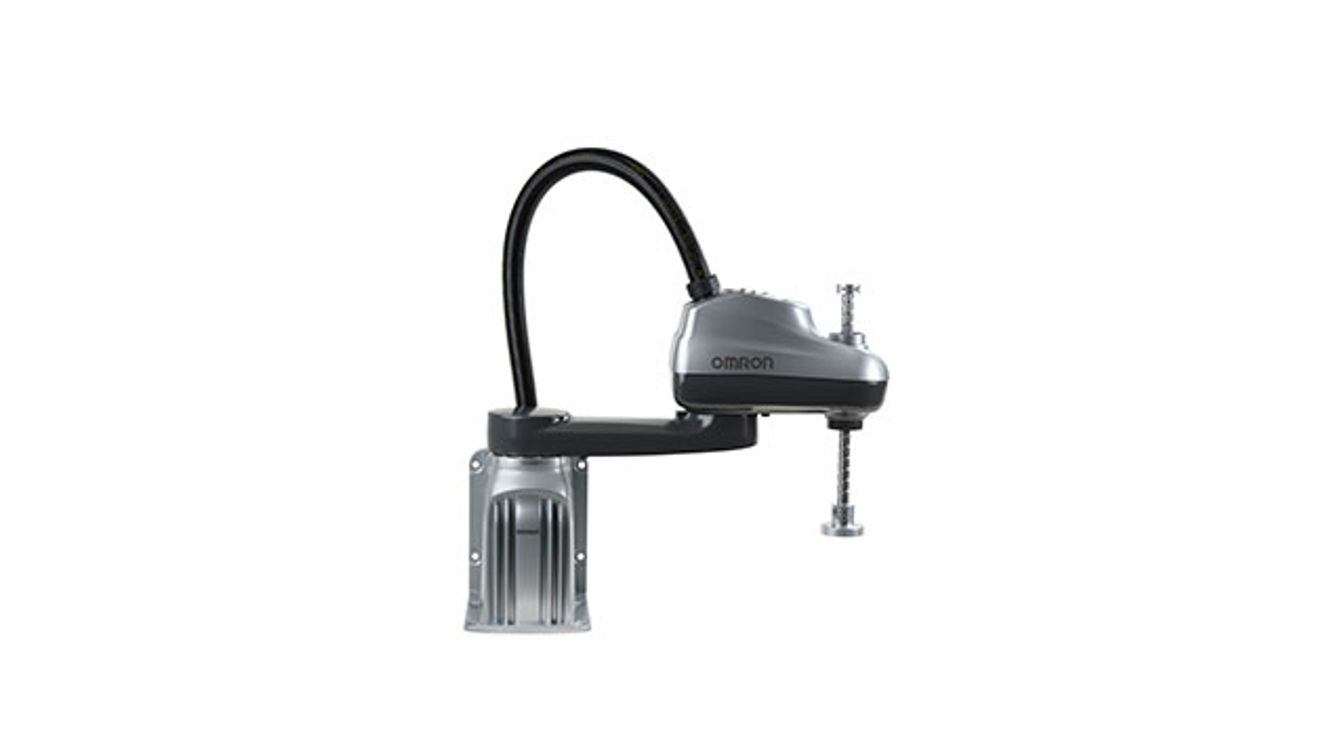
Here too, I can't single out a single technology, because there are solutions for every industry that are among the bestsellers. When a person around the world checks their blood pressure, in most cases a blood pressure monitor from Omron is used, because we are the international number one in this area. In the field of industrial automation, I must of course mention our robots, cobots, controllers and image processing solutions, which are also very successful.
What we have clearly noticed in recent years, however, is the customer demand for automation solutions, i.e. not for a specific component, but for a user-specific solution. And our broad portfolio is of course a great help here, as it enables us to develop and offer tailor-made solutions. With our i-Automation! solutions, every company can produce at a high level. Among other things, this results in production lines in which the machines learn and develop independently so that they understand and support people.

Omron's 'Integrated Robotic Controller' for fully automated robotic production systems enables real-time synchronization between robots, vision components, drives and safety technology.
© OmronIt's not all rosy in 90 years - what do you think was the most difficult time for the company?
Omron has grown continuously in the 90 years since it was founded - today we would say as a Japanese "start-up" company - and now employs around 30,000 people worldwide. I think it's quite normal for there to be ups and downs over the course of 90 years.
The Lehmann crisis and then, of course, the coronavirus pandemic have certainly been among the most challenging events in recent times. In the case of Lehmann, it was the simultaneous collapse in demand on virtually all international markets that presented us with considerable challenges. This had never happened before for Omron. But we mastered this time together and saved all jobs despite the dramatic slump in sales, and so we were able to get going again quickly after the crisis. This welded us together and made us more resilient to crisis situations. This was good, because with Corona we were then faced with the completely new challenge for all companies of having to handle all business processes 'from home'. In addition, there were slumps in sales, short-time working and, of course, concerns about how the pandemic would develop. But even in this crisis, we worked together as a team and stuck together. This has strengthened mutual trust and makes us confident that we will successfully overcome new crises together.
The manufacturing industry is currently struggling with various difficulties such as a shortage of skilled workers, unstable supply chains, rising costs and profit margins squeezed by inflation - with no end in sight. This is where our solutions come in and where we want to provide relief with the help of technology and expertise. Climate change is also a huge challenge: we all need to take action! For us, sustainability is part of our basic principles and we want to make a contribution to society by solving various social problems with our solutions. For example, we are a member of the Climate Group's EP100 initiative - the first Japanese manufacturing company and the fourth Japanese company in general to join this sustainability initiative. With the Industrial Automation and Healthcare divisions joining the initiative, Omron is committed to doubling its energy productivity.

Based on AI (Artificial Intelligence), the FH image processing system enables optical inspections without existing bad patterns.
© OmronWhat does the Omron roadmap look like for the next ten to 15 years?
Our roadmap is clearly focused on industrial automation, AI, sustainability and holistic support. The development of relays, timers, switches and other components that are essential for the automatic operation of manufacturing machines 50 years ago was the beginning of a long-term commitment to accelerating and advancing industrial automation. In recent years, the focus has shifted to manufacturing automation and we have made great strides in the development of sensors, controllers, robots and other devices that help improve manufacturing processes. This has led to several world firsts, including the first intelligent high-performance camera with multi-color light, a Scara robot with predictive maintenance capabilities and an integrated robot controller.
Production automation can help industrial companies to tackle a wide range of current problems. The integration of technologies and devices via the Internet of Things (IoT) helps manufacturers to reap the benefits of Industry 4.0. Examples include greater efficiency through data monitoring and analysis and better collaboration between people and machines. At the same time, the introduction of AI helps to automate decision-making processes and optimize production plans, resulting in improved efficiency and less waste. This is exactly where we come in with our solutions and technologies.
What technological trends do you see that are or will be important for Omron?
We are combining core automation platforms such as robotics, controls, sensors and vision with new technologies such as AI and 5G to provide the manufacturing industry with creative solutions to challenges they face due to macroeconomic factors. Innovations such as Omron's AI-powered solutions for predictive maintenance and collaborative robotics are helping to accelerate data-driven operations through digitalization and create a blueprint for the next generation of smart factories. This is how we address key trends. We are convinced that automation will play an even more important role in industry in the future in order to work more sustainably, efficiently and profitably. The world is currently witnessing a far-reaching transformation in the field of production and manufacturing. A decade ago, China was still the 'Factory of the World', mass consumption was the main driving force, and little attention was paid to raw material consumption or the environment. Today, we are moving away from this mindset and instead pursuing an 'autonomous' approach that emphasizes sustainability, the development and well-being of the individual, and quality over quantity. This new world is all about harmonized automation solutions that improve productivity, help address the ongoing skills shortage and help reduce the carbon footprint at the same time.
What do you think will be the biggest challenge in the coming years, in terms of business and/or technology?
Social developments, technology and economic growth are inseparable. The biggest challenges of the next few years are certainly climate change and the shortage of skilled workers, as they affect all industries, countries and sectors. Omron is developing technologies to become more flexible and adaptable, for example. As part of our 'Shaping The Future 2030' strategy, our company founder's vision of using technology to create a better world will live on.


You might also be interested in
Accelerated AMR fleet management
Omron has announced the release of 'Fleet Operations Workspace (Flow) Core 3.0' software. The platform extends the operational capabilities of LD and HD series autonomous mobile robots (AMR) and facilitates AMR deployment and fleet management.
 read more...
Combating the skills shortage with cobots
When it comes to the question of whether to purchase a cobot, the decision is quickly made between buying or leasing. Omron has seven tips for SMEs to finance cobot fleets and keep them up to date more easily.
read more...Dark Factory - realistic and desirable?
Will humans be superfluous in the factory of tomorrow? Will only machines and artificial intelligence control factories and production processes? Thoughts on the concept of the 'dark factory'.
read more...Four tips for successful automation
Some SMEs are reluctant to introduce automation solutions because they perceive them as complicated, expensive and time-consuming. Peter Lange from Omron gives four tips to help simplify automation.
read more...Dassault Systèmes at the Hannover Messe
Virtual twins simplify manufacturing processes
Dassault Systèmes, together with Omron, will demonstrate how Virtual Twin technology simplifies the process from factory planning to operation, increases efficiency and enhances flexibility.
read more...Strategic partnership for cognitive robots
Neura Robotics, a pioneer in the field of cognitive robotics, and Omron Robotics and Safety Technologies, a provider of industrial robotics and automation, have entered into a strategic partnership. The aim is to introduce cognitive robots in...
read more...AMR for loads up to 900 kg
For more efficient material handling in production, Omron offers the autonomous mobile robots (AMR) 'MD-650' and 'MD-900' with an average payload of 650 and 900 kg. The AMRs operate at a maximum speed of 2.2 m/s (MD-650) and 1.8 m/s (MD-900).
read more...The e-paper special: looking for products of the year 2024
They've earned it: all 96 nominated products from 12 categories in their own e-paper. Browse through the individual areas and make your personal selection. You can also find out more about the companies and their solutions in the accompanying video...
read more...Focus on mobile robotics
Omron Robotics and Safety Technologies and Lowpad BV have entered into a strategic partnership to complement Omron's mobile robots with Lowpad's flat solutions.
read more...