

VDMA Robotics + Automation
OPC UA specification for screwdriving technology
In order to promote interoperable communication in the integrated assembly solutions industry, the VDMA Robotics + Automation Association has published the first OPC UA specification for the industry.
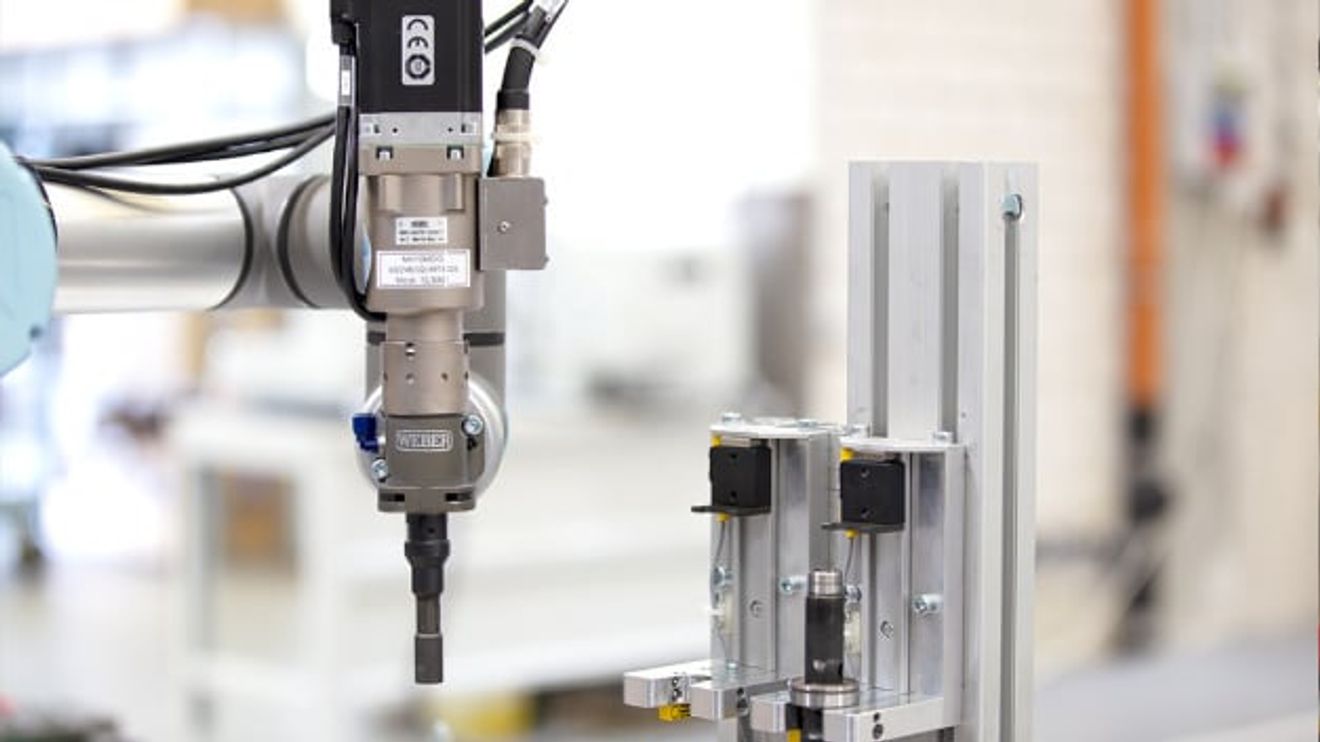
"With Part 1 of the OPC 40451-1 UA CS for Tightening Systems now available, we have laid the foundation for the seamless integration of tightening systems in digital production as the Industrial Internet of Things," says Mohit Agarwal, member of the working group. "More pieces will follow to enable additional use cases via OPC UA and enable a long-term vision for interoperable, harmonized models across connectivity technologies and other domains."
"This will publish another important chapter of the global language of production and even realize cross-industry interoperability by using the basic specification 'OPC UA for Machinery'," says Andreas Faath, Head of Department VDMA Machine Information Interoperability.
The use cases for the OPC 40451-1 UA CS for Tightening Systems specification were developed in collaboration with customers. Part 1 of the Companion Specification mainly deals with the three important use cases Asset Management, Condition Monitoring and Result Management. The information model enables manufacturer-independent access to asset information for the entire tightening system, i.e. including components such as tools, controls and feed units. According to the VDMA, a real milestone is that the standardized tightening result - which can be accessed regardless of the manufacturer - enables the traceability of safety-critical connections.
The 'Tightening Systems' group is part of a larger initiative called 'Industrial Joining Technologies', which aims to describe common information models that are reusable for the field of joining, including bonding, riveting, flow drilling screws, etc. To achieve interoperability and extensibility, many models, such as Asset Identification, Result Data and Result Access, will be harmonized with the OPC Foundation working groups.
The next part of the Companion Specification is already in progress. The planned topics are Commands, Events, Joint, Asset Extensions, Result Extensions and others.


You might also be interested in
New specification for mechanical engineering
A new version of the OPC UA for Machine Tools Companion Specification is now available. The Joint Working Group with the OPC Foundation, which is supported by the VDW, has developed a supplement that makes it possible to integrate existing systems...
 read more...
Not against, but with MQTT!
MQTT is an established protocol for edge/cloud communication. However, the OPC Foundation also wants to use OPC UA not only in the field, but also for edge/cloud communication. Their appeal: Avoid a proliferation of MQTT assignments with OPC UA!
read more...BSI updates security analysis on OPC UA
In its study "Security analysis on OPC UA", the BSI evaluates the specified and implemented security functions of OPC UA. Among other things, the focus was on the search for security vulnerabilities.
read more...Strong growth expected in 2022
The German robotics and automation industry is expecting double-digit sector growth in 2022. This was reported by the VDMA Robotics & Automation Association.
read more...Loading and unloading machine tools
Hirata has developed a new robot cell for the automated loading and unloading of machine tools to increase productivity and reduce the workload of production staff.
read more...New options for cobot applications
Hilpert electronics, sales partner of TM Robot, offers new, complementary options for the effective use of collaborative robots in addition to various cobots.
read more...New 'Machine Information Interoperability' department
The VDMA has now founded the new 'Machine Information Interoperability' department to continuously optimize the interoperability of production environments and the Industry 4.0 ecosystem. The focus of the work is OPC UA interface development.
read more...The field level is followed by the cloud
The OPC Foundation's Field Level Communications Initiative was established at SPS 2018. Three years later, its President Stefan Hoppe announces a similar initiative for cloud activities. An update.
read more...Job expansion planned in mechanical engineering
The core workforce is to be increased, additional jobs created and the range of apprenticeships and dual study programs expanded. This is what the majority of German machine and plant manufacturers want. However, there is a problem.
read more...