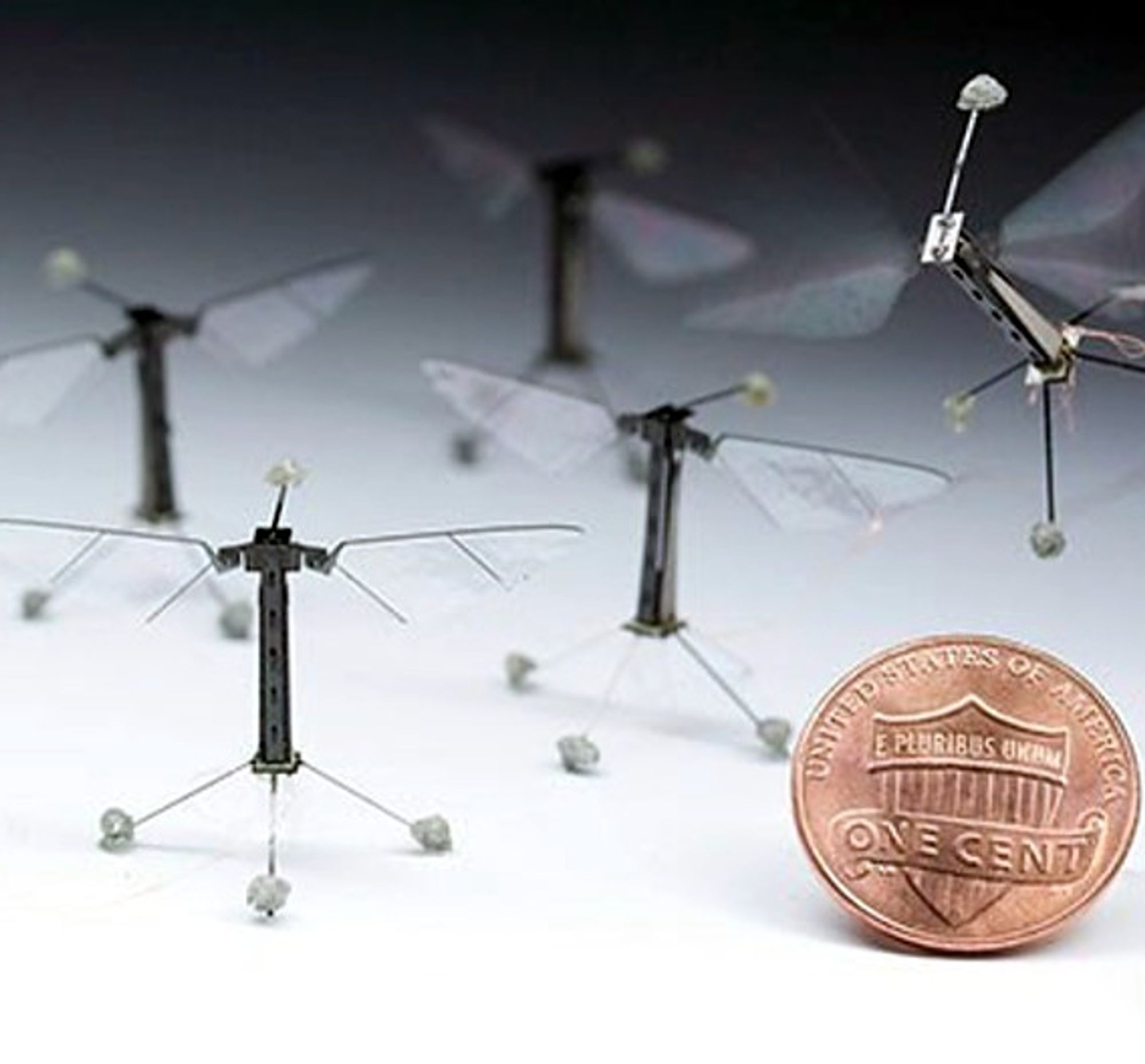
© Kevin Ma/Pakpong Chirarattananon
... the scientists mounted wafer-thin wings. They have a total span of just under three centimetres. To make these wings flap 120 times per second (the natural model, the housefly, can flap its wings ten times more), an electrical output of just 19 milliwatts is sufficient. At two centimetres high, the robotic fly is not much bigger than a penny.

