

Zebra Technologies
New solutions for image processing and barcode readers
Especially in the current situation, automated and intelligent solutions are crucial to ensure that supply chains function as smoothly as possible. Production specifications often change quickly and the time available for order processing is becoming increasingly tight.
Warehouse and distribution center operators need to make their returns processes as efficient as possible. Retailers have to meet more and more demands with their existing staff and at the same time provide a good customer experience. They all need simple solutions to improve quality and increase production output.
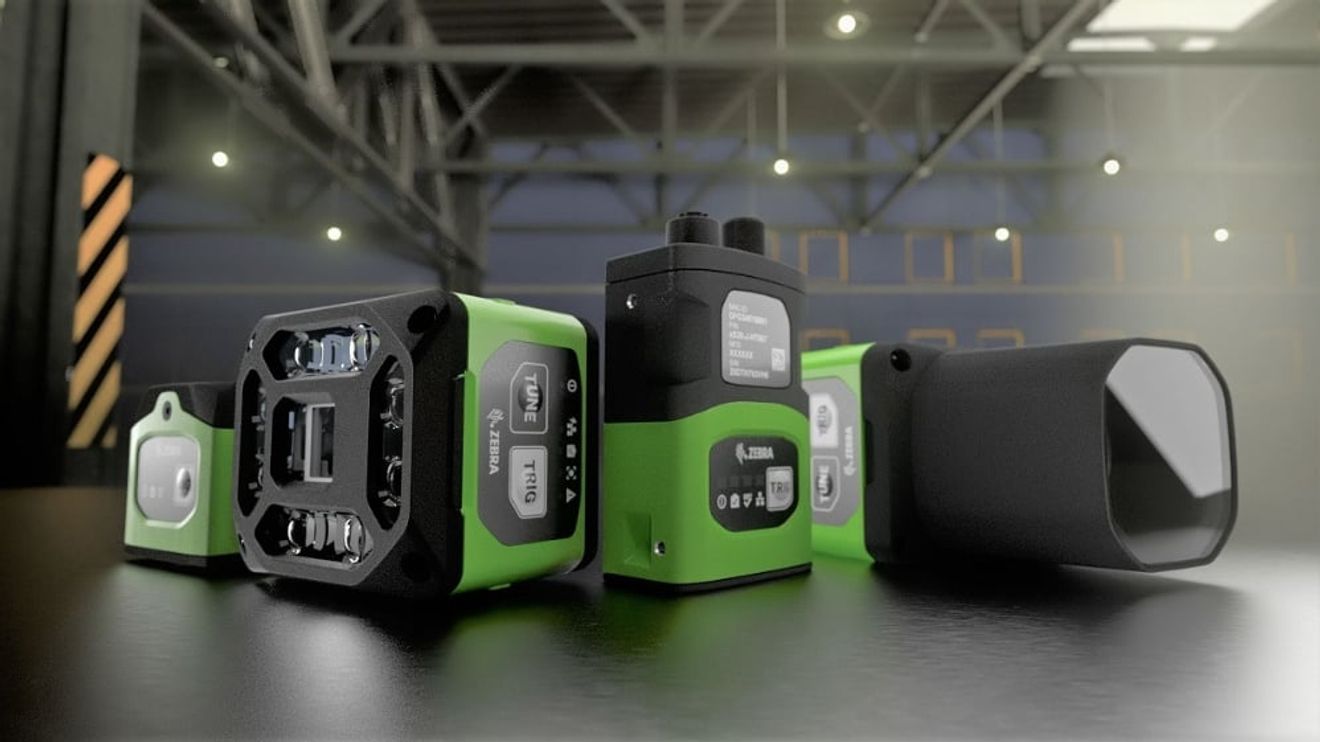
Zebra Technologies recently introduced new solutions for machine vision and fixed-mount barcode readers. Zebra's new portfolio enables tracking and quality inspection during ongoing manufacturing processes. Zebra's product suite includes intelligent machine vision cameras and fixed barcode readers and is supported by Zebra Aurora™. This comprehensive software platform makes it easy to set up, deploy and operate both cameras and scanners. Zebra Aurora simplifies complex processes and helps reduce costs. Zebra's fixed barcode readers and machine vision cameras share the same ruggedized fixed hardware to verify production lines and product movement processes. This can significantly improve quality in production, warehousing and logistics.
The difference between industrial image processing and computer vision
But what is the difference between industrial image processing (machine vision) and computer vision? Machine vision and computer vision are both intelligent systems that are used to capture, process and analyze images. Both solutions improve quality and process control by identifying individual problems as well as recurring patterns that employees may overlook.
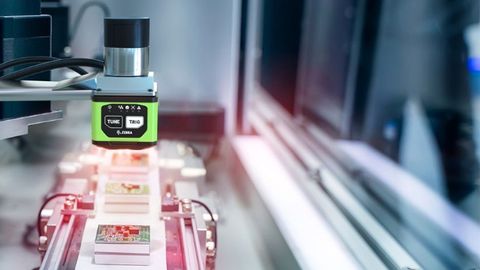
The differences between the two technologies lie in their speed and how they handle information. Machine vision is often used in manufacturing facilities to look for inconsistencies in a label, packaging or even an entire item. Such errors can result in complaints, penalties for non-compliance and other costly consequences. Many companies use a system that indicates either a pass or fail inspection. This allows inspectors to decide quickly and without further consultation whether items should continue through the manufacturing process or be removed. Industrial image processing systems usually also work independently, i.e. image capture and analysis is carried out directly at the system. The data does not have to be sent to a back-office system for processing first.
Computer vision, on the other hand, is often used as a back-end processing platform for front-line image acquisition technologies, such as intelligent automation solutions, bioptic scanners and even mobile computers. Sophisticated algorithms provide workers with a comprehensive overview of operations. Although computer vision also enables quick decisions, there tends to be a slightly longer lead time compared to industrial image processing, as the data is processed in the system in great detail.
Industrial image processing is usually designed for specific industrial automation applications due to its specialized visual capabilities. Computer vision algorithms, on the other hand, can be used more broadly to support qualitative analyses, for example. This is why machine vision and related solutions such as stationary barcode readers tend to be used in production, warehousing and distribution. Computer vision is increasingly being used in the retail and healthcare sectors.
Stationary barcode readers are mostly used for tracking products or product parts on their way through a production, picking, packaging or shipping system. Industrial image processing, on the other hand, is mostly used for visual quality or process control of products. Stationary barcode readers are therefore designed to read the barcodes of items moving on conveyor belts or other equipment in distribution centers and warehouses. Logistics managers and even customers can be informed of the current status at any time. However, Zebra's fixed barcode readers can also be used for industrial image processing with a simple software reconfiguration.
New solutions for industrial image processing and stationary barcode readers
Zebra's new flexible portfolio includes seven fixed data capture solutions with a range of scanning and industrial imaging capabilities. Companies can select the products that meet their needs and easily upgrade them at any time by purchasing a software license. This gives them support for new barcode symbologies, higher scanning speeds or advanced industrial imaging features.
The stationary barcode readers improve traceability by accurately decoding every part and package as it moves through production, warehousing and shipping - throughout the supply chain. Zebra's fixed-mount barcode readers recognize 1D/2D barcodes, Direct Part Marks (DPM) and Optical Character Recognition (OCR) text. They therefore enable improved productivity and the automation of product movements. This makes warehouse, shipping and returns processes more efficient. Zebra's intelligent industrial imaging cameras can automate quality inspection in many discrete manufacturing processes, reduce defective products and confirm assembly and tracking information. This increases productivity and quality.
Zebra's new solutions provide companies with many benefits that cannot be achieved with other automation solutions. Zebra's devices are also the only ones that share the same software platform with Zebra Aurora. This allows a single camera/sensor device to serve a dual purpose, reducing costs and training.
For more information on Zebra's machine vision and fixed-mount barcode readers , click here.


You might also be interested in
A look at the supply chain
Zebra has taken a closer look at the supply chain for the coming year: According to this, sensors and fixed infrastructures will play a decisive role in data collection and thus in the supply chain, and investments in automation solutions are also...
 read more...
The e-paper special: looking for products of the year 2024
They've earned it: all 96 nominated products from 12 categories in their own e-paper. Browse through the individual areas and make your personal selection. You can also find out more about the companies and their solutions in the accompanying video...
read more...Report: AI in the automotive industry
43% of managers from the automotive industry surveyed in Germany use some form of artificial intelligence (AI) in machine vision. This is one of the findings of the 'AI Machine Vision in the Automotive Industry Benchmark Report'.
read more...Image processing software based on deep learning
Zebra Technologies offers manufacturers the ability to utilize optical character recognition (OCR) with new deep learning OCR software.
read more...RFID for greater transparency
Zebra Technologies published the results of its Global Warehousing Study 2023, which found that 58% of warehouse decision-makers plan to introduce RFID by 2028 to increase inventory visibility and reduce stock-outs.
read more...Mobile computer with 5G and Wi-Fi 6E connectivity
Zebra's 'TC22/TC27' is suitable for SMBs such as retail, transportation and logistics, utilities and field service that require long-range scanners, hybrid point-of-sale (POS) solutions and enterprise-level management capabilities.
read more...Machine vision specialization for partners
Zebra Technologies is offering a new level of specialization in industrial automation and machine vision for partners around the world.
read more...Zebra Technologies buys Matrox Imaging
Matrox has entered into a definitive share purchase agreement with Zebra Technologies under which Zebra intends to acquire the Matrox Imaging business (Matrox Electronic Systems Ltd.).
read more...The top articles in June
New standard, new app store, new security vulnerability - what do these three points have in common? They are among the most-read articles in June! In addition, an unusual human-robot interaction caused quite a stir.
read more...