

Electronic data exchange
The interaction of EDI and ERP
The implementation of electronic document types and the associated paper documents is not trivial and is a challenge for the automotive industry and its upstream suppliers alike. The interaction between EDI and ERP is crucial for the efficiency of the processes.
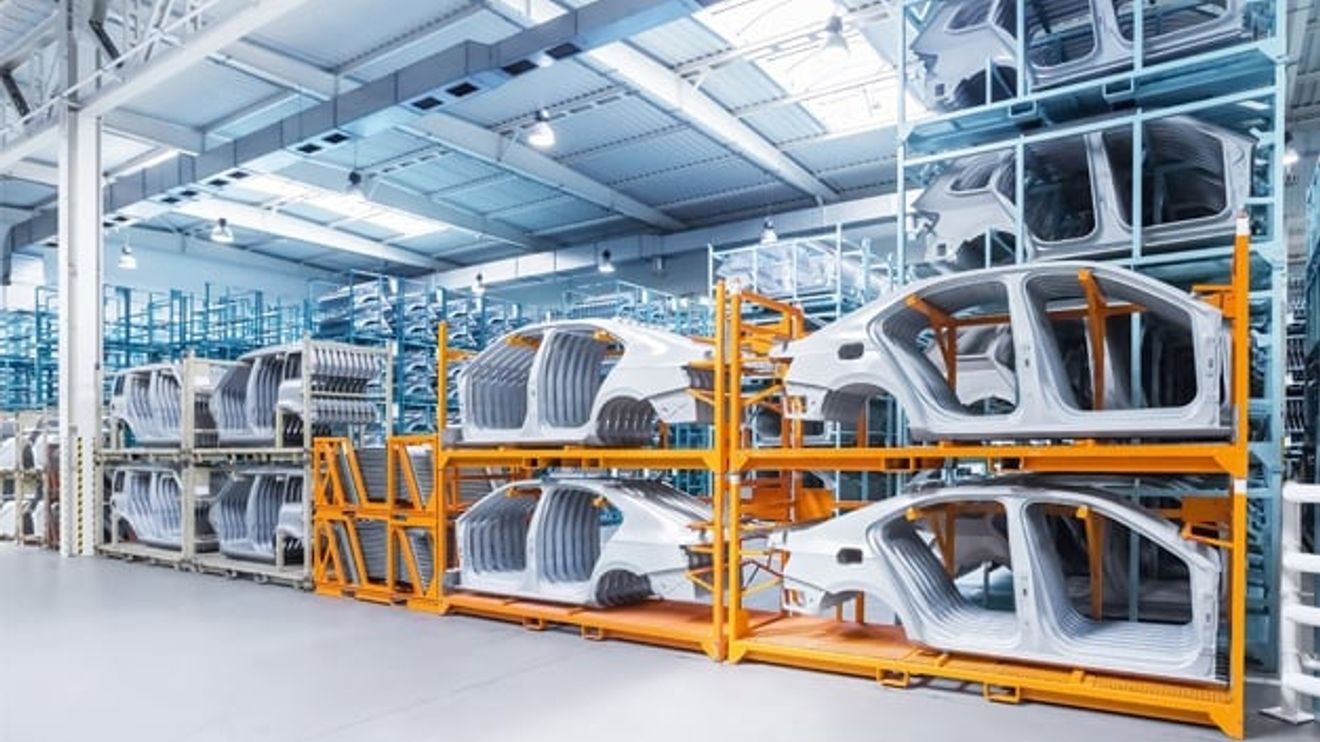
Model cycles in the automotive industry are shorter than ever, while the demands on individual components and groups have increased massively. Whereas in times long past, only a few elements of a vehicle changed as part of facelifts, today the electronic equipment for connectivity, navigation and other subsystems determines model cycles more than any engine. Added to this are the diesel scandal and the increasing pressure to move into electromobility. In short, the expectations placed on all companies in the supply chain have grown and will continue to grow.
Just-in-time delivery is crucial in ongoing production. This ensures low stock levels and uninterrupted production at car manufacturers. This poses several challenges for ERP systems at supplier companies: In addition to individual and series production, the entire logistics process chain must be supported - from sales orders to production planning and control through to shipping. The company's internal processes should be supported or optimized in the best possible way, and existing software solutions in the company should also work as well as possible with the new solution. There are also customers and suppliers whose requirements and industry-specific specifications need to be met. In the automotive sector in particular, there are also external processes that urgently need to be incorporated into ERP planning.
What is behind EDI?
Electronic data interchange (EDI) refers to the digital transfer of structured business-relevant data. This facilitates communication between companies. Predefined message standards are used to transfer business data such as orders, delivery bills or invoices. Human intervention is thus reduced to a minimum; manual recording, printing, enveloping and mailing are completely eliminated. By transferring data directly from one IT system to another, not only are company and country boundaries crossed, but error-prone media disruptions are also avoided. Similar rules and advantages also apply to the use of ERP systems - they automate processes and ensure fewer frictional losses.
A standardized infrastructure is necessary so that the various processes can work across companies. Four key elements are essential for the processes to work successfully: A standardized exchange protocol, a uniform message standard for decoding the data, the ERP software involved and an EDI service provider. Well-known exchange protocols for EDI connections include X.400, AS2, SFTP, OFTP and SMTP. Well-known message standards in the field of EDI are EDIFACT, ANSI X.12, ODETTE, RosettaNet, XML, VDA or TRADACOM.
Using ERP software with EDI
Without an ERP system that can import and export structured data, it is difficult to implement EDI. Even if it is possible to use EDI with just one system for financial accounting or document management, such an approach is not recommended in view of the media disruptions that occur. Although there are also solutions based on WebEDI, these are only suitable for small document volumes - and therefore only for very small companies with a small number of documents.

Schematic process of EDI transfer from the sending to the receiving company. In the automotive sector, a network protocol is used for direct electronic data transfer, based on recommendation 4914/2 of the German Association of the Automotive Industry.
© Dmitry - stock.adobeThe core of every EDI connection to an ERP system is the import and export of structured data. The corresponding interface in an ERP system is responsible for processing external data. Data is usually transferred to an EDI converter, which takes over the further processing of the data. Data can be transferred to the EDI converter in various ways, for example via an SFTP server or via direct API integration. The EDI converter receives the exported data, converts it, the recipient receives the file and imports it into their own system via their EDI solution. Once the question of the import/export interface has been clarified, it is important to examine in detail the scope of data that can be imported and exported via the interface.
Depending on the business relationship and industry, different types of data can be expected in the EDI data. For example, the following fields are required to create an invoice in accordance with EDIFACT: GLN (Global Location Number) of the sender of the document, GLN of the recipient of the document, invoice date, invoice number, number of the associated purchase order, date of the associated purchase order, number and date of the associated shipping notification, invoice items and the invoice amount including net and gross values.
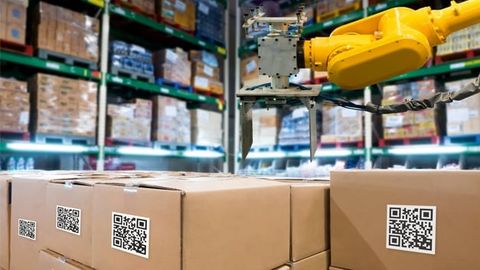
Warehousing in the automotive industry: QR codes enable the automated allocation of packaged individual parts.
© zapp2photo - stock.adobeHowever, there is a special feature in fixed supplier relationships in the automotive industry. If there are fixed supplier contracts, the invoices must also be provided with an agreement number. The EDI converter can only generate this form of invoice if all the data required by the client is included in the export format of the ERP system. In addition, relevant master data must be maintained in the ERP system. This is because the export cannot work correctly if it is not maintained properly due to inadequacies in the ERP system.
Minimize input errors
The interaction of the external EDI processes with the internal processes of the ERP system is crucial for the efficiency of the processes. The customer orders using 'EDIFACT Order', the order is converted and imported into the ERP system. In order to avoid duplicate data entry and to be able to utilize the advantages of EDI as much as possible, the order data is transferred and an immediate order confirmation is generated. Both the ERP user and the person responsible can make changes to the order confirmation. The order confirmation is then electronically translated by the EDI converter into an EDIFACT ORDRSP message (order response) and sent.
A shipping notification must be sent to the business partner before the goods are dispatched. Here too, the data is taken from the order confirmation to avoid duplicate data entry. The EDI service provider then handles the conversion and delivery. Finally, the invoice is created based on the shipping notification data and sent to the business partner. The original order is gradually and chronologically refined into an invoice. The data is transferred from the document above it, also known as the turnaround process. The prerequisite for the turnaround procedure is the corresponding implementation of the processes in the ERP system.
Another important consideration is the choice of a suitable EDI service provider to carry out the necessary conversions. Two different methods are available for this: First, an in-house, local EDI converter can be purchased and provided by a service provider. However, external service providers can also handle the entire EDI transfer process.
Purchasing your own local EDI converter is only worthwhile for companies with a high level of technical expertise. In addition to the local converter, a separate EDI service provider must be commissioned to connect the business partners via the required protocols (AS2, X.400, OFTP or SFTP). However, a local converter also generates costs in the five-digit range. For larger suppliers, the costs can run into six figures, with annual maintenance costs in addition to the purchase price.
If an external service provider carries out the EDI processes, it will not only convert the data but also transmit it to the individual partners. In contrast to a local converter, there are no high one-off costs for the procurement or maintenance of the converter - payment is based on performance.
Mandatory VDA standard for EDI
The special requirements of the automotive industry, such as those arising from just-in-time and just-in-sequence production, are met by the EDI standards developed by the German Association of the Automotive Industry (VDA) back in 1977. However, the current fixed-length VDA standards are gradually being replaced by EDIFACT document types. To this end, the VDA is adopting recommendations on how document types can be mapped using EDIFACT messages. Nevertheless, the VDA message types used to date are still in use, without a definitive end date.
Author:
Christian Bieblis Managing Director of Planat.


You might also be interested in
The VDA 5050 standard
The VDMA and VDA associations have jointly developed an interface, the VDA 5050, so that driverless transport systems, or AGVs for short, can work together in intralogistics and production environments.
 read more...
The spectre of deindustrialization
Germany owes its prosperity to industry. But gas and electricity prices are causing SMEs in particular to fear for their existence. Is deindustrialization now looming?
read more...Industry associations see danger for German economy
Last week, the Federal Cabinet launched an amended Climate Protection Act. The VDMA and VDA criticize the fact that the efforts of German industry are not being noticed, not even by young climate activists.
read more...Demand is rising
90 applications for industrial 5G campus networks have already been submitted to the Federal Network Agency. Automation technology plays an important role in the market maturity of 5G standardization.
read more...5G mobile communications standard
Auction ends - bitter aftertaste remains
In the 497th auction round, the auction of mobile radio frequencies in the 2 GHz and 3.6 GHz ranges came to an end on June 12 after 52 days. Four providers secured these for 6.5 billion euros. Associations are now calling for local 5G frequencies to...
read more...Electromobility / Fraunhofer IAO
75,000 jobs to be lost
By 2030, every second job in drive technology for passenger cars could be directly or indirectly affected by electromobility. This is the conclusion of a study by the Fraunhofer Institute for Industrial Engineering (IAO).
read more...Paderborn University becomes part of 'ELLIS NRW'
Paderborn University is one of the founding members of the new research unit 'ELLIS Unit NRW'. The European network bundles AI research in North Rhine-Westphalia with a focus on machine learning and explainable AI.
read more...AI 'CheckMate' optimizes industrial processes
With 'CheckMate', the University of Klagenfurt has developed an AI system that independently creates algorithms for complex combinatorics and optimization problems. The technology is designed to make industrial planning and logistics processes more...
read more...Research on data and governance
FAU investigates China's data practices
A research project at FAU Erlangen-Nuremberg is analyzing historical data practices in China over more than 2000 years. The focus is on early administrative and information systems and their significance for today's debates on AI, big data and...
read more...