

followed up! - at Senseye/Siemens
AI in predictive maintenance
Senseye has been a wholly owned subsidiary of Siemens since summer 2022. Together, they want to drive forward AI-based solutions for predictive maintenance in all production plants and locations.
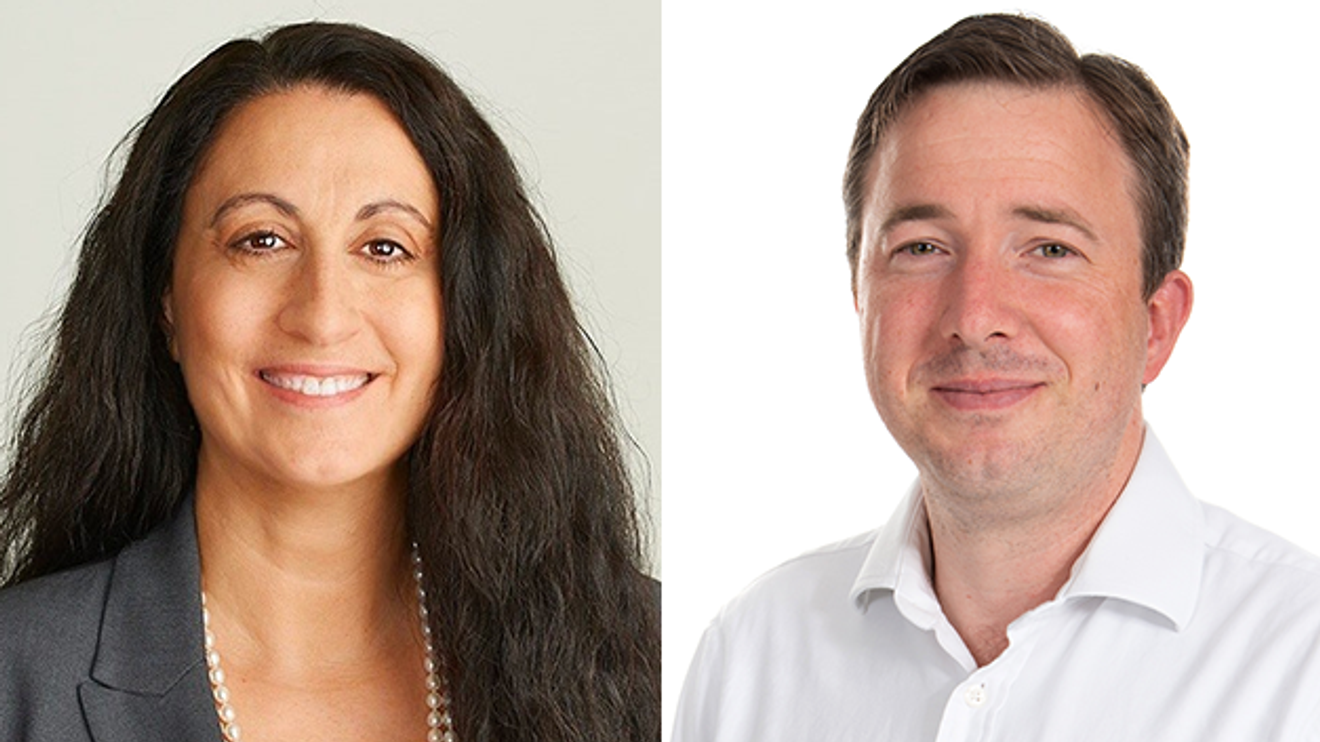
To what extent is Senseye already integrated into Siemens and what synergies have you already been able to exploit?
Margherita Adragna : On April 1, 2023, the legal merger was successfully completed and Senseye was officially integrated into our Digital Industries Customer Services department. By adding Senseye Predictive Maintenance to our existing service offering, we can now provide even greater support to our customers worldwide and enable them to perform predictive maintenance on a large scale. This creates real added value for our customers across all their plants and locations.
Simon Kampa: Accessing the data required for effective predictive maintenance has always been a major challenge. But now that we are part of Siemens, we can offer integrated connectivity options that suit different customer preferences and requirements - from industrial edge and brownfield connectivity to IoT gateways and the cloud.
They offer AI-based solutions for predictive maintenance. But isn't predictive maintenance a type of machine learning by definition?
Kampa: The buzzword 'predictive maintenance' is not new. But we have now reached a level of technological maturity that enables us to use data to scale predictive maintenance across multiple sites. We provide our customers with decision support based on AI technology. The solution uses purpose-built machine learning to provide a globally scalable solution that can be integrated into existing and new infrastructures. The data on machines, maintenance and maintenance teams is used to understand the future state of machines and categorize what requires human attention. Identifying the right failure modes for a plant and the relevant condition indicators is still a technical problem that needs to be solved as a first step. Once these are defined, we can use technology to perform the necessary automated AI-driven analyses. It runs continuously, which means 24/7 monitoring of tens of thousands of assets.
In which areas of a production plant does predictive maintenance bring the greatest benefits?
Kampa : As Senseye Predictive Maintenance was developed to monitor all types of mechanical equipment, it can be scaled across all production lines and equipment in a company. For example, a major automotive manufacturer uses Senseye Predictive Maintenance to extend its predictive maintenance across its global production sites where a range of models are manufactured. Currently, more than 10,000 machines and 100 different machine types are monitored remotely. These include robots, conveyors, drop lifters, pumps, motorized fans and press/punching machines. In terms of business results, it is also about much more than just increasing machine availability. The platform also helps maintenance teams to avoid under- or over-maintenance of equipment, reduces operational risks and costs and supports mobile workers. Ultimately, this also increases sustainability by reducing parts consumption, energy consumption and waste. In addition, many customers achieve a fast ROI and reduce unplanned downtime by up to 50 percent.
By using your predictive maintenance solutions in conjunction with asset intelligence, you promise a longer plant service life. How exactly do you define asset intelligence and how can this be effectively combined with predictive maintenance?
Adragna: Asset intelligence is about ensuring that production assets are operating at peak efficiency while striving for and improving sustainability goals. Senseye Predictive Maintenance enables asset-independent anomaly detection and AI-based anomaly assessment. This gives maintenance teams the right insights into their machines at the right time. With a clearer view of current and potential future risks, they can reduce machine maintenance costs by up to 40 percent.
Kampa: We see that many customers adapt and improve the way they work in maintenance once they have access to asset intelligence. They are gaining the confidence to extend the time between preventative maintenance events and in some cases eliminate them altogether. This is a shift towards true condition-based maintenance that underpins predictive maintenance strategies. A key example was the elimination of 100 lubricant samples at one factory. Instead, the customer relied on Senseye to provide early warning of a failure.
To what extent does the experience gained from the predictive maintenance applications flow into the development of new systems and products from Siemens?
Kampa: From day one, the vision of the founders of Senseye was to generalize the problem of predictive maintenance. This was the only real way to make our solution scalable and keep pace with the emerging Industrial Internet of Things. The focus on generalization and scaling are driving principles that we are taking to Siemens and aligning with the entire team in our thinking about expanding the portfolio.
Adragna: As a scalable platform, Senseye Predictive Maintenance wants to continue to grow in line with Siemens and its customers. Based on the experience we have gained through a global presence in several large organizations, the app has evolved from a bespoke tool to a streamlined, user-friendly platform that can be easily tailored to the user's specific requirements.
What does the technological and strategic roadmap look like in the next one to two years?
Adragna : On the road to predictive maintenance, our customers can rely on the support of Siemens. We accompany them through the entire process, wherever the customer is. In addition, we offer the necessary concepts, hardware, software, engineering and training. We have many Siemens solutions available and aim to integrate them as seamlessly as possible. Our customers shouldn't have to worry about the technology behind it, but can rely on us to work with them to find the right setup for them.
Kampa: The more data our customers collect over time in their projects, the more potential there is to build up structured knowledge about their assets and use it as a basis for strategic and tactical decisions.


You might also be interested in
followed up! - with Dr. Gunther Kegel
"Recognizably alien to the industry"
More and more regulations and bureaucracy are being imposed on companies. In an interview, ZVEI President Dr. Gunther Kegel criticizes politicians and calls for consistent action.
 read more...
checked up on! - with Steffen Winkler
AI - a lever in the industry
Steffen Winkler from Bosch Rexroth explains how important artificial intelligence has become in industry and how automation specialists are using AI.
read more...followed up! - with Rainer Brehm, Siemens
An All Automation Society?
Industrial automation has experienced an enormous upswing in the last 25 years. But where exactly is automation today and where should or must it be in the future? Rainer Brehm takes a stand in this interview.
read more...Check with B. Böhrer, Logiccloud
Arrived in business
A year ago, Bernhard Böhrer founded the company Logiccloud with its product of the same name; the market launch took place with the SPS in November. The CEO explains the next steps.
read more...Follow up with Stefan Messerkliger, B&R
"The same mistakes!"
In industrial manufacturing, OPC UA is regarded as the data exchange format of the future. In the world of mobile machinery, such an agreement is still missing. Stefan Messerklinger calls for OPC UA to be introduced in this sector too.
read more...Check with Thomas Rettig, Beckhoff
The robotics construction kit
Beckhoff presented its ATRO modular system at Automatica 2022, which can be used to realize any robot design. The background to entering the robotics market.
read more...followed up! - with Steffen Ullrich, Genoa
Multi-layered protection
In the wake of the Russia-Ukraine conflict, the BSI is warning of Russian hacker attacks. IT security researcher Steffen Ullrich explains the danger for German companies and what protective measures should be taken.
read more...followed up! - ZVEI DC industry
The DC initiative
With the DC Industry project, the ZVEI is driving forward direct current grids in industry. The brains behind the project explain what synergies are being created with electromobility and what benefits can be expected in relation to the climate...
read more...5G in Hall 9
Siemens will equip Hall 9 at the Hannover Exhibition Center with a 5G campus network by September, according to a joint announcement in mid-February. Marcus Eibach, Senior Vice President, Deutsche Messe AG, explains what this means in concrete terms...
read more...